

How to Keep Mums Alive Through Fall
The mums looked perfect at the garden center, and three weeks later the blooms are brown and crispy. That quick fade is the most common fall complaint, and it is almost always a watering problem. Mums sold in small nursery pots dry out fast. Once the roots dry past a certain point, no amount of water brings the flowers back.
The good news is that chrysanthemums are tough plants. If you learn how to keep mums alive, one plant can bloom for six to eight weeks. All it takes is steady water, plenty of sun, and a little frost protection. This guide walks through each step in order, from picking a healthy plant to tucking it in on cold nights.
Choose Healthy Plants and Give Them Room
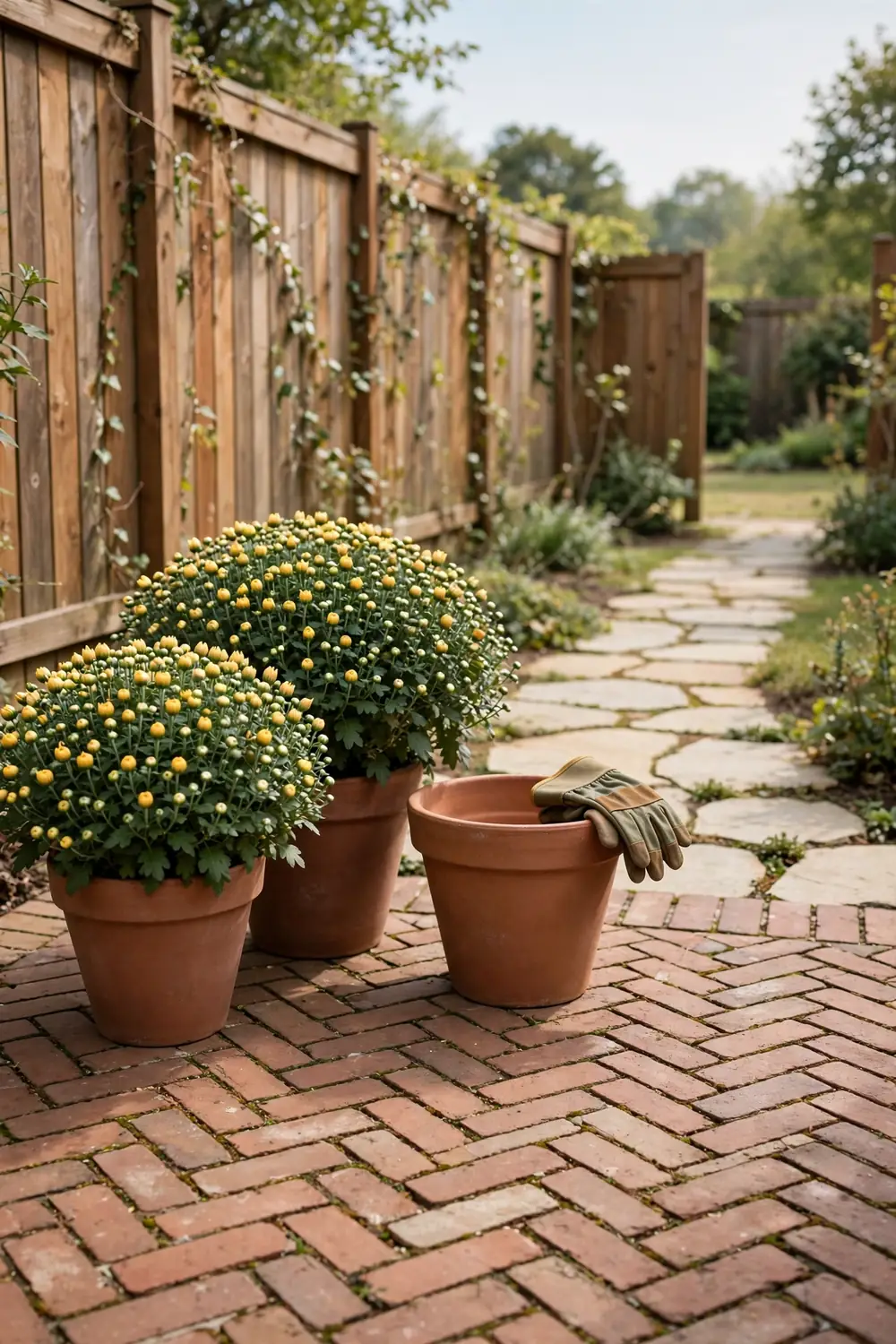
Start with the right plant, because a weak mum never recovers no matter how well you care for it. Look for pots packed with tight buds that show color but have not opened yet. Those buds will open over the next few weeks. Your display will last longer than with a plant in full bloom.
Skip any plant with yellow or wilted leaves, mushy stems, or dry soil pulling away from the pot edges. Lift the pot and check the drainage holes, since roots growing out of them mean the plant is root bound and will struggle.
Repot right away into a pot about two inches wider than the nursery pot. Mums drink a lot, and a bigger pot holds more moisture between waterings. Use fresh potting mix, set the plant at the same depth as before, and water well until it drains from the bottom.
Water Deeply but Let the Soil Breathe
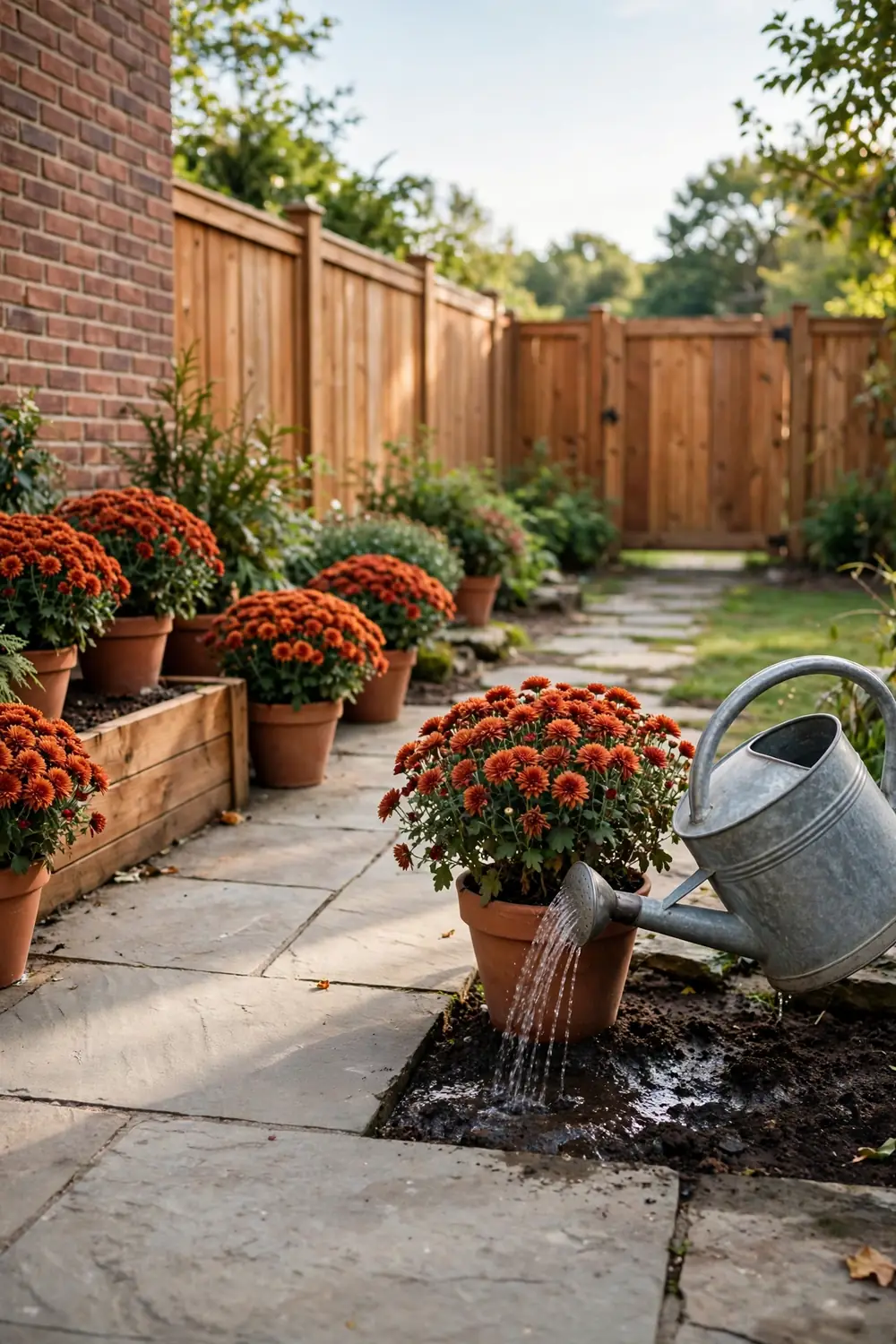
Watering is where most mums fail, so make it a daily habit to check the soil. Push your finger about an inch into the mix. If it feels dry, water until it runs out of the drainage holes. If it feels damp, wait and check again tomorrow. Mums in small pots can need water every day in warm September weather.
Always water at the base of the plant, not over the flowers and leaves. Wet foliage brings mildew and rots the blooms faster. A watering can with a narrow spout makes it easy to aim under the leaves. Morning watering is best because splashes dry before night.
Empty the saucer under the pot after watering. Roots sitting in standing water drown and rot. The plant wilts just like it does from thirst, which fools a lot of gardeners. Too much water kills more fall mums than too little.
Give Them at Least Six Hours of Sun

Mums love sun, and blooms last longest where they get six or more hours of direct sun each day. A south or west facing porch or patio is ideal. Flowers hold their color better, and buds open faster than in shade.
Light shade in the afternoon is fine. It helps in warmer regions where September days still run hot. What hurts mums is deep shade all day. Plants in dim spots grow leggy, stems stretch, and buds may never open.
Watch how the sun moves across your yard before you set the pots down for the season. A spot that feels sunny at ten in the morning might sit in shadow by two. Once you find the brightest six-hour stretch, leave the pots there. Moving them around stresses the plant and knocks buds loose.
Deadhead Spent Blooms Regularly

Snipping off finished flowers keeps the plant looking fresh and sends strength to the buds that have not opened yet. Check your mums every few days. Pinch or snip each bloom as soon as it browns at the center or the petals start to curl.
Cut the stem back to just above the first set of healthy leaves below the spent flower. Do not yank the dead heads off by hand. Pulling tears the stem and opens a wound where disease can enter. Small scissors or pruners work fine.
Do not expect new buds to form this late in the season. Deadheading in fall is about looks and plant health. It will not force new buds. A mum with its spent flowers removed stays neat for weeks longer, and the leaves stay fuller because the plant stops feeding dead flowers.
Feed Lightly Through the Season

Mums from the garden center arrive well fed, so they rarely need much extra food in fall. A light feeding every two to three weeks keeps the color strong. It will not push soft growth that frost can harm. Use a balanced liquid plant food mixed at half the label strength.
Pour the mixed food into the soil the same way you water, at the base of the plant. Never sprinkle dry plant food on the blooms. Stop feeding once nights drop near freezing. Late food encourages tender new leaves that blacken at the first hard frost.
If your mums came from a big box store and look pale, one feeding can green them up within a week. After that, water and sun do the rest. Too much plant food is a more common problem than too little with fall mums.
Shield Them When Frost Hits
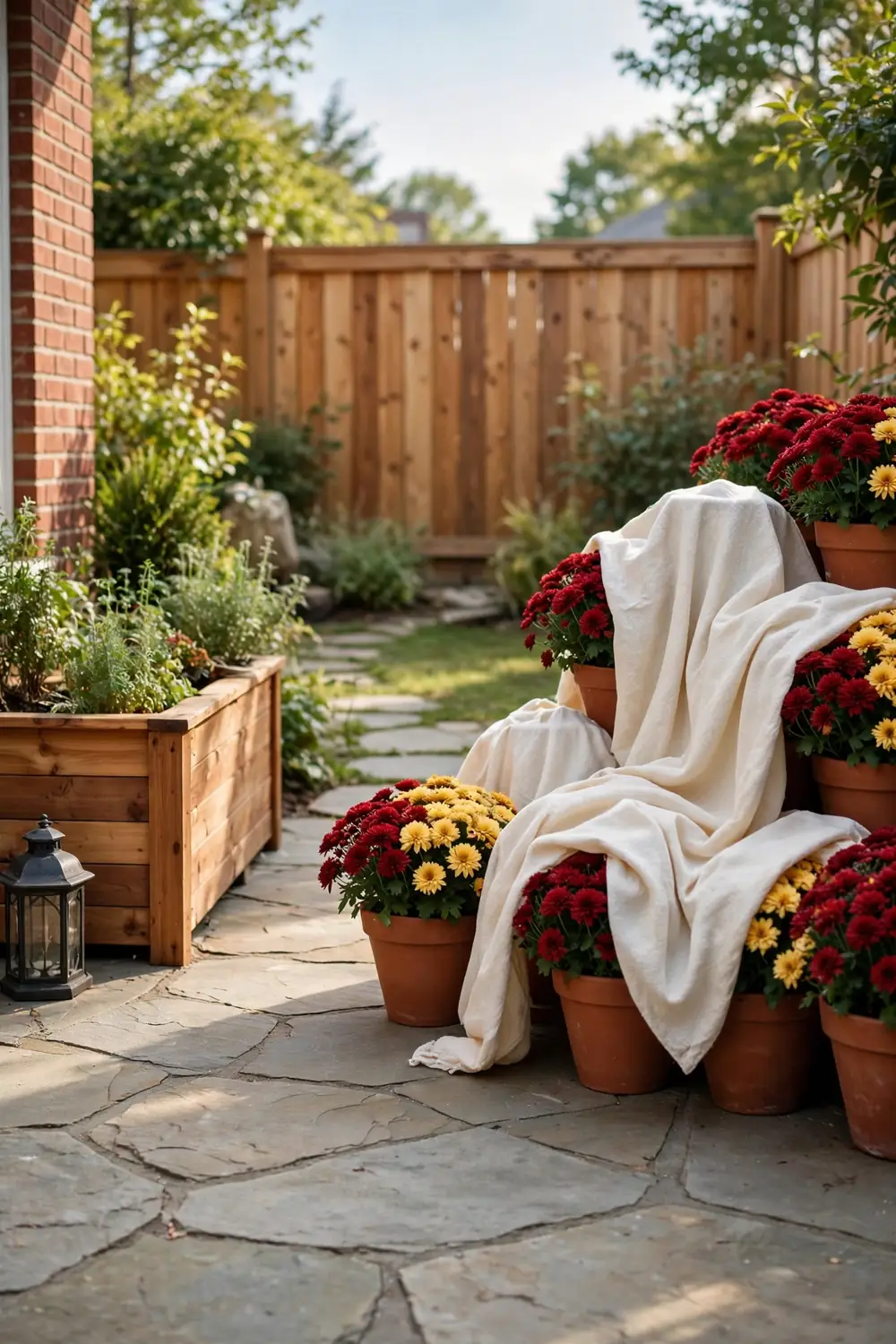
Mums handle light frost, but a hard freeze ends the show. When the forecast calls for nights below 28 degrees, cover the plants before sunset. An old bedsheet, a frost cloth, or even a cardboard box works. Drape it loosely so it does not crush the blooms. Take it off the next morning once the air warms.
Potted mums get extra protection because you can move them, so slide the pots against the house wall. The building gives off stored warmth through the night. A cold garage works too. Pots grouped together also hold heat well.
Water the soil the afternoon before a freeze. Moist soil holds warmth better than dry soil and guards the roots. Skip this step only if the pot is already soggy from rain.
Making It Last Through the Season
Buy in stages if you want color for months, picking up a few plants with tight buds every week or two through fall. New blooms keep arriving as older pots fade. Hold early buys in a cool, shady corner until you are ready to show them. Warmth and sun open buds fast, while cool shade slows them down.
Turn each pot a quarter turn every week so all sides get sun and the plant stays round and full. On hot fall days, shift pots out of harsh afternoon sun into light shade. Buds usually last longer out of harsh sun. Pull pots under the porch roof during hard rain too. Pounding rain can shatter open blooms in a single storm.
Frequently Asked Questions
How often do mums need water?
Check the soil every day and water when the top inch feels dry. Most potted mums need water daily in warm fall weather, and every two to three days once the air cools. Water the soil at the base and pour off any water that sits in the saucer.
Can mums survive a frost?
Mums handle a light frost, which usually only dulls the outer petals. A hard freeze below 28 degrees ends the blooms. Cover plants with a sheet or move pots into the garage overnight, then uncover them in the morning.
What keeps mums alive after the flowers fade?
Cut the stems back to about six inches once the blooms are spent and keep watering lightly. Move the pot to a cold garage or mulch it deep in a sheltered spot for winter. Garden mums may return in spring, but most potted fall mums are grown for one season of color.
Why are mum leaves turning yellow?
Yellow leaves most often mean too much water or a pot that does not drain. Let the soil dry a bit between waterings and check that the drainage holes are open. A light feeding helps if the whole plant looks pale.
One Last Tip
Healthy mums ask for very little. Steady water and a sunny spot do most of the work, while a sheet on cold nights handles the rest. Get the basics right and the blooms carry from September deep into the season. Most of the work is just checking the soil each day and snipping the flowers as they fade.
If these tips helped your pots stay full and bright, Save this for when inspiration strikes.