
Use this free raised bed soil calculator to find out exactly how much soil your raised bed needs in seconds.
Free Raised Bed Soil Calculator
Enter your bed size and see exactly how much soil to buy.
Free to use. Nothing you type is stored.
Multiply length × width × depth (in feet) to get cubic feet of soil. A 4×8 raised bed that is 12 inches deep needs 32 cubic feet, or about 22 bags of 1.5 cu ft soil.
How Much Soil Do I Need for a Raised Bed?
The short answer is that it depends on the size of your bed. A small 4×4 bed that is 6 inches deep needs only 8 cubic feet of soil. A big 4×8 bed that is 12 inches deep needs 32 cubic feet. That is a big difference, and buying too much wastes money while buying too little means a second trip to the store.
The raised bed soil calculator above does the math for you. Type in your bed length, width, and depth. It tells you the total in cubic feet, cubic yards, and liters. It also tells you how many bags to buy and breaks down the best soil mix.
Most new gardeners guess. They grab a few bags and hope it is enough. It almost never is. Soil looks like a lot in the bag, but it spreads thin once you pour it into a bed. A 1.5 cubic foot bag fills a 4×8 bed to less than an inch deep. You need more than you think.
If you are building more than one bed, the numbers add up fast. Two 4×8 beds at 12 inches deep need 64 cubic feet. That is over 40 bags of soil. At that point, buying in bulk starts to make sense. More on that below. And if you are short on space, our container garden ideas show how to grow a lot in pots and planters.
Raised Bed Soil Chart
Use this chart for a quick look. Find your bed size and depth to see the cubic feet of soil you need. These numbers assume one bed with no extra for settling.
Soil needed for common raised bed sizes, in cubic feet.
| Bed Size | 6 in Deep | 12 in Deep | 18 in Deep |
|---|---|---|---|
| 4×4 ft | 8 cu ft | 16 cu ft | 24 cu ft |
| 4×6 ft | 12 cu ft | 24 cu ft | 36 cu ft |
| 4×8 ft Most popular | 16 cu ft | 32 cu ft | 48 cu ft |
| 3×6 ft | 9 cu ft | 18 cu ft | 27 cu ft |
| 2×8 ft | 8 cu ft | 16 cu ft | 24 cu ft |
For the exact number with your own bed size, bag size, and settling added, use the calculator at the top of this page.
How to Use This Calculator
It takes less than a minute. Here is what to do.
Step 1: Enter your bed length and width. Measure the inside of the bed. Use the Feet/Meters toggle if you measured in metric. The default is an 8×4 foot bed, which is the most common size.
Step 2: Enter the soil depth. This is how deep you want the soil, not how tall the boards are. Many gardeners fill to an inch or two below the top of the boards. The default is 12 inches.
Step 3: Enter the number of beds. Building three beds? Type 3 and the calculator adds them all up.
Step 4: Pick your bag size. Bags come in 1, 1.5, and 2 cubic foot sizes, plus 50-liter bags. Check what your store sells. The calculator rounds up, so you always buy enough.
Step 5: Check the settling box if you want. Fresh soil sinks over the first few weeks. Adding 10% extra keeps your bed full. I always check this box for new beds.
Your results show right away. You get total cubic feet, cubic yards, liters, bags to buy, and the 60/30/10 mix breakdown. Looking for more free helpers? Browse all of our home and garden calculators.
How We Calculate It
The math is simple. Here is the formula:
Volume (cubic feet) = length × width × (depth ÷ 12) × number of beds
Depth is divided by 12 to turn inches into feet. If you check the settling box, we multiply the answer by 1.1 to add 10%.
Then we convert:
- Cubic yards = cubic feet ÷ 27
- Liters = cubic feet × 28.317
- Bags = total cubic feet ÷ bag size, rounded up
Worked example: Say you have one 8×4 foot bed and want 12 inches of soil. First, turn 12 inches into feet: 12 ÷ 12 = 1 foot. Then multiply: 8 × 4 × 1 × 1 = 32 cubic feet. In cubic yards, that is 32 ÷ 27 = 1.19. In liters, it is 32 × 28.317 = 906. For 1.5 cubic foot bags: 32 ÷ 1.5 = 21.3, which rounds up to 22 bags. The mix is 60% topsoil (19.2 cu ft), 30% compost (9.6 cu ft), and 10% perlite (3.2 cu ft).
Bags vs Bulk: When to Buy by the Yard
Soil comes two ways: in bags from the garden center, or in bulk by the cubic yard from a landscape supplier. Which is cheaper depends on how much you need.
One cubic yard equals 27 cubic feet. That is about 18 bags of 1.5 cubic foot soil. If your total is under one cubic yard, bags are fine. A single 4×8 bed at 12 inches deep needs 32 cubic feet, which is 1.19 cubic yards. That is right on the edge.
My rule is simple. If you need more than one cubic yard, call a bulk supplier for a price. Bulk soil often costs half as much per cubic foot as bagged soil. Two or three beds almost always tip the math toward bulk.
Bulk has a catch. Most suppliers deliver by the full or half yard, and they dump it in your driveway. You need a wheelbarrow and some muscle to move it. If you cannot handle a big pile, bags are worth the extra cost.
Another catch: bulk “garden soil” varies a lot. Some is great. Some is mostly clay or full of weed seeds. Ask what is in the mix before you order. For raised beds, you want something light and rich, not heavy fill dirt.
The Best Soil Mix for Raised Beds
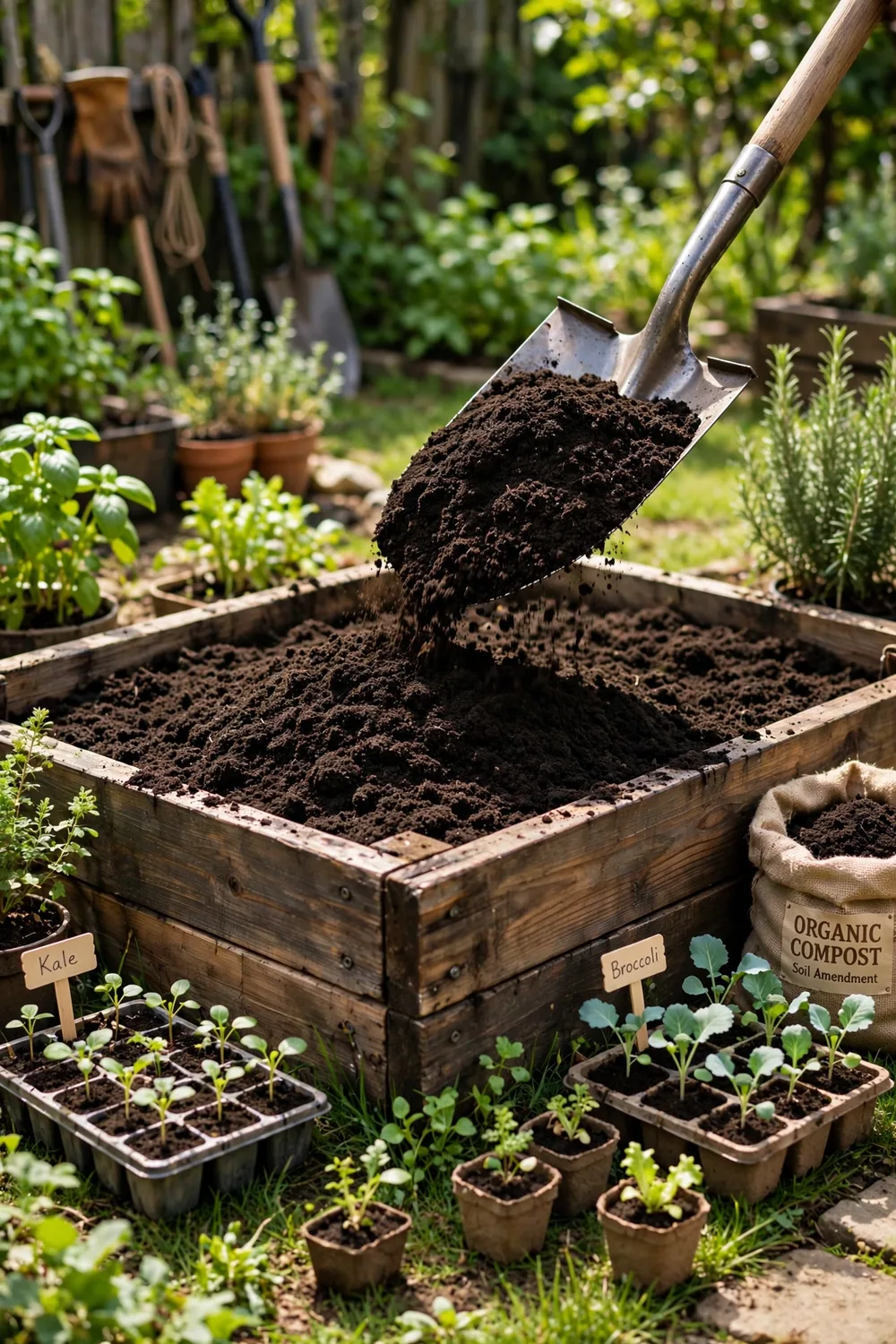
Do not fill your bed with one thing. The best raised bed soil is a mix of three parts. I use the 60/30/10 rule, and the calculator above breaks it down for your bed size.
60% topsoil. This is the base. It gives the mix body and holds nutrients. Buy screened topsoil without big clumps or trash. Avoid cheap fill dirt, which is dead soil with no life in it.
30% compost. This is the food. Compost adds nutrients and feeds the tiny life in the soil that helps plants grow. You can use bagged compost, mushroom compost, or your own homemade compost. Mixing two kinds is even better.
10% aeration. This keeps the mix light. Perlite or pumice are the usual picks. They are the little white or gray bits that stop soil from packing down. Roots need air as much as water. Without this part, your mix can turn into a brick.
For a 4×8 bed at 12 inches deep (32 cubic feet), that means 19.2 cubic feet of topsoil, 9.6 cubic feet of compost, and 3.2 cubic feet of perlite. Mix it all together right in the bed with a rake or shovel.
Some gardeners buy pre-mixed “raised bed soil” in bags. That works fine too. It costs more, but it saves the mixing step. If you go this route, you can skip the 60/30/10 math and just buy the total cubic feet the calculator gives you.
How Deep Should a Raised Bed Be?
Deeper is not always better, but too shallow starves your plants. Here is what different plants need.
Lettuce, herbs, and greens: 6 to 8 inches. These have shallow roots. A 6-inch bed works, though 8 inches gives a little extra room. This is the cheapest bed to fill. If you want to start even smaller, see our guide on how to grow microgreens indoors.
Tomatoes, peppers, and cucumbers: 12 to 18 inches. These are hungry plants with deep roots. Tomatoes especially do best with room to spread. Twelve inches is the minimum I would use. Eighteen is better if you can afford the soil.
Root crops like carrots and potatoes: 12 to 18 inches. Carrots need depth to grow straight. In shallow soil, they fork and twist. Potatoes need room to hill up soil around the stems. Go deep for these. For a fall planting project, read how to plant garlic in fall.
If you grow a mix of everything, build 12-inch beds. That depth handles almost all common vegetables. It is the sweet spot between cost and plant health. A 4×8 bed at 12 inches needs 32 cubic feet of soil, which the calculator confirms.
Taller beds, like 18 or 24 inches, are easier on your back. You bend less. But they need a lot more soil. A 4×8 bed at 18 inches needs 48 cubic feet. The next section shows how to fill the bottom for less.
How to Fill a Tall Raised Bed for Less
A deep bed does not need expensive soil all the way down. The bottom half can be filler. Plants only use the top 12 inches or so. Here is how to fill a tall bed without going broke.
Start with cardboard. Lay cardboard right on the grass or ground inside the bed. It blocks weeds and breaks down over time. Remove any tape first. Overlap the pieces so no light gets through.
Add logs and branches. This is the hugelkultur method. Thick logs go on the bottom, then smaller branches and twigs. They rot slowly and hold water like a sponge. Use hardwood if you have it. Avoid black walnut, which can harm plants.
Add leaves and straw. Pile on fall leaves, straw, or wood chips. This layer fills gaps between the branches. It breaks down faster than wood and feeds the soil as it rots.
Top with your soil mix. The top 12 inches should be your good 60/30/10 mix. That is where the roots live. The layers below will sink over the season as they break down, so fill the soil a little high at first.
This trick can cut your soil cost in half for a deep bed. A 4×8 bed at 18 inches needs 48 cubic feet if filled all the way. With filler in the bottom 6 inches, you only buy 32 cubic feet of mix. That saves real money.
One warning: fresh wood pulls nitrogen from the soil as it breaks down. Keep the wood in the bottom 6 inches, well below the roots. Your top 12 inches of good mix will be fine.
Common Mistakes
Using only garden soil. Soil dug from your yard is too heavy for a raised bed. It packs down, drains poorly, and may carry weed seeds and disease. Always mix it with compost and something light like perlite, or use the 60/30/10 blend.
Filling too shallow. A bed filled only 4 inches deep will not grow much beyond lettuce. Roots hit the bottom and stop. Fill to at least 6 inches for greens and 12 inches for most vegetables. Measure before you buy soil.
Forgetting about settling. Fresh soil sinks. A bed filled to the top in spring can drop 2 inches by summer. That leaves roots exposed and wastes space. Add 10% extra when you fill, or top up with compost after a few weeks.
Skipping the math. Guessing leads to a half-filled bed or a driveway full of extra bags. Take one minute with the calculator above. Knowing you need exactly 22 bags beats guessing.
Buying the cheapest soil. Bargain soil is often mostly sand or clay with little nutrition. Your plants live in this stuff all season. Spend a little more on decent topsoil and compost. It pays back in bigger harvests.
More Free Home & Garden Tools
Keep planning with our other free calculators. Like this one, they need no sign-up and nothing you type is stored.
- Christmas Tree Lights Calculator – how many lights your tree needs
- Christmas Tree Size Calculator – the right tree height for your ceiling
- Rug Size Calculator – the perfect rug size for any room
- Paint Calculator – how much paint your room needs
- Gallery Wall Spacing Calculator – exact nail positions for your frames
- All Home & Garden Tools – browse the full collection
Frequently Asked Questions
How many bags of soil do I need for a 4×8 raised bed?
A 4×8 raised bed that is 12 inches deep needs 32 cubic feet of soil. That is 22 bags of 1.5 cubic foot soil, or 16 bags of 2 cubic foot soil. If your bed is only 6 inches deep, you need half that: 16 cubic feet, or 11 bags of 1.5 cubic foot soil. Use the calculator above for your exact depth and bag size.
Can I use topsoil alone in a raised bed?
You can, but your plants will do better with a mix. Topsoil alone packs down over time and drains slowly. Mix it with about 30% compost for nutrients and 10% perlite or pumice for drainage. This 60/30/10 blend stays light and feeds plants all season.
How deep should a raised bed be for tomatoes?
Give tomatoes at least 12 inches of soil, and 18 inches is even better. Tomatoes grow deep roots and get thirsty fast. Shallow soil dries out and stunts the plant. If your bed is shorter, you can still grow tomatoes, but water more often and expect smaller plants.
How often should I add soil to my raised bed?
Top up your beds every spring. Soil settles and breaks down about 1 to 2 inches per year. Add a 2-inch layer of compost each spring before planting. This replaces lost volume and feeds the soil. Every 3 to 4 years, check if the level has dropped a lot and add more mix.
How much soil do I need for a 4×4 raised bed?
A 4×4 bed at 6 inches deep needs 8 cubic feet, which is 6 bags of 1.5 cubic foot soil. At 12 inches deep, it needs 16 cubic feet, or 11 bags. Most 4×4 beds are used for salads and herbs, so 6 to 8 inches of soil is plenty.
Should I put anything under my raised bed?
Yes, lay cardboard on the ground inside the bed before adding soil. It smothers grass and weeds below. Avoid landscape fabric, which blocks worms and drainage. If gophers are a problem, add hardware cloth (metal mesh) under the cardboard.
Can I mix garden soil with raised bed mix?
Yes, if your garden soil is decent. Mix it half and half with compost and add perlite for drainage. Do not use heavy clay soil straight from the yard. If your native soil is poor, stick with the bagged 60/30/10 mix instead.
Is it cheaper to buy soil in bulk or by the bag?
Bulk is cheaper per cubic foot, usually about half the price of bags. But bulk only makes sense if you need at least one cubic yard (27 cubic feet). For one small bed, bags are simpler. For two or more beds, call a landscape supplier and compare. Remember that bulk soil gets dumped in your driveway, so you need a way to move it.