Bedroom Color Ideas: Shades for a Calm Space
Painting the bedroom is one of the fastest ways to change how it feels, and choosing among the many bedroom color ideas out there can be overwhelming. The right shade quiets the mind at night and wakes you up gently in the morning. Wall color sets the tone for everything else, from bedding to curtains.
Calm bedrooms usually share a few color traits. The shades are soft and muted, with no harsh brightness or strong contrast. Soft greens and blues show up again and again because they quiet visual noise. Pick one main color for the walls, then repeat it in small doses through pillows and rugs. That repetition is what makes a room feel pulled together.
Soft Sage Green Walls
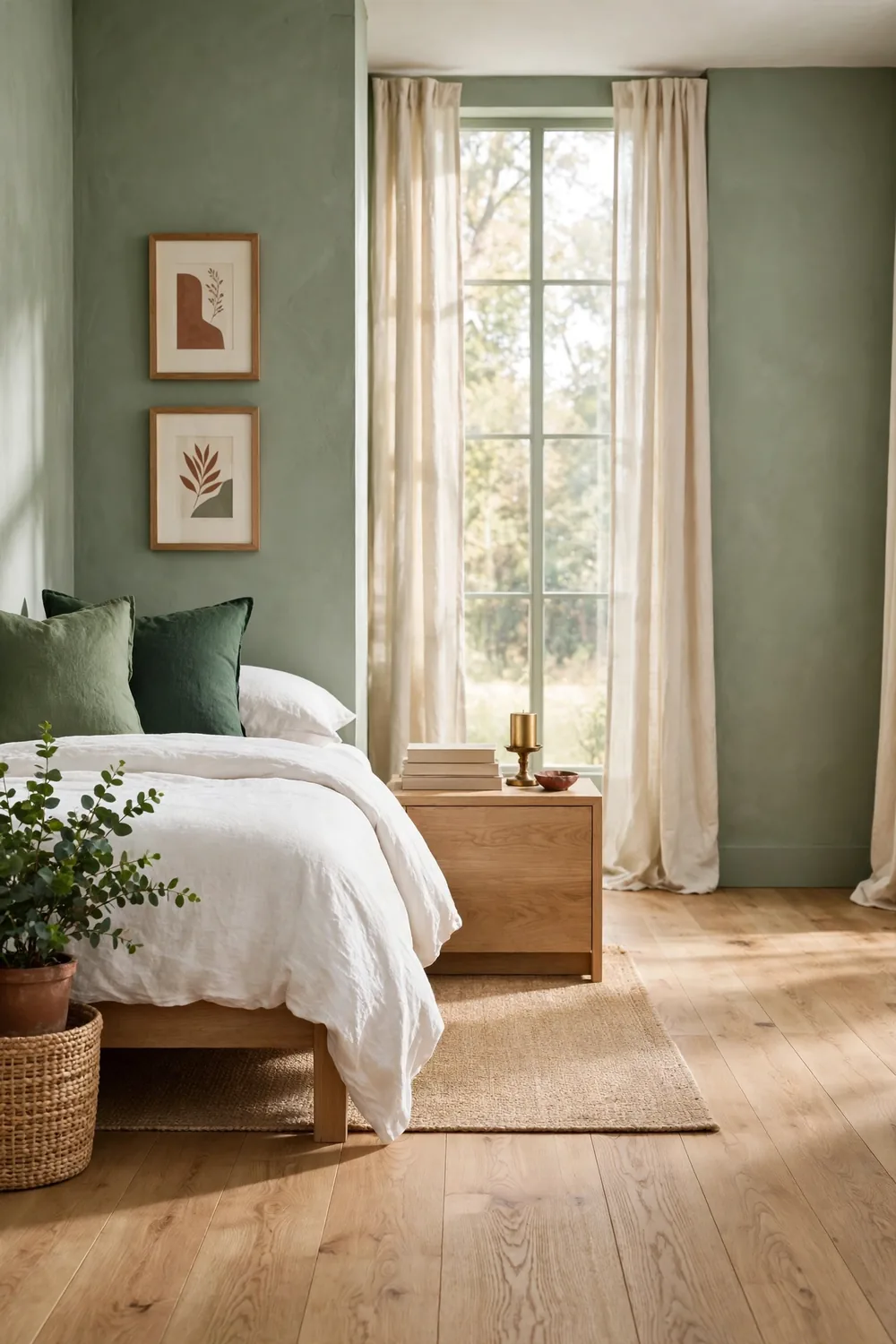
Sage green sits between green and gray, so it reads calm in almost any light. It loves white bedding and light wood, and it pairs well with brass or black hardware. Morning light brings out the green, while evening lamplight softens it toward gray. It flatters both big rooms and small ones.
Soften the room with cream curtains and a natural jute rug. One deeper green pillow or a potted plant adds life without breaking the calm. Cool gray bedding can make sage feel flat, so stick with warm whites. Paint the ceiling the same sage for a tucked-in, restful feel.
Warm White Walls

Warm white is one of the most forgiving calm bedroom paint colors because it lets the room’s textures do the talking. It brightens north-facing bedrooms with little direct sun, and it makes small rooms feel open. The undertone matters: pick a white with a touch of cream, never a stark blue-white. Test a swatch on every wall before committing.
Layer warm whites with beige and tan so the room never looks bare. Linen bedding and a wool throw add depth through texture. Wood tones all sit happily against warm white. Keep the trim the same color as the walls for a smooth, unbroken look.
Dusty Blue Walls

Dusty blue brings the calm of an overcast sky indoors. It lowers the energy of a room, which makes it a strong pick for restless sleepers. The gray in it keeps it grown-up, never babyish. It shines with white bedding and light oak floors, and south-facing rooms keep it from going cold.
Add warmth so the room feels cozy on cool evenings. A mustard pillow or a wood nightstand balances the cool walls, while a cream rug grounds the space. Avoid red accents here; warm metallics and honeyed wood do the job better. One wall of dusty blue is enough in a tiny room.
Greige for a Balanced Neutral

Greige, the blend of gray and beige, gives you the calm of gray without the chill. It works with almost any bedding color, which makes future makeovers cheap, and it suits modern and traditional rooms equally. Look for a greige with warm undertones so it glows in lamplight. Cool greige can turn flat under LEDs.
Build the room in layers of the same family: greige walls and oatmeal bedding. Add contrast with a dark wood dresser or a black-framed mirror. Greige hides dust and small marks better than white, a real plus in a busy home. It also looks lovely in wide shots if you love sharing your space.
Blush Pink Accent Wall
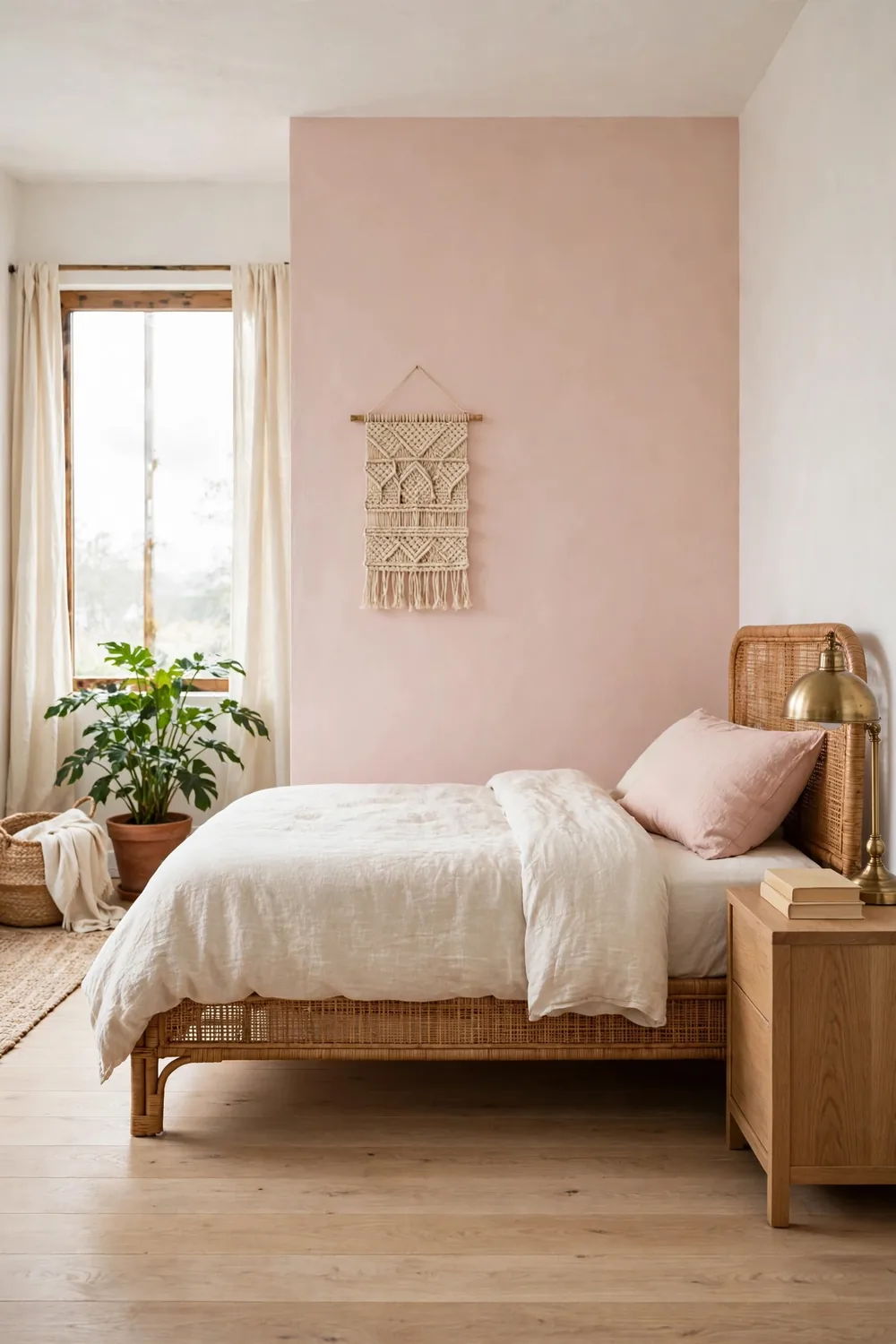
Blush pink is pink with its volume turned down, and it warms a bedroom without shouting. One accent wall behind the bed is usually plenty. The rest of the walls can stay warm white or light beige. It pairs beautifully with brass and cream linen. The result reads soft and romantic, never childish.
Keep the bedding simple so the wall stays the star. White or cream quilts with one blush pillow echo the color gently. Add a green plant to freshen the pink. Dark wood can fight with blush, so lean toward light oak or painted white furniture. If the room gets little sun, pick a blush with peach undertones.
Terracotta Warmth

Terracotta brings the warmth of baked clay to the bedroom, and it glows in afternoon sun. It suits rooms that feel cold or stark, and it loves natural materials like linen and jute. Keep it to one accent wall or a wainscot-height band. A full room of terracotta can overwhelm a small space.
Pair terracotta with cream and sandy beige for a desert-calm palette. Black metal frames and dark wood ground the warmth. Plants thrive against it, since green pops against the clay tone. Keep patterns small so the color carries the room. It stays restful even though it is bold.
Soft Lavender Walls

Soft lavender is one of the most restful bedroom colors, with a gray base that keeps it calm. It suits white bedding and pale wood, and the color reads romantic without being sweet. In bright sun it can turn pink, so test it at midday. A north-facing room keeps lavender true to its swatch.
Echo the purple family with gray-violet pillows and a lilac throw. Sage green plants freshen the room and keep it from feeling one-note. Avoid pairing lavender with bright yellow, which jars the calm; white trim keeps the edges crisp. It is a lovely pick for a guest room, where rest matters most.
Deep Navy Accent Wall

A deep navy accent wall makes the bed feel like a cocoon. It adds depth to a plain room and makes white bedding look crisp. Keep the other three walls light: warm white or pale gray. Navy drinks light, so this idea needs a decent window or good lamps. It suits both modern and classic rooms.
Warm it up with brass lamps and honey-toned wood. These warm touches stop navy from feeling cold. Keep the ceiling white so the room does not close in. One navy wall is the sweet spot; two can darken the room too much. It pairs well with coastal stripes and brass fixtures.
Warm Taupe Walls
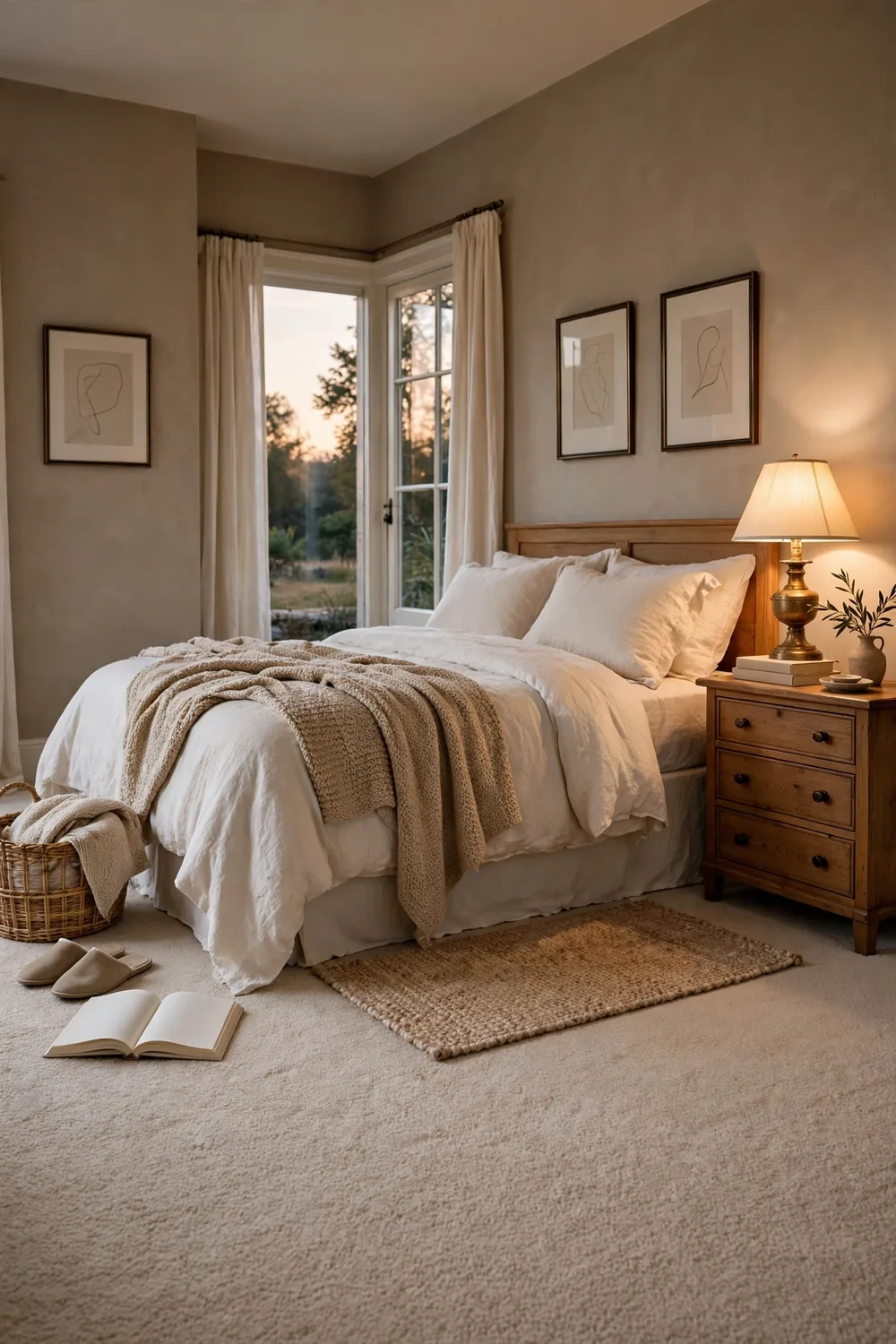
Warm taupe is beige with more depth, and it wraps a room in quiet comfort. It flatters skin tones in mirror light, a small bonus in a dressing corner. It works with cream and caramel bedding. The key is warm undertones; cool taupe reads gray and flat. Sample it next to your wood furniture.
Layer taupe with ivory and sand for a tone-on-tone scheme that always rests easy. A textured rug and knit throw keep it from looking plain. Dark bronze or aged brass hardware adds richness. Taupe forgives scuffs and fading, so it suits kids’ rooms too. It is the neutral that never looks boring.
Soft Mint Green
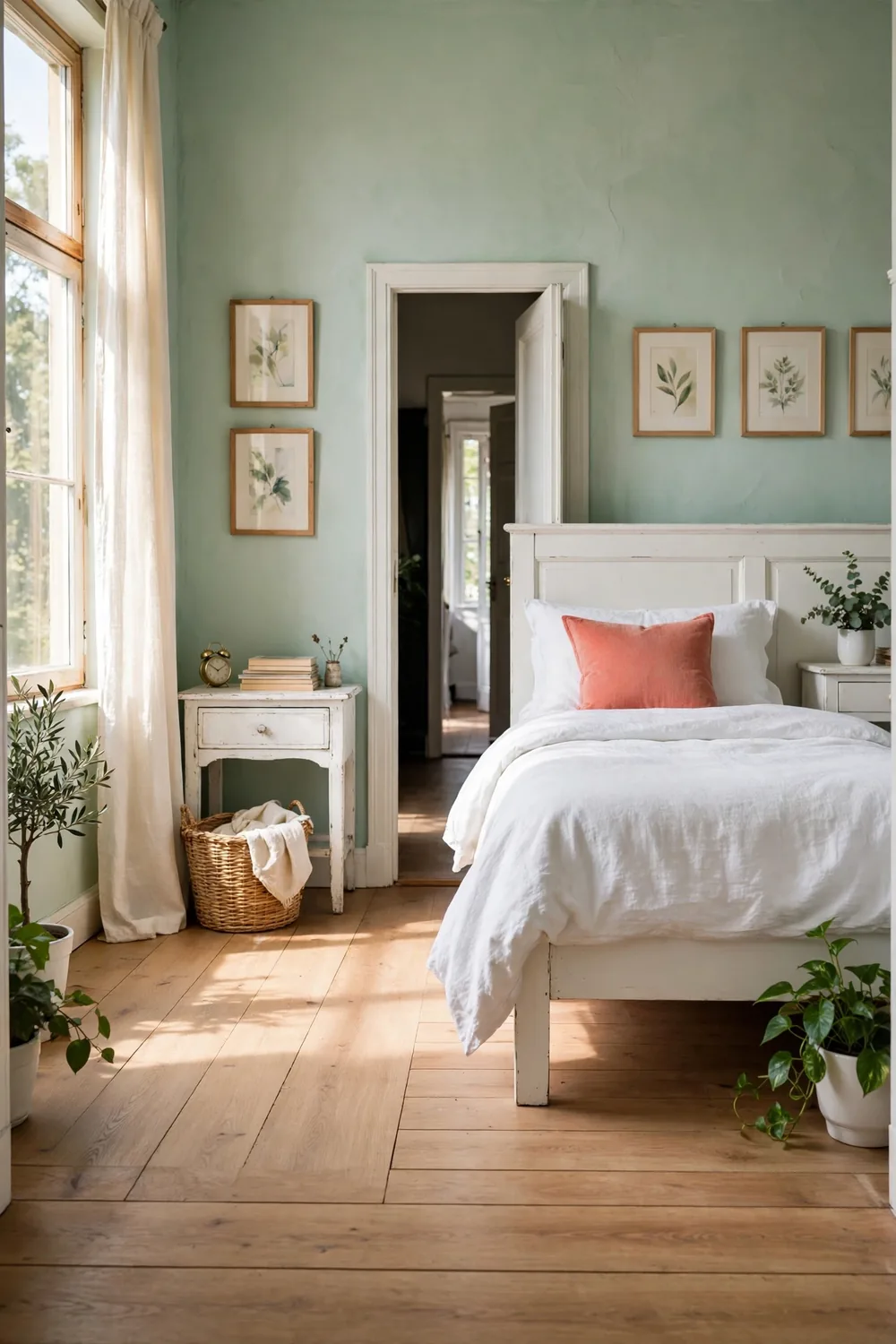
Soft mint is green with a breath of blue, fresh but never loud. It suits white furniture and light floors, and it glows in morning light. The color reads clean and airy, which helps small bedrooms feel bigger. Keep the mint muted; bright mint belongs in a playroom. Gray-based mints are the calmest of the family.
Pair mint with crisp white bedding and one coral or peach pillow for gentle contrast, and let light wood nightstands keep the look fresh. Plants in white pots echo the green without adding clutter. Avoid dark brown wood, which can weigh mint down. It is a happy color that still lets you sleep.
Layered Cream and Beige

A room layered in cream and beige feels like a deep breath. The palette works because every shade shares warm undertones. Mix pale cream walls with oatmeal bedding, then add a darker tan throw. The layers keep the room from looking flat. This scheme suits renters, since it needs no bold paint.
A tone-on-tone look is one of the simplest bedroom paint color combinations to get right. Mix linen and wool with rattan, and frame the window with deeper beige curtains. One dark accent, like a walnut frame or a black lamp, keeps the palette from floating away. The result is calm luxury without a single loud note.
Pale Sky Blue
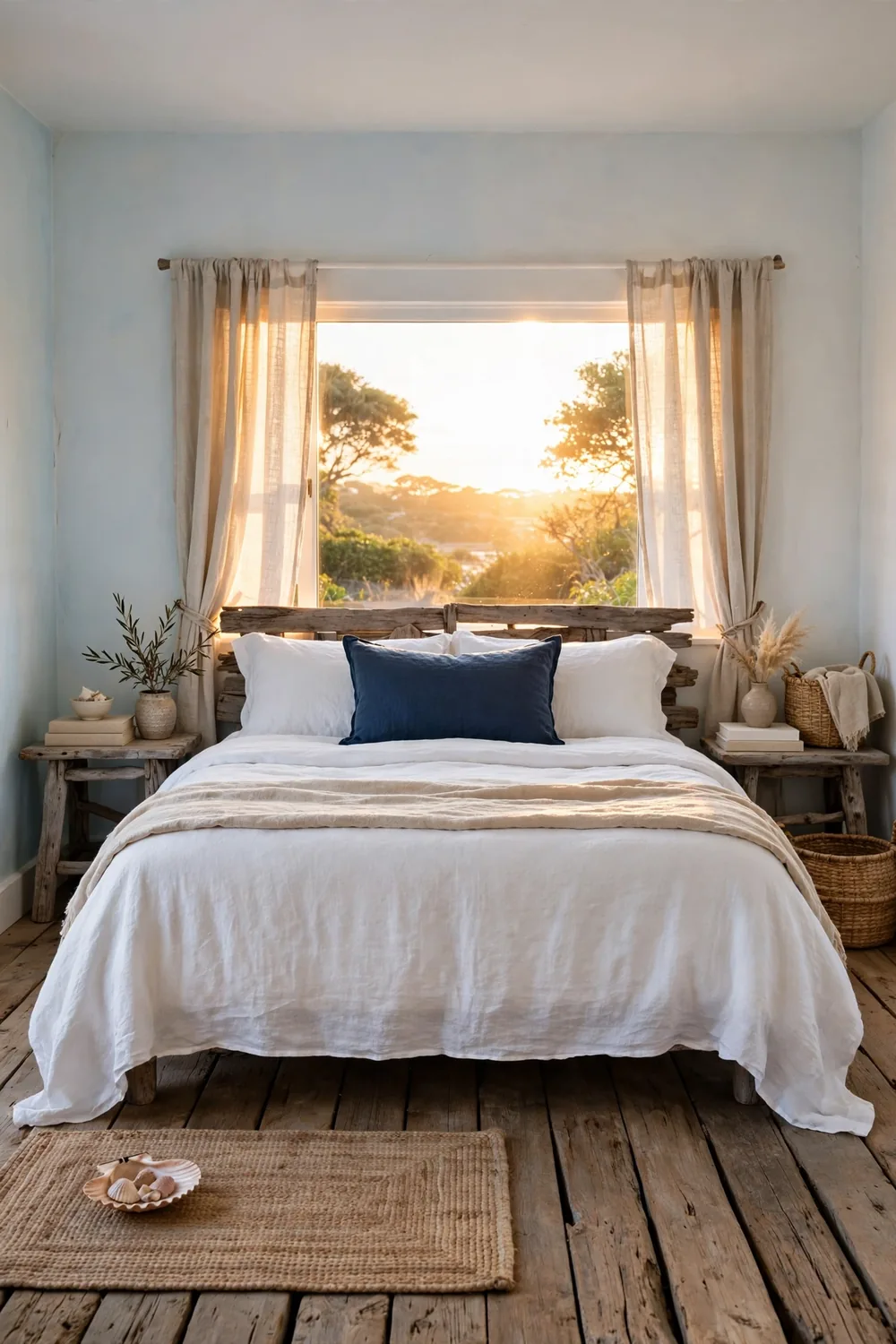
Pale sky blue lifts a bedroom the way morning light does. It is one of the airiest calm colors, and it makes low ceilings feel higher. White trim and white bedding keep it crisp, which suits coastal and cottage rooms best. In a room with gray light, pick a sky blue with a warm base.
Ground the airiness with natural fibers: a jute rug and linen curtains. Sandy beige or driftwood tones pair naturally with sky blue. A touch of navy in one pillow adds depth. Keep the ceiling bright white to bounce light. It is the color of a deep breath on a clear day.
Olive Green Accent Wall
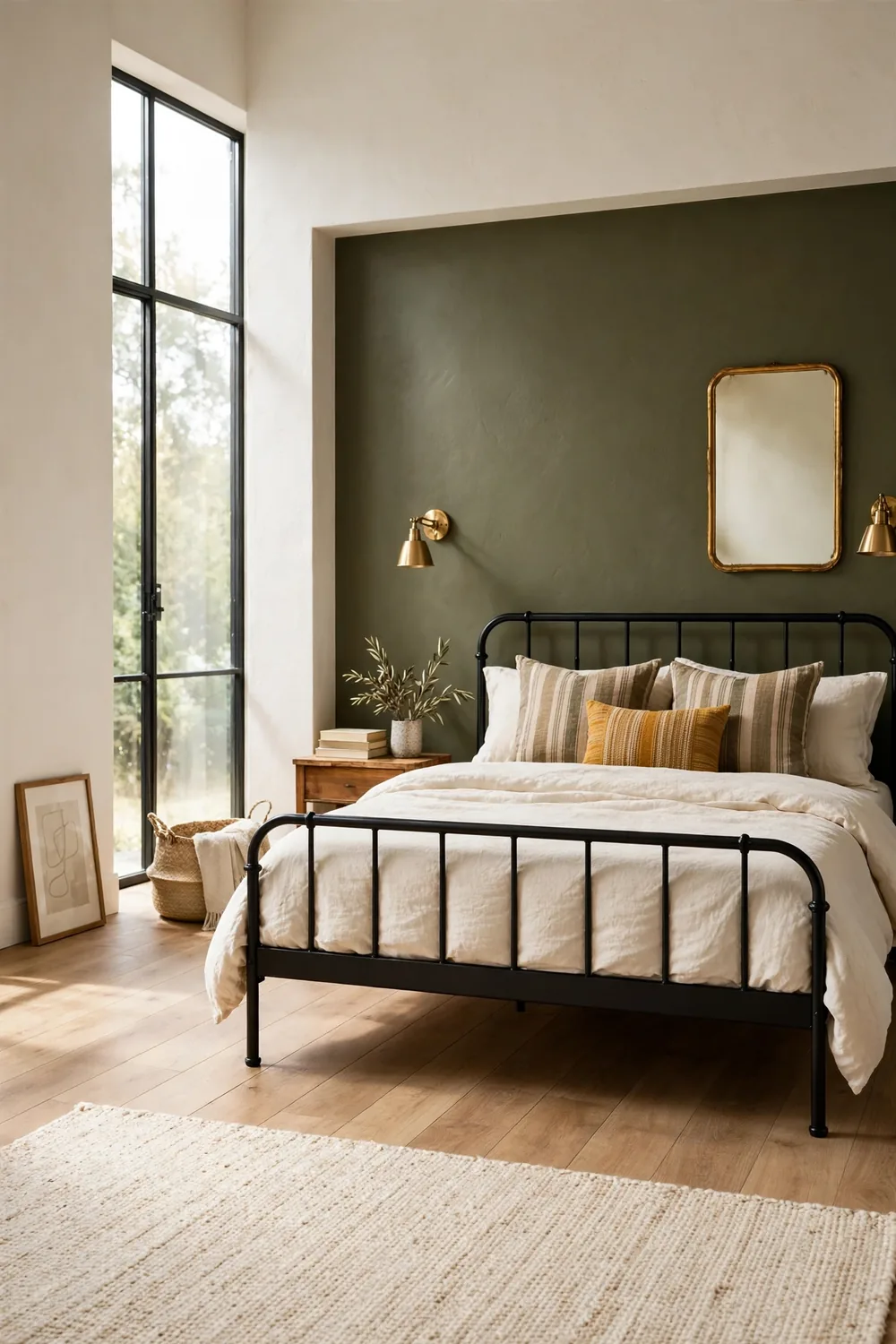
Olive green is earthy and grown-up, like sage with more confidence. One accent wall behind the bed grounds the whole room. It pairs with warm white and black metal. The color hides in shadow beautifully, so it suits rooms with moody light. It also flatters walnut and oak furniture.
Balance olive with plenty of cream to keep the room bright and restful. A cream rug and white bedding lighten the wall. Brass sconces or a gold-framed mirror warm it further. Keep patterns earthy: small stripes or plain weaves. Olive rewards simple rooms, so resist the urge to overdecorate.
Soft Apricot Glow
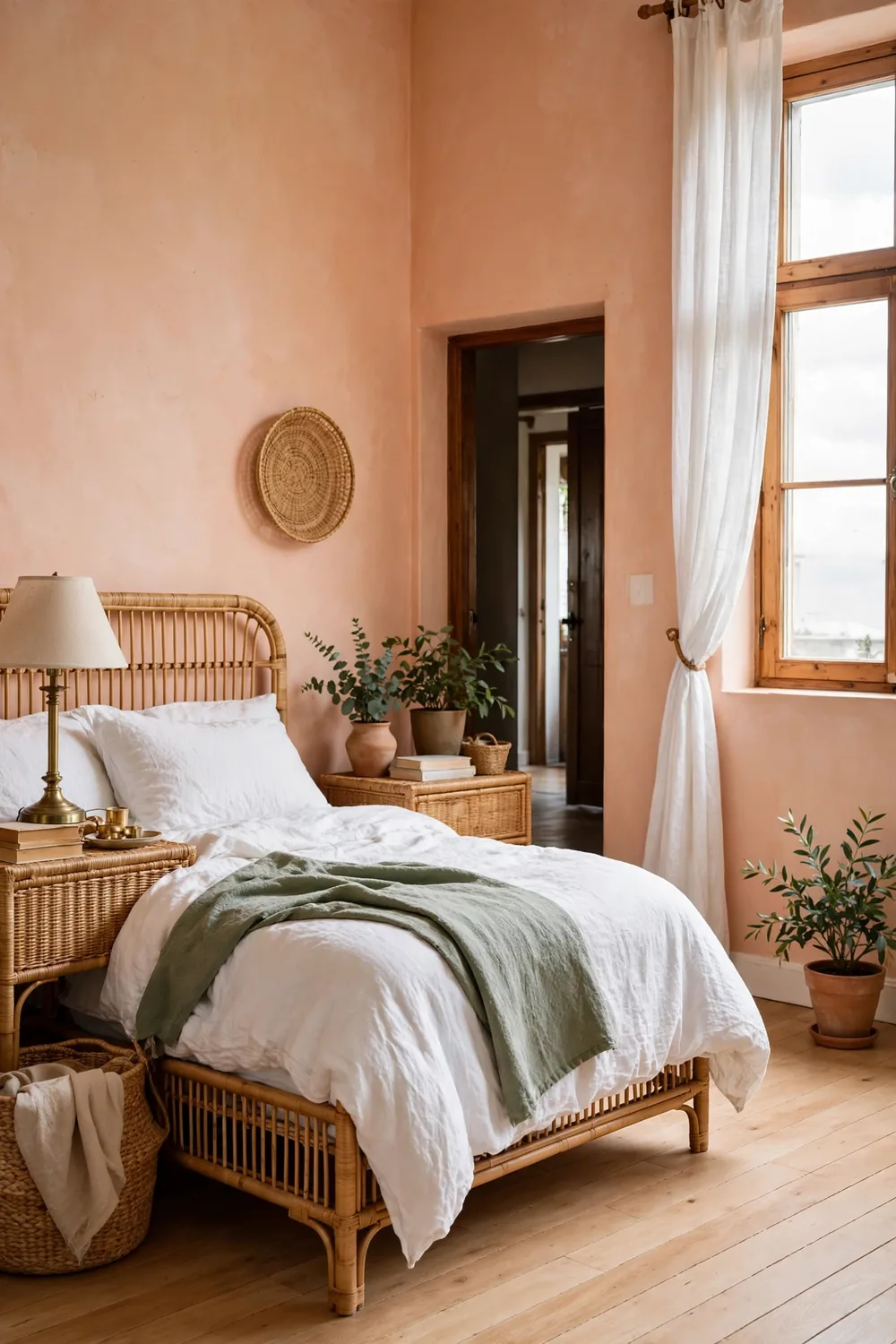
Soft apricot wraps a bedroom in morning-sun warmth, even on gray days. It is peach with restraint, and it flatters every skin tone. The color suits bohemian and cottage rooms. Pair it with cream and terracotta. Full apricot walls can feel sweet, so many readers prefer it on one wall.
Balance the sweetness with natural textures: rattan and raw wood. White bedding keeps the look fresh. A sage throw or a green plant cools the warmth just enough. Brass or gold accents glow against apricot. It is a cheerful color that still winds down well at night.
Charcoal Gray Accent Wall
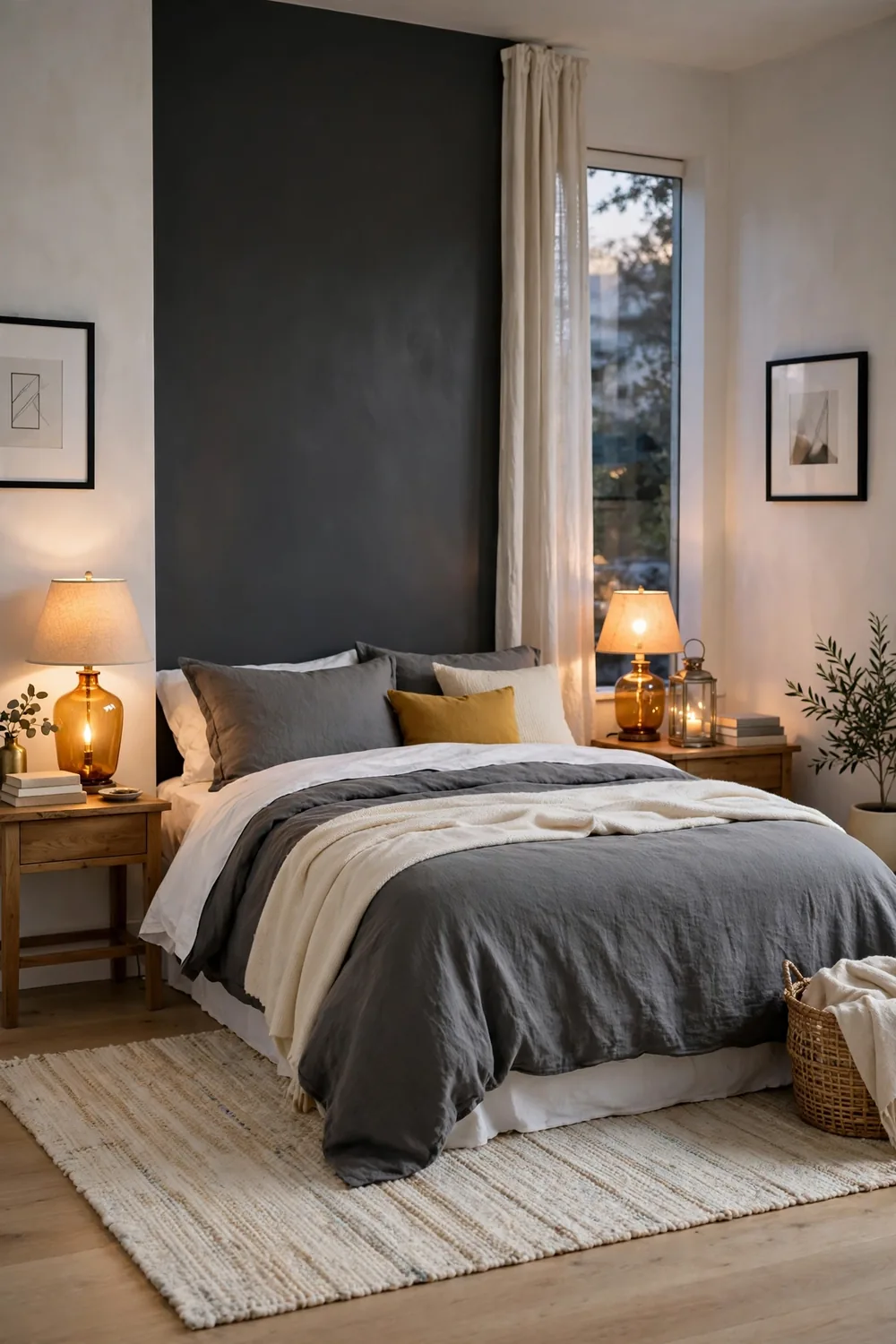
Charcoal gray is the dark neutral that makes a bedroom feel like a retreat. One wall behind the bed is enough; the rest stay light. It makes white bedding pop and flatters wood tones from pale oak to dark walnut. Good lighting matters here, so plan a strong lamp on each nightstand.
Soften charcoal with warm layers: a cream throw and amber-toned lamps. These warm notes keep the dark wall cozy. Avoid pairing it with cool blue bedding, which can feel chilly. Black frames and one brass accent complete the look. It is drama you can actually sleep in.
Light Gray Airiness

Light gray is the clean slate of calm colors. It recedes, so the bed and the window become the stars. The undertone decides the mood: warm gray feels cozy, cool gray feels crisp. Test your swatch beside the flooring, since gray picks up nearby colors. It suits modern and Scandinavian rooms best.
Wake gray up with one clear accent: blush or soft teal. Keep the accent to pillows and art so it stays calm. White bedding and a light rug keep the room bright. Layer gray bedding in two close tones for depth. It is the easiest color to redecorate around later.
Warm Sand Tones

Warm sand is beige with sunshine in it, and it makes a bedroom feel grounded and easy. It suits rooms with lots of wood, since the tones blend. The color hides wear well, which helps in a well-used room. Pair it with cream and soft white. It reads calm in both daylight and lamplight.
Add depth with terracotta or clay accents in one pillow or a vase. A jute rug and linen curtains keep the desert-calm mood. Dark wood furniture anchors the light walls. Plants in clay pots complete the earthy look. It is a forgiving color that welcomes almost any bedding.
Dusty Rose Accent

Dusty rose is pink aged with gray, romantic without the sugar. One accent wall behind the bed sets a soft mood. It pairs with cream and warm gray. The gray in it keeps the color calm after dark. White bedding lets the wall speak. It suits traditional and cottage bedrooms especially.
Keep the palette tight: rose and cream, warmed with brass. A gold mirror or brass lamp warms the pink. Sage or olive plants add a fresh note. Keep bright red out of this room. Dusty rose rewards restraint with real charm.
Deep Forest Green Accent Wall
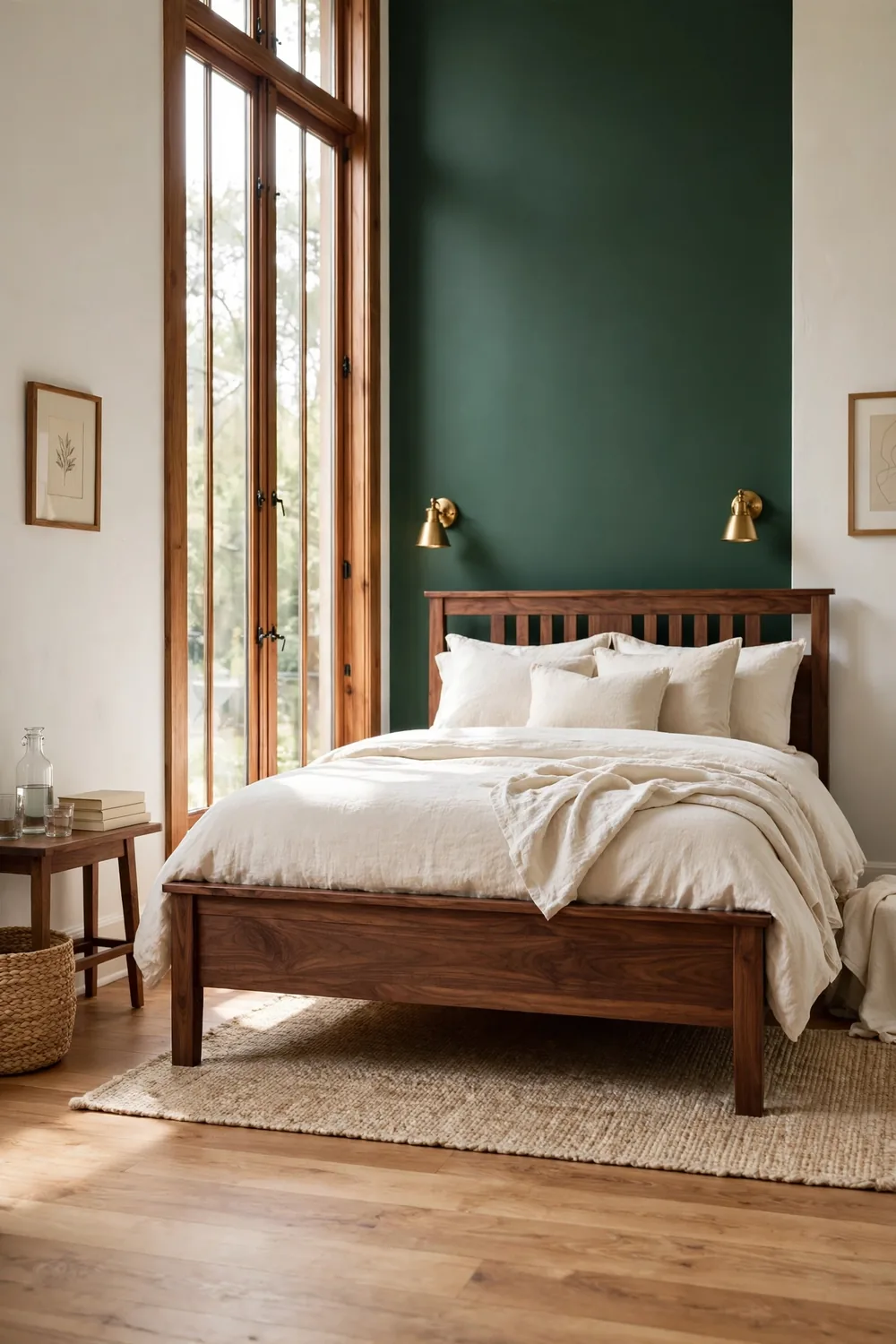
Deep forest green is the boldest calm color here, rich like a walk in the woods. One wall behind the bed creates a headboard effect without any furniture. It pairs with brass and cream. The color needs decent light, so keep the other walls bright. It suits craftsman and traditional rooms.
Let the green lead and keep everything else quiet. Cream bedding and a natural rug let the wall shine. Brass sconces glow against the dark green. A plant or two echoes the color. This is the pick for readers who want color with real presence and still sleep deeply.
Painting soon? Use our free paint calculator to find out exactly how many gallons you need for your room.
Frequently Asked Questions
Which bedroom color ideas work best in a small room?
Light, warm colors open a small bedroom best. Warm white and pale sky blue reflect light and push the walls back visually. Keep the ceiling the same color as the walls to blur the edges. One darker accent, like a navy pillow or a walnut frame, keeps the room from feeling washed out.
Should the bedroom ceiling be white or match the walls?
White ceilings lift the room and bounce light, which suits most bedrooms. Painting the ceiling the wall color wraps the room in a cocoon feel and works well with deep shades like navy or forest green. Match the ceiling when the room has good natural light. Keep it white in a small or dark room.
How many colors should a calm bedroom have?
Three is the sweet spot: one wall color, one bedding color, and one accent. More than that starts to feel busy, especially in a room meant for rest. Repeat each color at least twice so the scheme looks planned. If the room feels flat, add texture for depth.
What paint finish is best for bedroom walls?
Eggshell or satin finishes suit bedrooms best. They wipe clean without the glare of semi-gloss. Flat paint hides wall flaws but marks easily. Reserve semi-gloss for trim and doors, where durability matters.
Bedroom Color for Every Home
The calmest bedrooms are not the plainest ones. They use color with a clear job: quiet the walls and let the bed take center stage. Pick the shade that fits your light and your furniture, then give it room to work. Small samples on the wall beat big guesses every time.