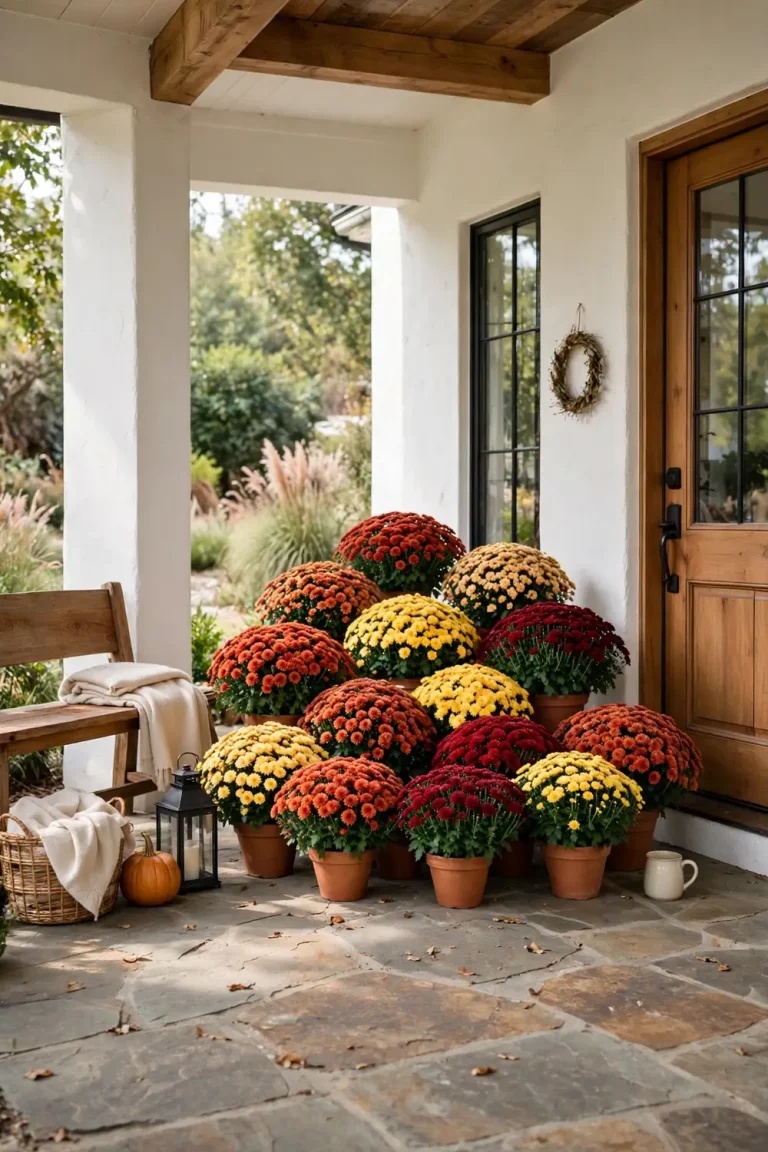

How to Make a Fall Simmer Pot
Cool October air slips through the open windows, and the house feels like it should smell like something truly wonderful. A fall simmer pot is the easiest way to get there. It’s just fruit, spices, and water warming on the stove, and within half an hour the whole house smells like an orchard in autumn.
You don’t need any special tools or skills for this. If you can slice an apple and boil water, you can make a fall simmer pot. The recipe below uses classic autumn ingredients, and you can change them based on what you have in the kitchen.
Time: 20 minutes | Difficulty: Easy
What You’ll Need
- 1 large stockpot or Dutch oven (at least 6 quarts)
- 2 medium apples
- 1 large orange
- 3 cinnamon sticks (about 3 inches each)
- 1 tablespoon whole cloves
- 2 star anise pods
- 3 sprigs fresh rosemary
- 1/2 cup fresh cranberries
- 1 teaspoon vanilla extract
- 8 cups water, plus more for topping up
- 1 cutting board, 1 sharp knife, and 1 wooden spoon
Step 1: Slice the fruit

Rinse the apples and the orange under cool water and pat them dry. Cut each apple into quarters and remove the cores, then slice the quarters into pieces about half an inch thick. Slice the orange into rounds about a quarter inch thick, leaving the peel on because the peel holds most of the citrus scent.
You don’t need perfect slices here. Rustic pieces look fine and release their scent just as well. Spread the fruit on the cutting board as you work so you can see what you have. Thicker orange rounds hold up longer in the hot water, while thin apple slices give up their sweet scent faster.
Step 2: Add the spices

Set your stockpot on the stove and drop in the cinnamon sticks first. Cinnamon is the backbone of this recipe, so don’t skip it or use less. Add the tablespoon of whole cloves and the two star anise pods. These three spices work together to make that warm, sweet scent people connect with autumn baking.
Keep the heat off while you add everything. You want all the dry spices in the pot before any water goes in, so they settle at the bottom and release their oils slowly as the water warms. Give the pot a gentle shake to spread them in one layer.
Step 3: Add the herbs, vanilla, and cranberries

Scatter the rosemary sprigs over the spices. Rosemary adds a fresh, green note that keeps the sweet spices from smelling like a candle. It sounds odd, but it works. Pour in the teaspoon of vanilla extract, which rounds out the scent and makes it smell like something baking in the oven.
Add the half cup of cranberries last. They float on top and pop gently as they warm, adding little bursts of tart fruit scent. Fresh cranberries work best, but frozen ones are fine too. Just toss them in straight from the bag. Nothing here needs to be exact, so don’t worry about perfect amounts.
Step 4: Fill the pot with water

Pour the 8 cups of water into the pot, right over the fruit and spices. The water should cover everything by at least an inch. If your pot is wider than it is tall, you may need an extra cup or two, and that’s fine. Everything should float freely with room to move.
Ingredients packed too tightly will not release their scent well. Set the wooden spoon beside the stove. You will use it to stir the pot once or twice during the day, which wakes the scent back up when it starts to fade. Cold water from the tap is perfect here. There’s no need to heat it first.
Step 5: Bring it to a gentle simmer
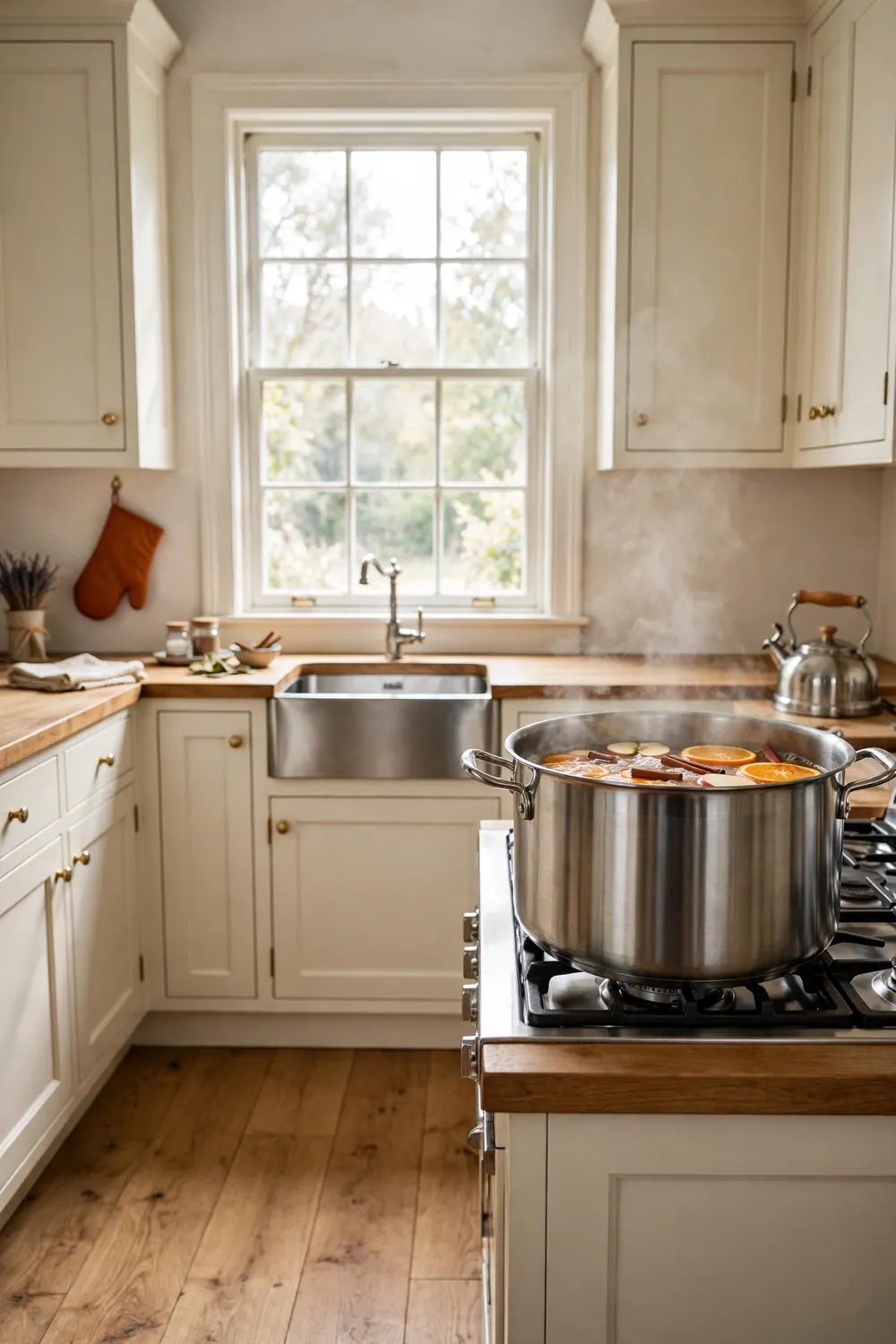
Place the pot on a burner and turn the heat to medium. Stay close while it warms up, which takes about 10 minutes. Watch for the first lazy bubbles breaking the surface. A hard boil cooks the fruit too fast and turns the scent sharp, so low and slow is the goal.
As soon as you see gentle movement in the water, turn the heat down to low. The surface should barely tremble. This is the sweet spot where the fruit and spices release their scent slowly for hours. Never leave the stove on and walk away while the pot is heating up.
Step 6: Keep it going all day
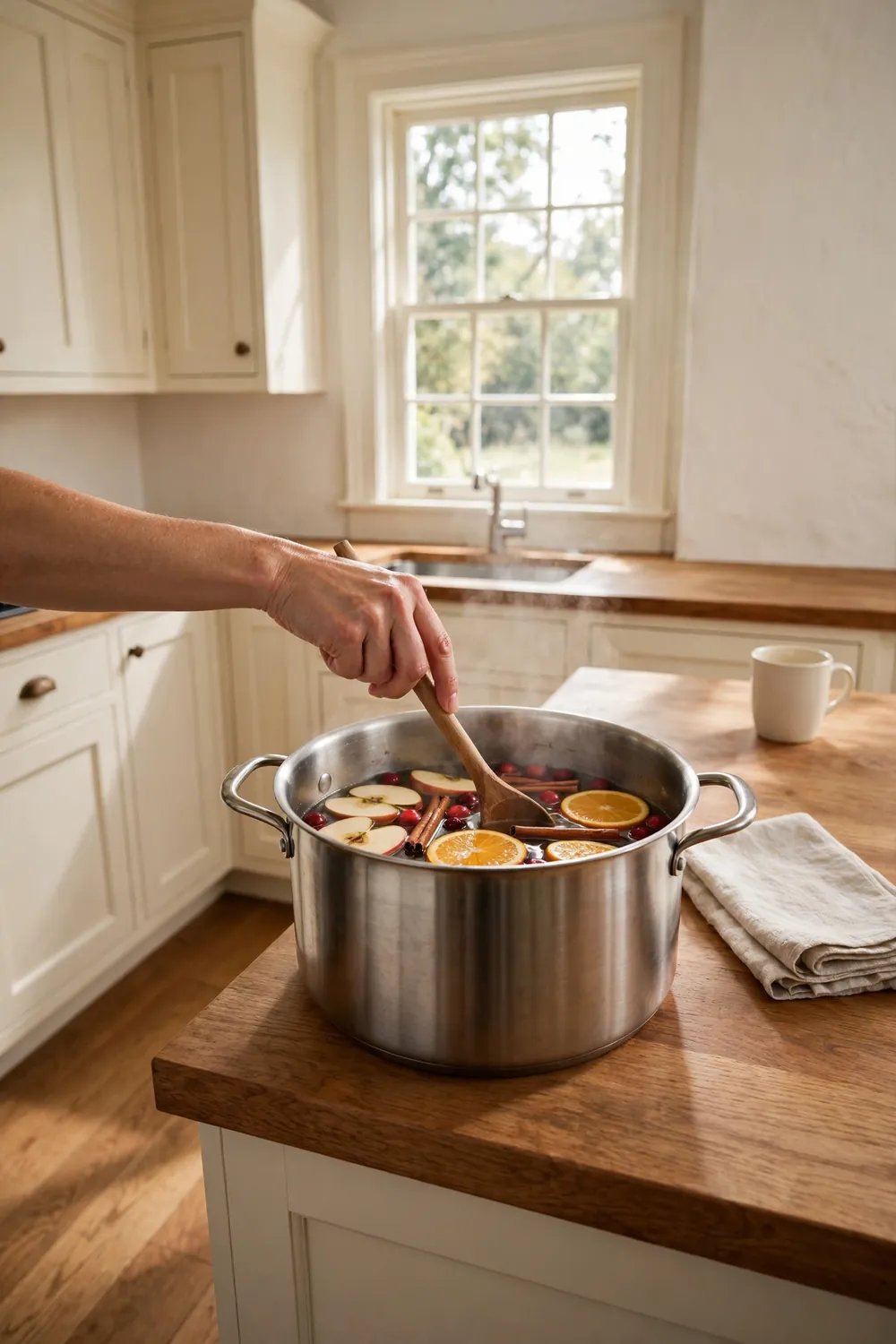
Once the pot is at a low simmer, you can go about your day. Check the water level every hour or so. The water steams away slowly, and you never want the pot to boil dry. Top it up with hot tap water whenever it drops by an inch or two. Stir with the wooden spoon each time you check it.
This moves the fruit and spices around and refreshes the scent. The same pot will scent your home for a full day, and often into a second day if you cool it, cover it, and keep it in the fridge overnight. Always turn the burner off when you leave the house or go to bed.
Keeping the Cost Down
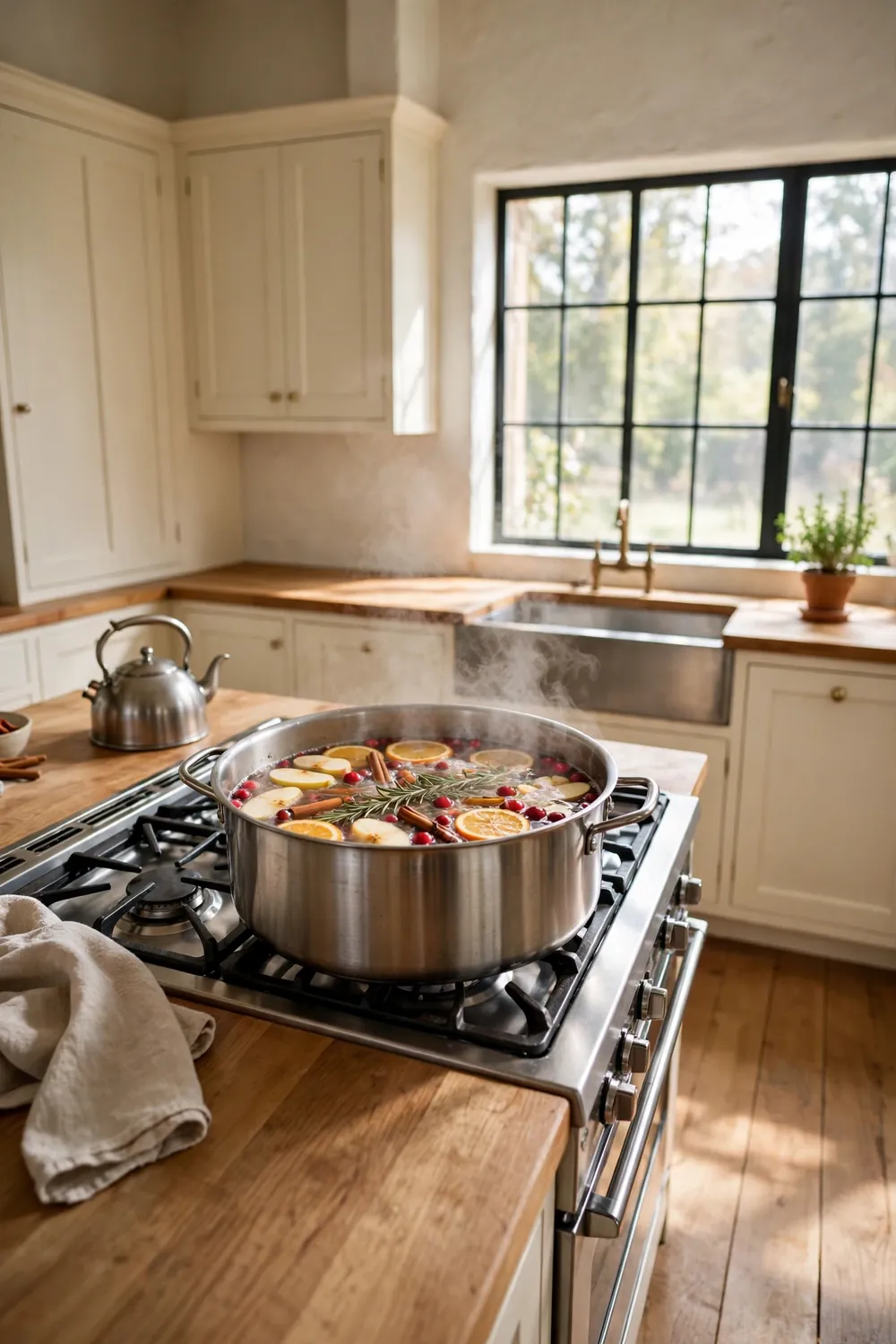
Simmer pots are already cheap to make, but a few habits keep the cost close to zero. Save fruit that is past its best for eating. Soft apples, orange halves left from breakfast, and cranberries from the back of the fridge all work perfectly. Buy spices in bulk bags. A big bag of cinnamon sticks costs less per stick and lasts through many pots. Grow a small rosemary plant on the windowsill for free sprigs all winter.
When the scent fades after two days, strain the liquid and pour it into ice cube trays. Frozen scent cubes melt into your next pot and stretch every batch a little further.
Frequently Asked Questions
How long can a simmer pot stay on the stove?
It can simmer all day as long as someone is home and the water level stays up. Check it every hour and add hot water when it drops. Turn the burner off whenever you leave the house or go to sleep, no matter how much water is left.
Can you reuse the same ingredients the next day?
Yes, for one more day. Let the pot cool, cover it, and store it in the fridge overnight. The scent will be softer on day two, so add a fresh cinnamon stick or a few new cranberries to wake it up.
Is a simmer pot safe to use around kids and pets?
The pot itself is just hot water, fruit, and spices, so the steam is harmless. Keep little hands away from the hot pot and the stove edge, the same as with any cooking. Leave essential oils out entirely if you have cats or small pets that chew, since concentrated oils can irritate them.
What are good substitutes for fresh fruit?
Dried orange and apple slices work well and last longer in the pot. A splash of apple cider or cranberry juice adds scent fast when you’re short on fruit. Even a spoonful of pumpkin pie spice from the pantry will do in a pinch.
Give It a Try
That’s all it takes. A pot of fruit and spices on the stove, and your home smells like the best parts of autumn for the whole day. Try different combinations as the season goes on, and find the mix your family loves most.