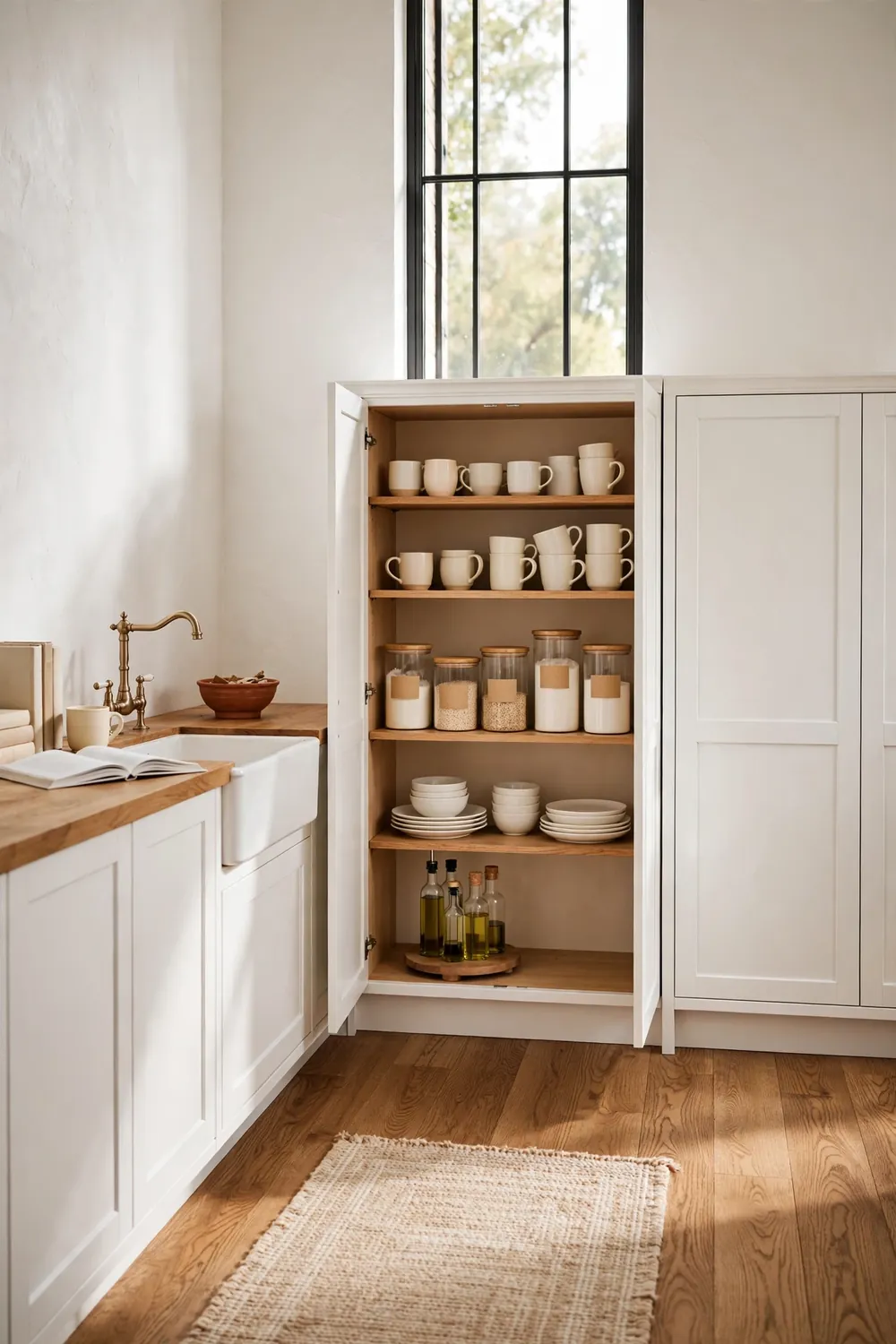
17 Kitchen Cabinet Organization Ideas That Double Your Space
Running late for work, you swing open the cabinet for the coffee filters. A plastic lid slides off the shelf and lands behind the trash can. The cereal box tipped sideways overnight, so the door sticks. You grab what you need and leave the mess for later.
That morning scramble usually means the cabinets need a better system. Kitchen cabinet organization works best when every shelf has a job and every item has a home. Small changes like risers, turntables, and door racks can double what a cabinet holds, with no renovation needed.
Pick one cabinet this weekend and try the idea that fits it best. Most use simple products from Target or Walmart and take less than an hour to set up. By the next morning rush, that cabinet will feel like the calmest corner of the kitchen.
1. Add Stackable Shelf Risers
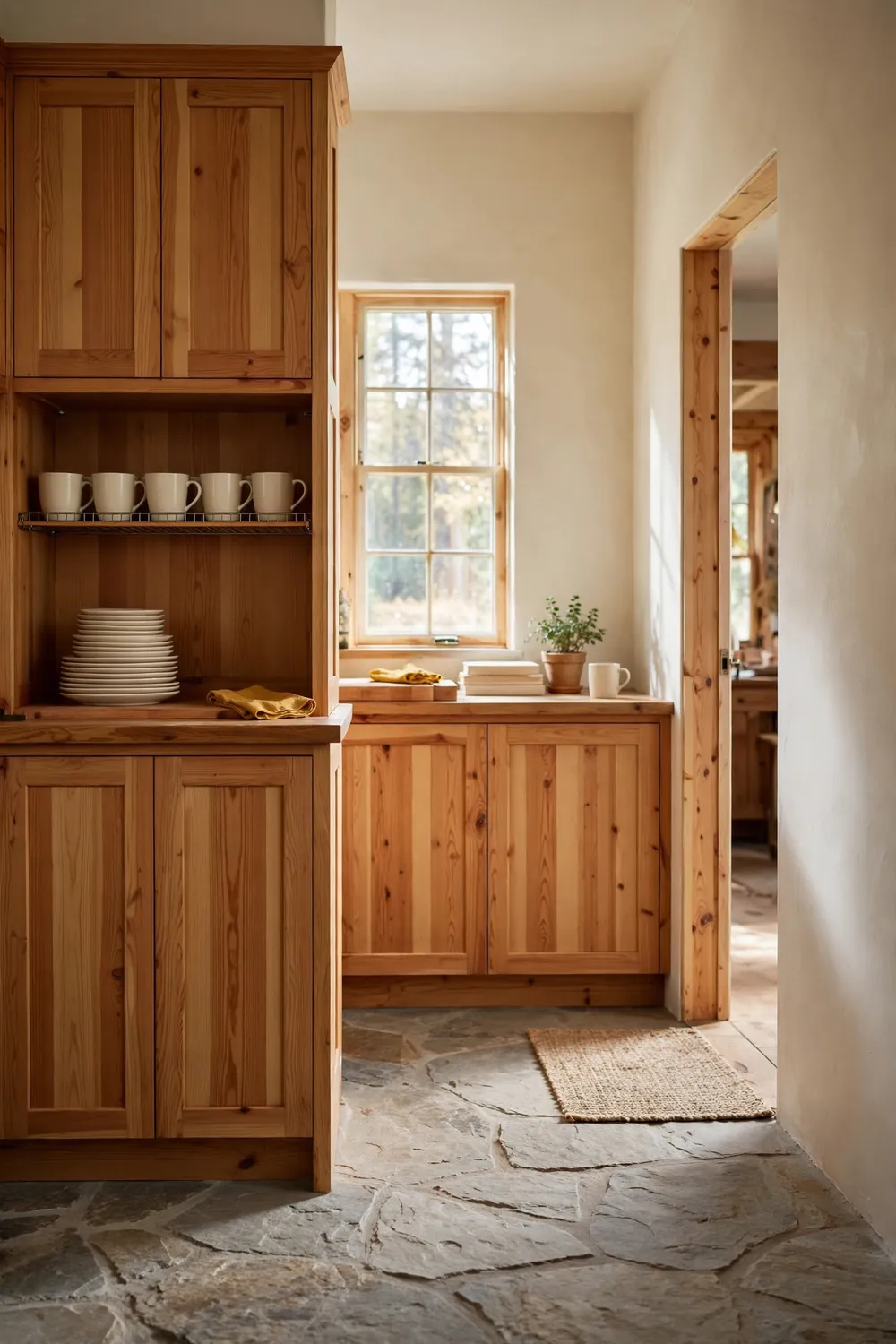
Upper cabinets waste the top half of every shelf. Dishes sit in one short row while dead air fills the space above. A stackable shelf riser adds a second level for mugs or bowls. Wire risers cost a few dollars at dollar stores and Target, and they need no tools to set up.
Use the riser for daily dishes, since crumbs fall through the wire for a quick wipe. Keep backup sets and rarely used pieces on the shelf below. One riser holds mugs above and saucers below, turning one crowded shelf into two tidy zones.
2. Slide-Out Drawers for Deep Base Cabinets
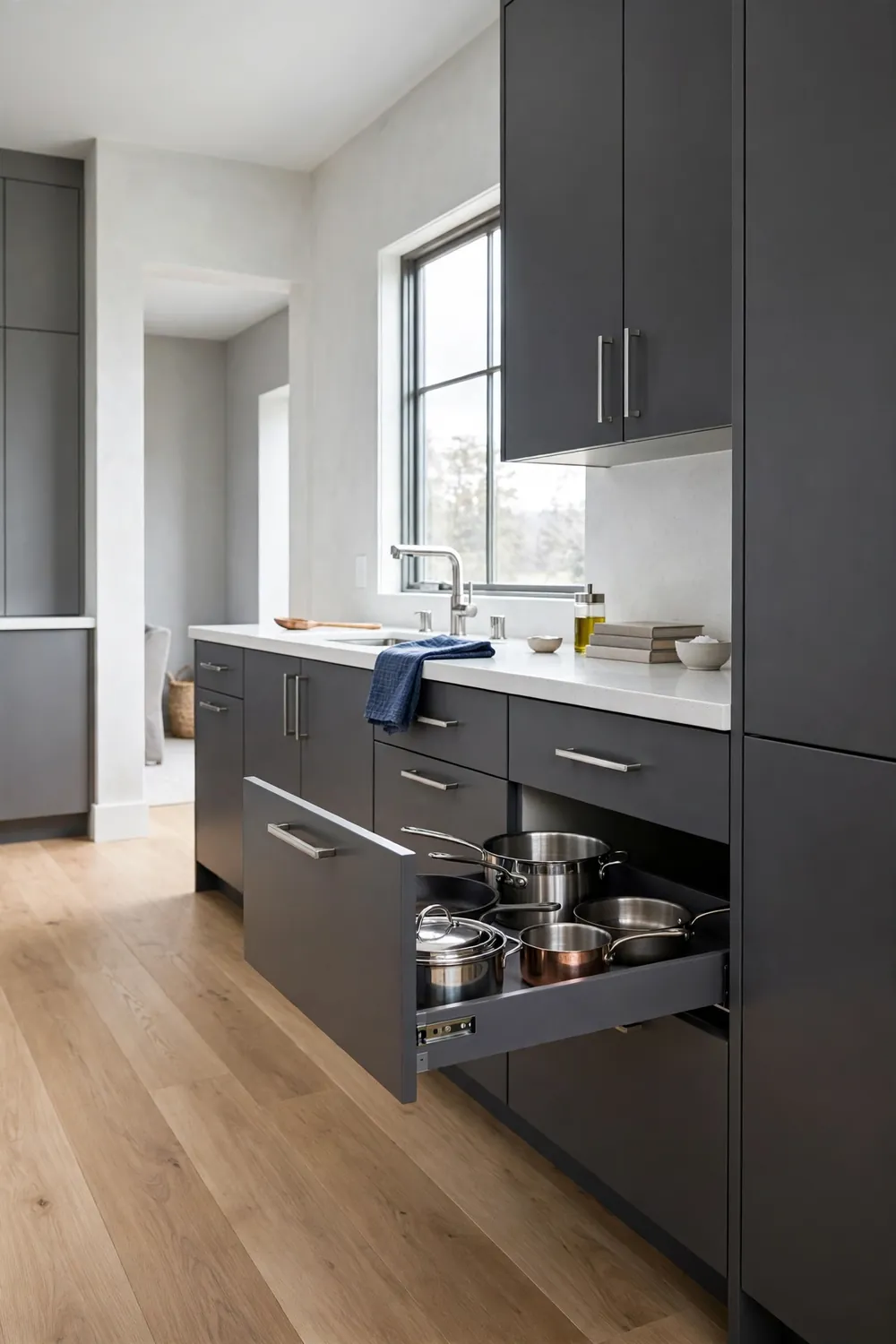
Deep base cabinets swallow pots and pans at the back. No hand can reach into the dark corner. A slide-out drawer tray brings the whole shelf out to you. The back stockpot becomes as easy to grab as the front skillet. Look for trays that screw to the cabinet floor, sold at any hardware store.
Measure the inside width of your cabinet before you buy. Leave a finger of space on each side so the tray glides freely. Heavy pots go on the bottom tray and lighter lids on top. No more kneeling on the floor to dig through the dark back corner.
3. Clear Canisters With Simple Labels
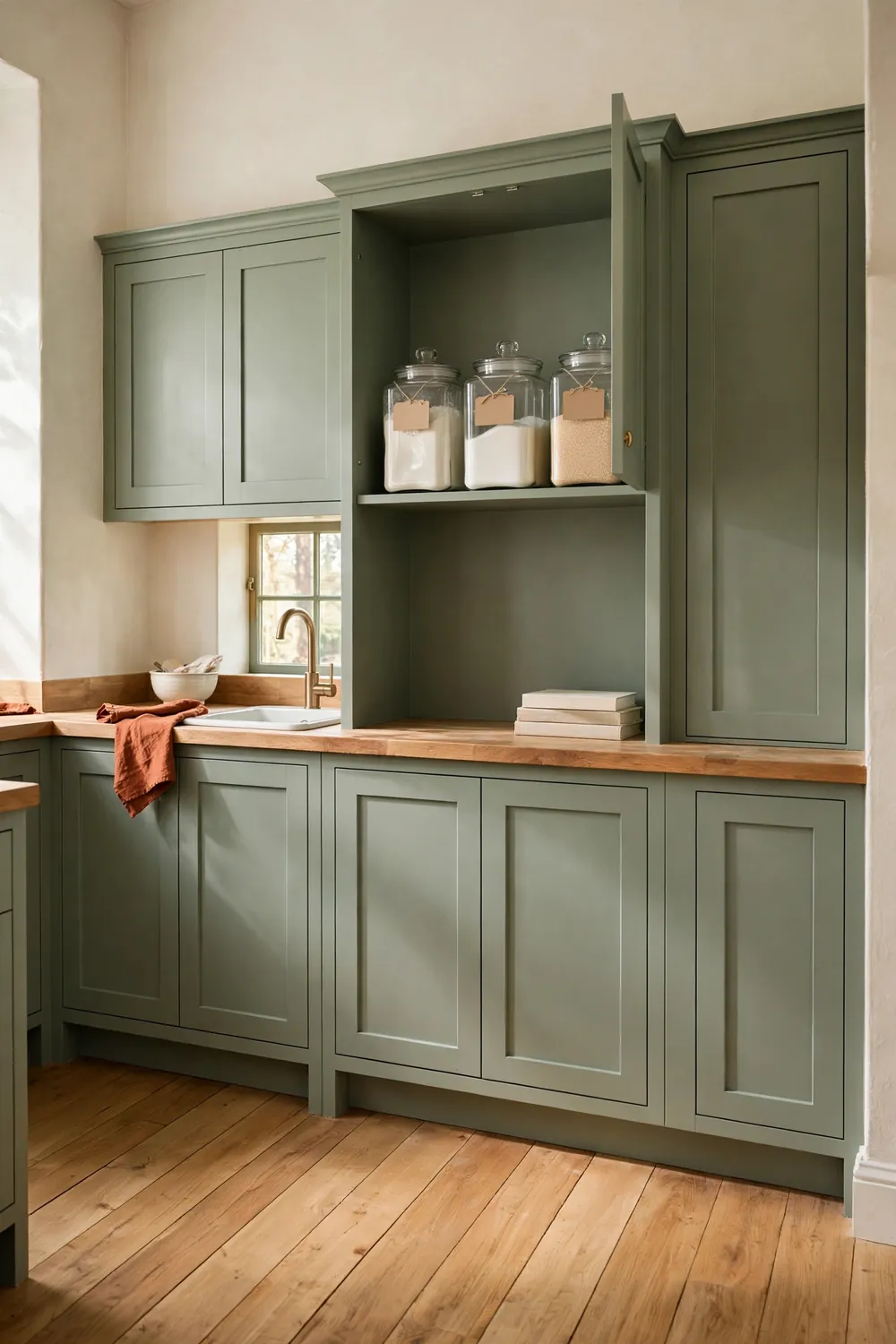
Half-empty bags of flour and rice flop over and spill. You can never tell the brown sugar from the whole wheat at a glance. Clear square canisters line up neatly and show exactly what is inside. A simple label on the front ends the guessing. Square shapes waste less space than round ones on a shelf.
Decant one group at a time so the job stays small, starting with baking supplies. Keep the scoop inside the flour and sugar canisters so it is always at hand. This pantry cabinet organization trick makes it look calm and shopping lists easier to write.
4. A Turntable in the Corner Cabinet

Corner cabinets are the black holes of the kitchen, where oil bottles disappear behind the vinegar. A turntable spins the whole shelf around with one easy turn. It all comes to the front. The raised edge keeps bottles from sliding off.
Group cooking oils and vinegars on one turntable near the stove. Keep sauces on a second one if you have another corner. Wipe the turntable with a damp cloth once a month, since drips collect there. This small tray does more for a corner cabinet than almost any other product.
5. Racks on the Inside of Cabinet Doors
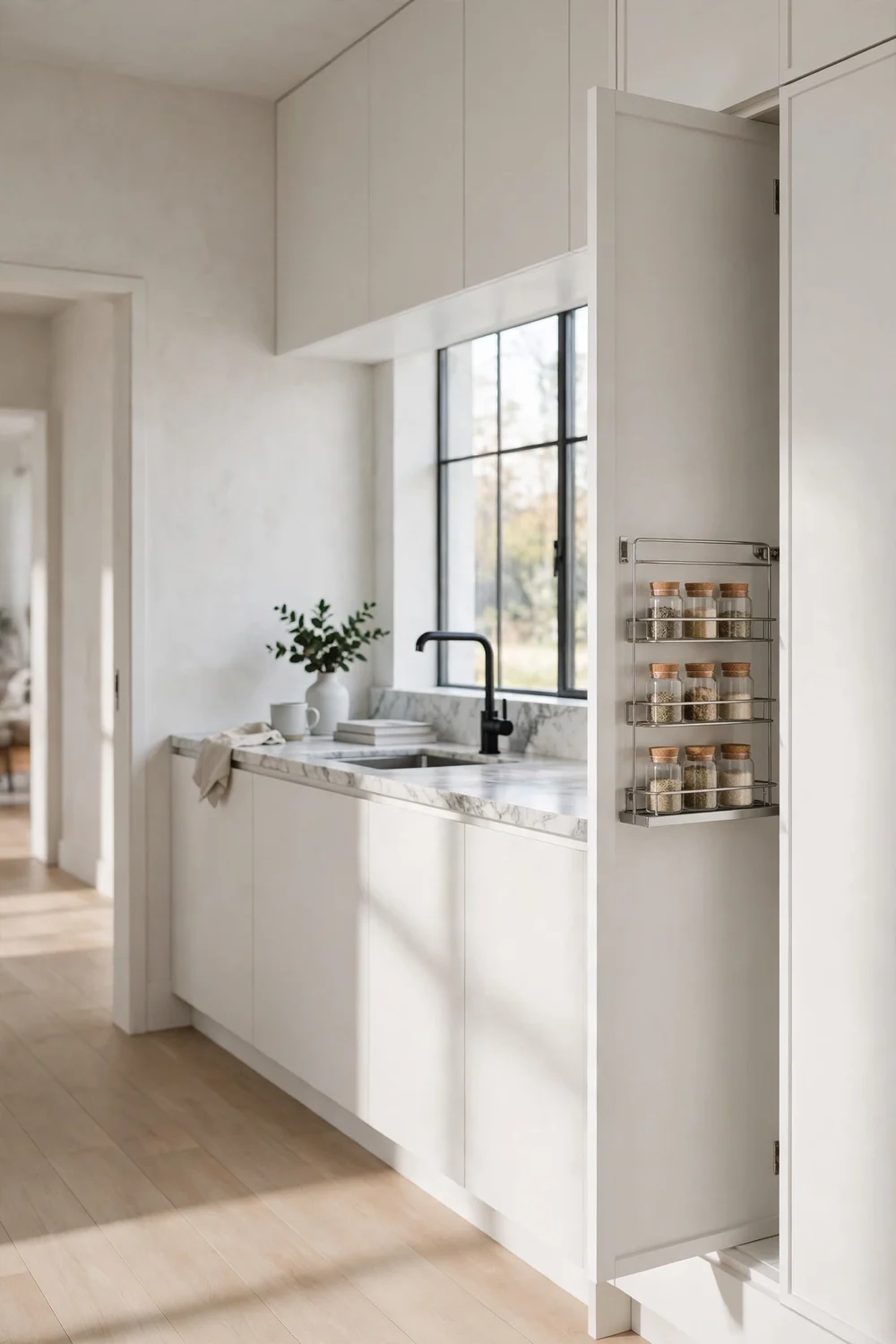
The inside of a cabinet door is free storage space that most kitchens never use. A slim wire rack hooks over the door or sticks on with its own glue. It holds spice jars and wrap boxes without touching a single shelf. Renters love this trick because nothing gets drilled.
Check the gap between the door and the shelf before you buy. The door must still close flat with the rack in place. Light items work best here, since heavy jars can strain the hinges over time. Move everyday spices onto the door nearest the stove, and dinner prep gets faster with flavors within reach.
6. Tension Rods for Pan Lids
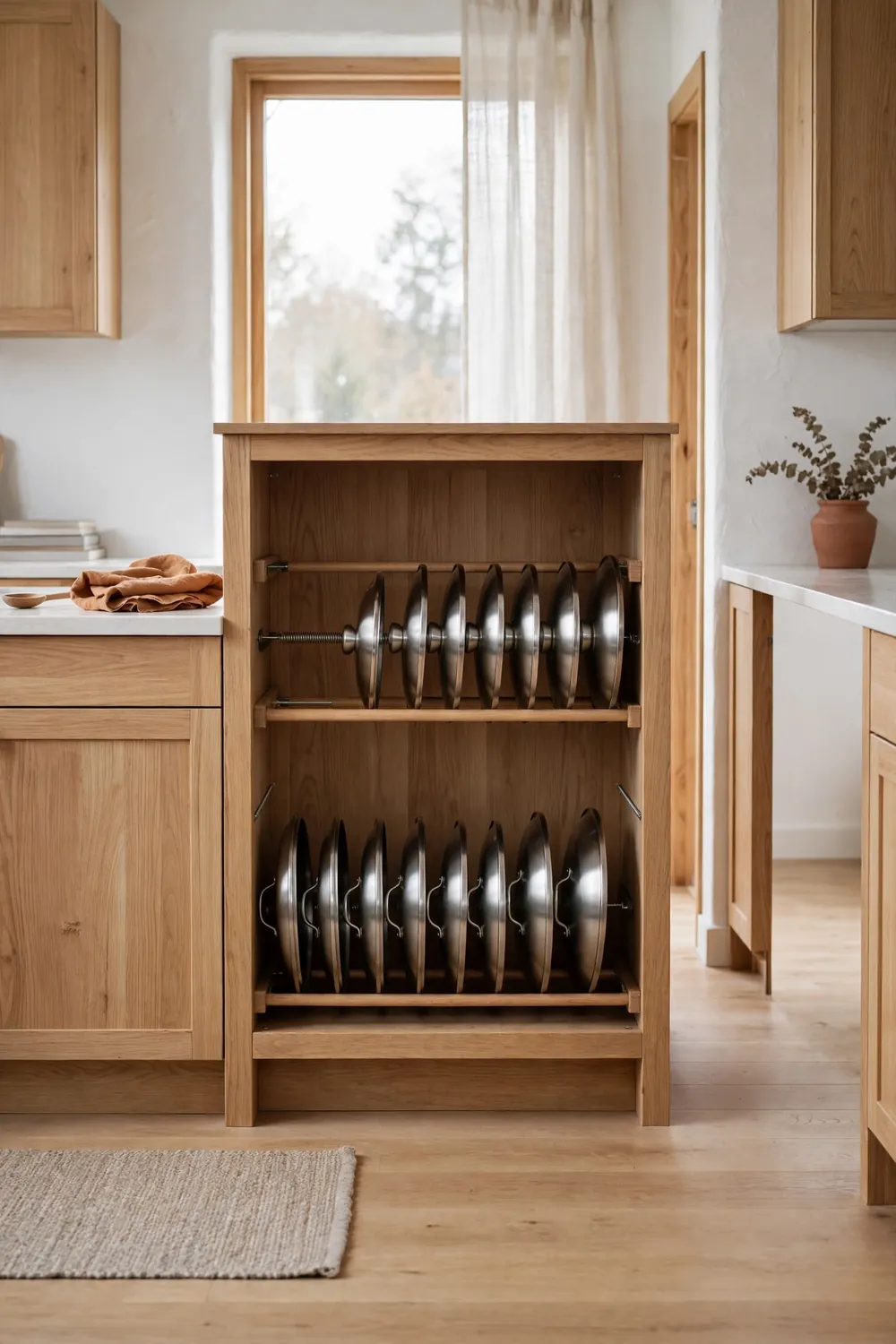
Pot lids are the hardest shape to store, since they never stack and always slide around. A spring tension rod wedged across a deep cabinet fixes this, turning the space into a filing system for lids. Each lid stands upright in its own slot. Two rods make two rows for a full set.
Measure the cabinet depth before you shop. Buy rods a little longer than that number so the spring holds firm. Stand the lids with handles facing up, so you can lift one out without moving the rest. Pans stack below or beside the rods, and it all goes quiet.
7. Sliding Baskets for Produce and Snacks
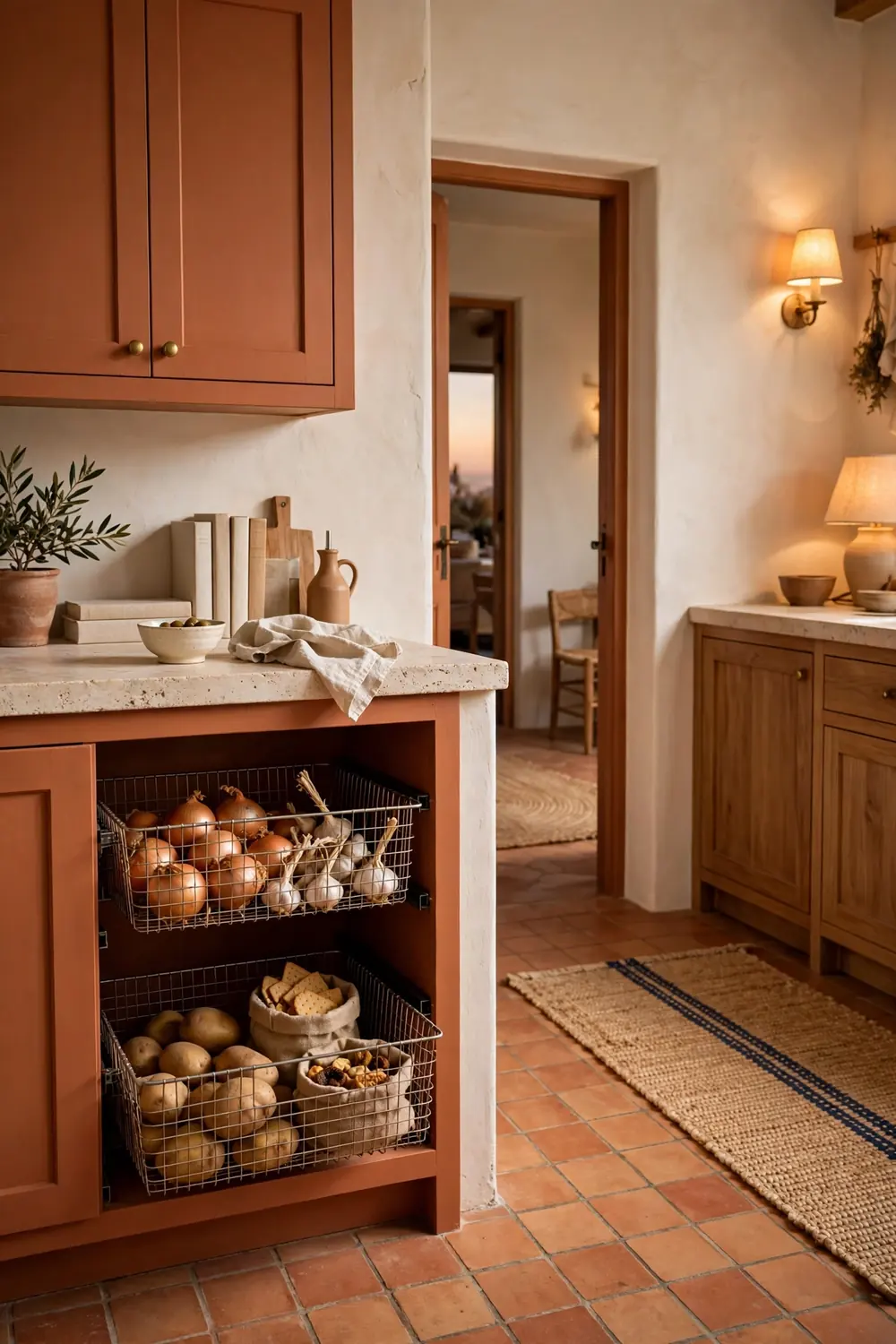
Lower cabinets turn into jumbled piles fast when bags of onions and potatoes share one dark shelf. A sliding wire basket gives each group its own pull-out home. The open weave lets air reach produce, so it stays fresh longer. Stack two baskets to use the full height.
Keep onions and potatoes in separate baskets, since onions make potatoes sprout faster when they sit together. Line the baskets with a small cloth so little wrappers do not fall through the wires. Pull the basket out fully when you cook. Putting groceries away takes half the time.
8. Hooks Under the Shelf for Mugs

Mugs eat shelf space fast, since each one needs its own circle of room. Small hooks screwed or stuck under a shelf solve this. Mugs hang by their handles in a neat row. The whole shelf below stays free for plates or bowls. A row of six hooks holds a full set in dead air.
Space the hooks wide enough for chunky mugs so they do not knock together. Hang everyday mugs in front and guest mugs toward the back. The cabinet starts to look like a little cafe shelf. The space below stays open for plates and bowls.
9. Magazine Holders for Wraps and Foil
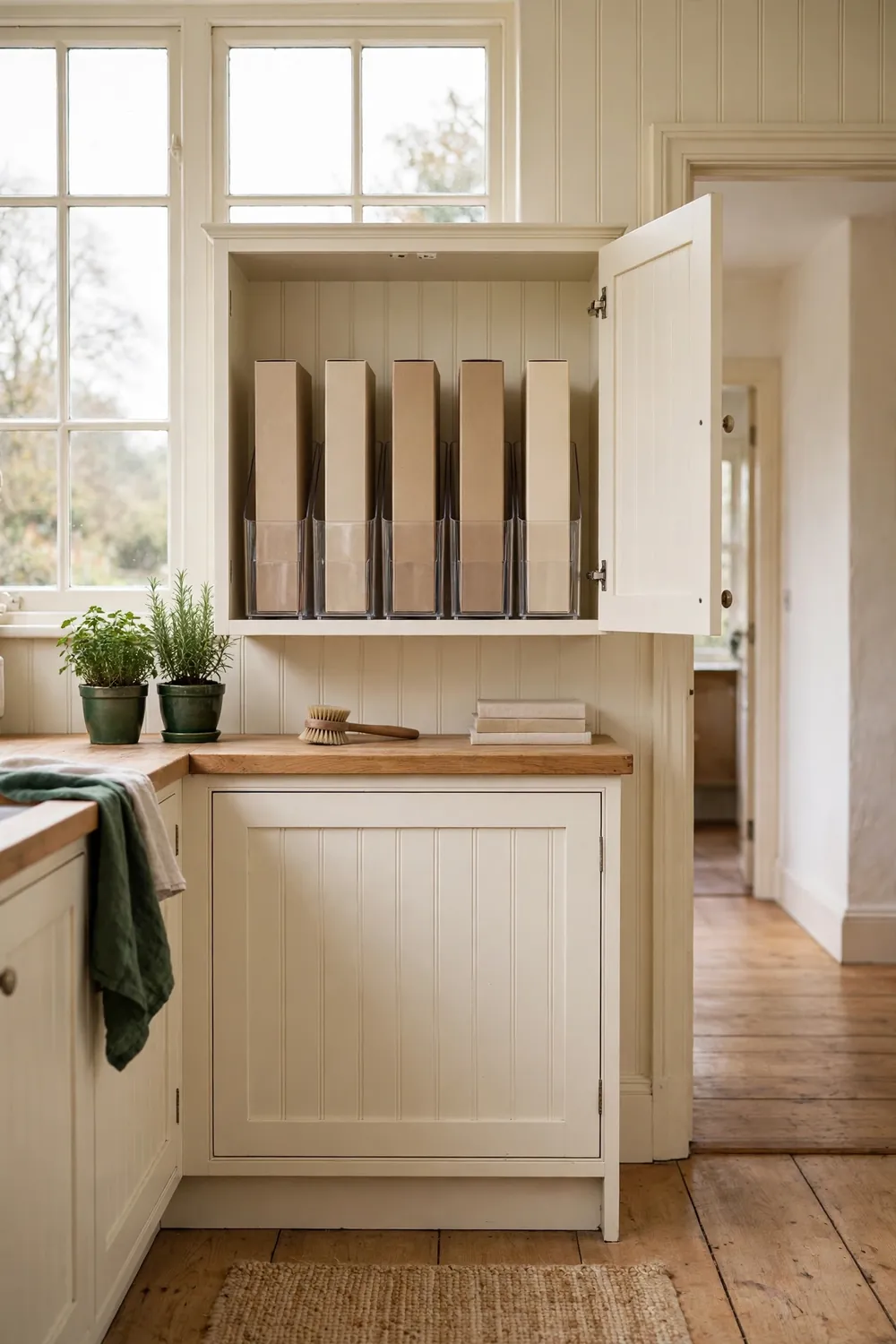
Tall boxes of cling wrap and foil are awkward to store, since they slide around any shelf you put them on. A clear plastic magazine holder stands each box upright like a file, so you can pull one out without the rest toppling. Line up a row of holders on a deep shelf or inside a roomy wall cabinet.
Label the front of each holder so boxes go back in the right slot. This also works for cutting boards and small baking pans stood on their sides like files. It is one of the cheapest kitchen cabinet storage upgrades. Holders cost about a dollar each at dollar stores.
10. Tiered Steps for Canned Goods
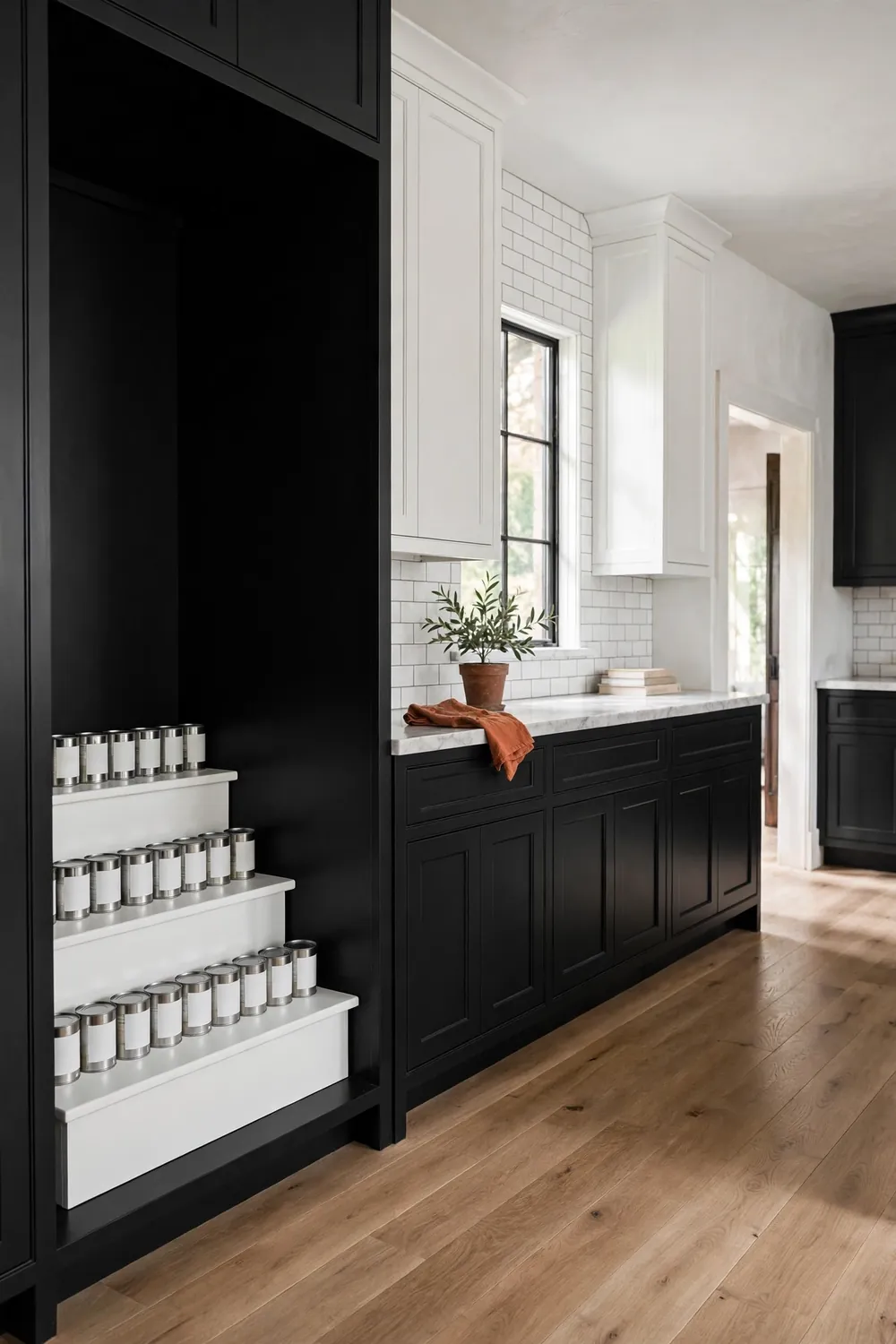
Cans in a single row hide the back row completely. You buy a third can of tomatoes you already own. A tiered step shelf lifts the back rows like stadium seats, and every label faces you at a glance. Three tiers fit most standard cabinet shelves.
Sort cans by type as you load the steps, with soups on one step and veggies on another. The shelf starts to read like a tiny store. Check the dates while you load, and put the oldest cans in front. Your grocery list gets shorter when you can see what you have.
11. Pegboard Inserts for Dish Drawers
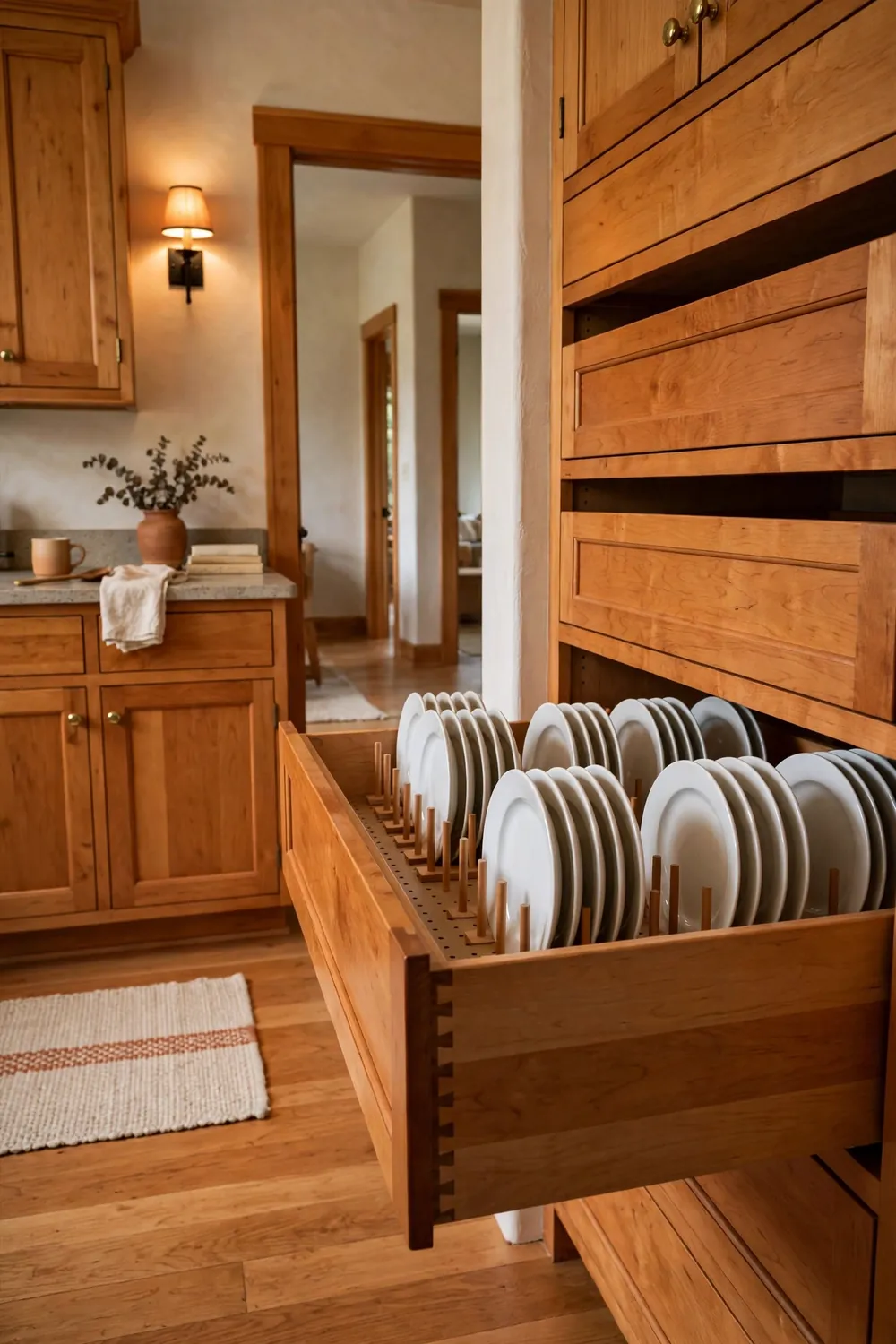
A deep drawer full of stacked plates chips edges. You lift the whole pile to reach the bottom plate. A pegboard insert with short dowels fixes this, letting you set plates and bowls on their sides in neat rows. Each piece gets its own slot, and the pegs move to fit your exact dishes.
Place the insert and set your dishes in. Push the pegs around them to lock each piece in place. Heavy dinner plates go near the front where the drawer glides strongest. Bowls nest in pairs behind the plates. Unloading the dishwasher takes a minute with every piece marked.
12. Under-Shelf Baskets for Small Packets
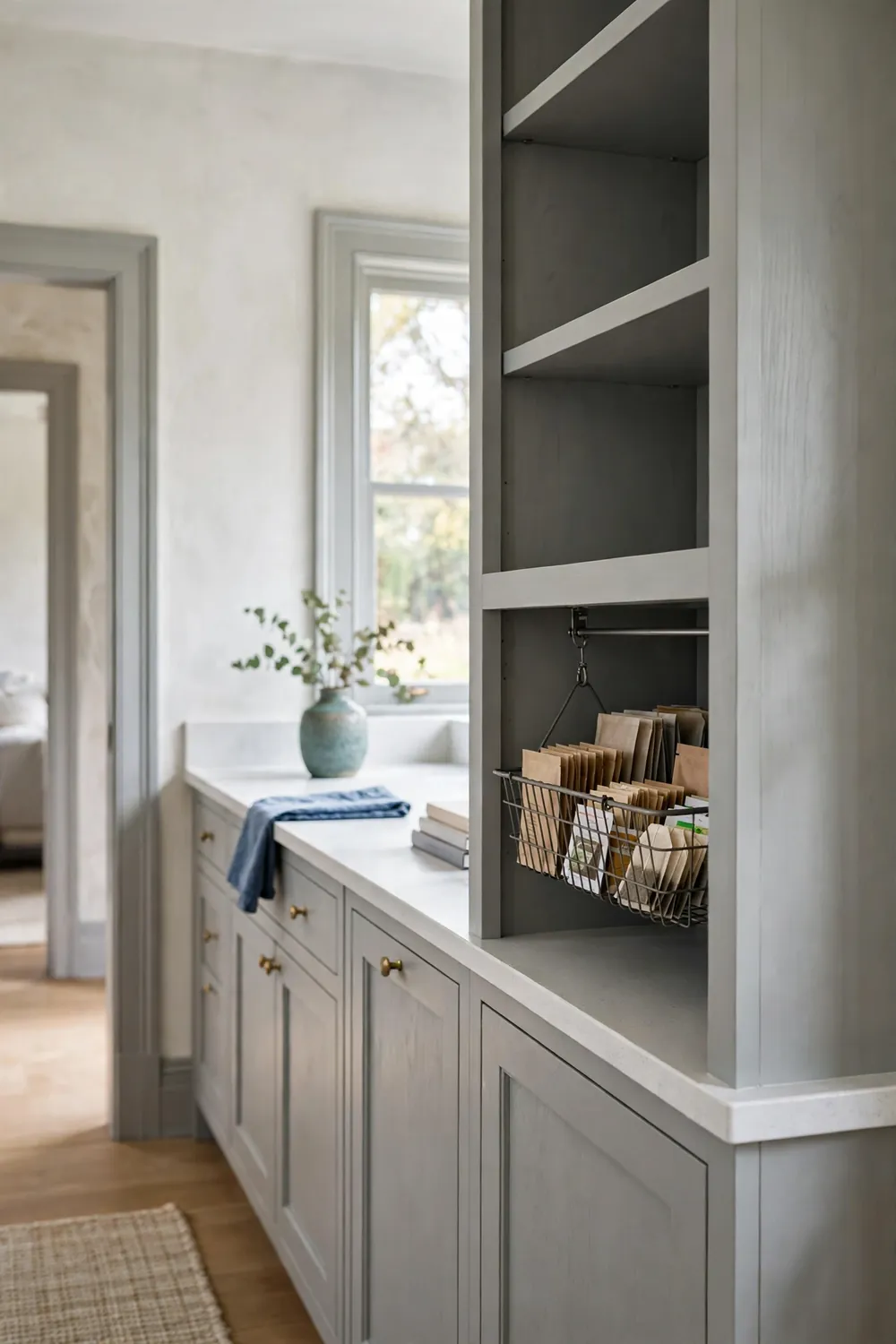
Tea bags and spice packets vanish into dark corners, and tall shelves swallow these small things whole. A wire basket that clips under a shelf fixes this, creating a hanging drawer out of thin air. The basket slides out for a look and pushes back in one motion.
Keep one basket for teas and cocoa. Place another near the front for lunchbox snacks. Do not overload them, since too much weight bends the clips over time. This is a smart move for short shelves too. It adds storage without a single screw or bracket.
13. Group Everything Into Kitchen Zones
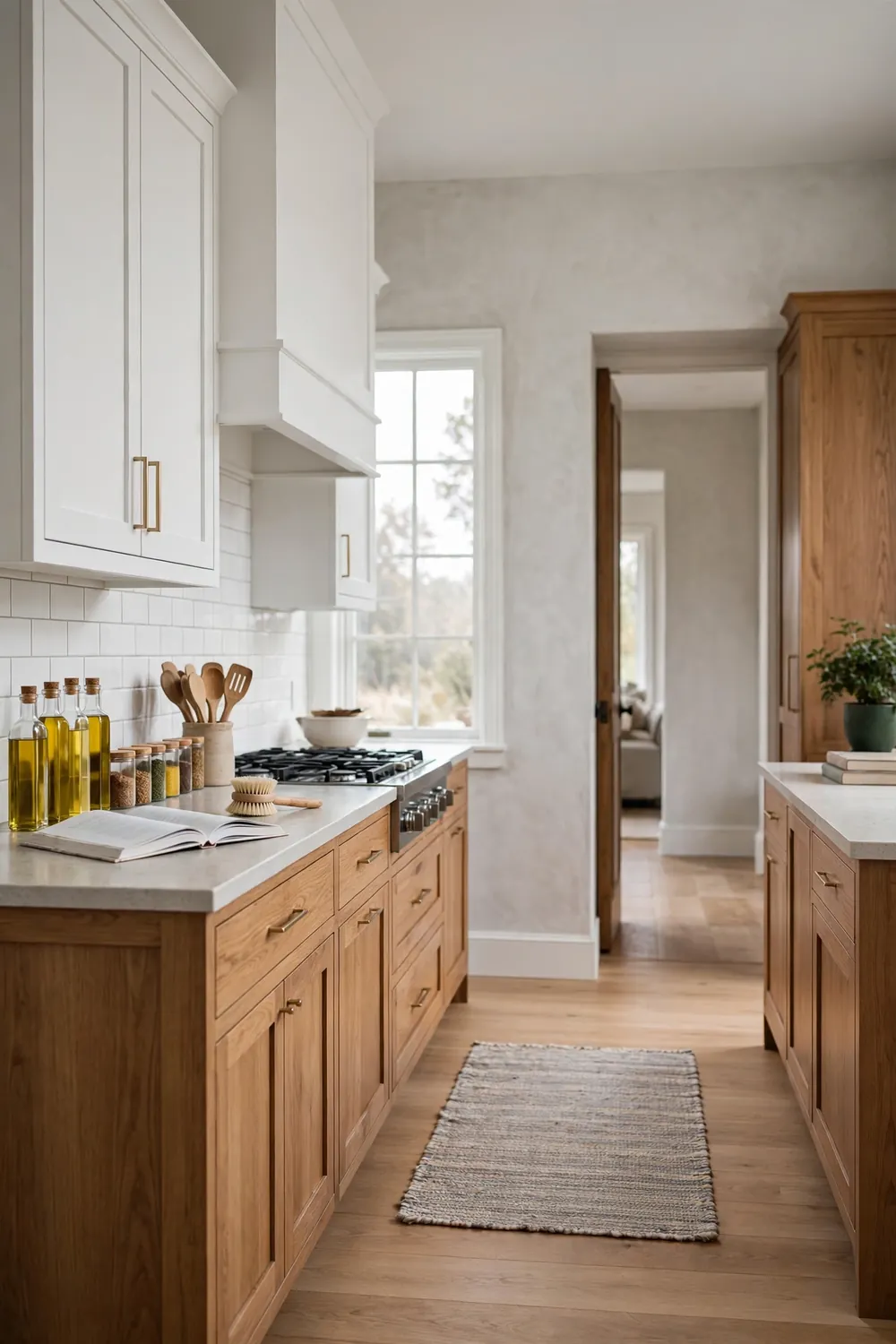
A cabinet works hardest near the job it serves. Set up a cooking zone by the stove for oils and spices. Add a prep zone by the sink for cutting boards and mixing bowls. A small coffee zone for mugs and filters finishes the setup, and steps drop because it all sits within reach.
Empty one cabinet at a time. Move items into the new zone before starting the next cabinet. Tell the family where the zones are. The system falls apart in a week without this step. Zones are the backbone of kitchen storage solutions because the layout matches how you cook.
14. Square Containers for Baking Supplies
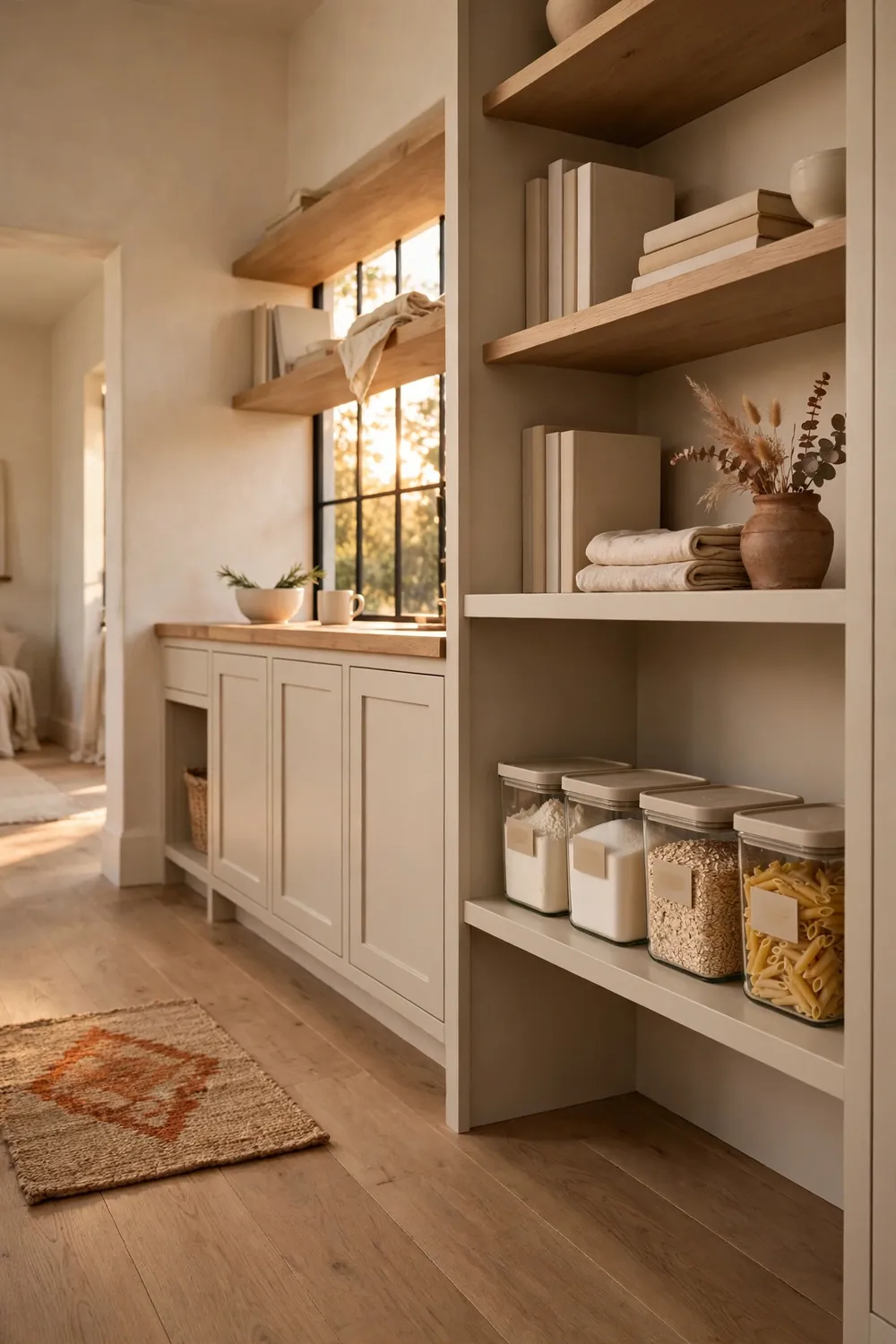
Round bowls and bags leave dead corners in every cabinet. Square containers stack flush and line up edge to edge. This simple switch adds surprising room on the same shelf. They work for flour, sugar, oats, pasta, and cereal alike.
Buy one matching set so every lid fits every container. Write the date on tape stuck to the bottom of each one. Square jars cost little and last for years. When the containers match, it looks planned, and putting dry goods away feels simple and quick.
15. Adhesive Hooks for Measuring Tools

Measuring cups and spoons tangle in drawers and hide under bigger tools right when you need them. A row of small stick-on hooks inside a tall cabinet door fixes this. Each cup and spoon set hangs where you can see it. The hooks hold firm on clean, dry surfaces and come off without damage.
Wipe the spot with rubbing alcohol first. Press each hook for a full minute so the bond holds. Hang cups by size with the largest in front for a quick grab. Renters get the same tidy result as homeowners here, and it is a true small-kitchen win.
16. A Plate Stacker for Heavy Dinnerware
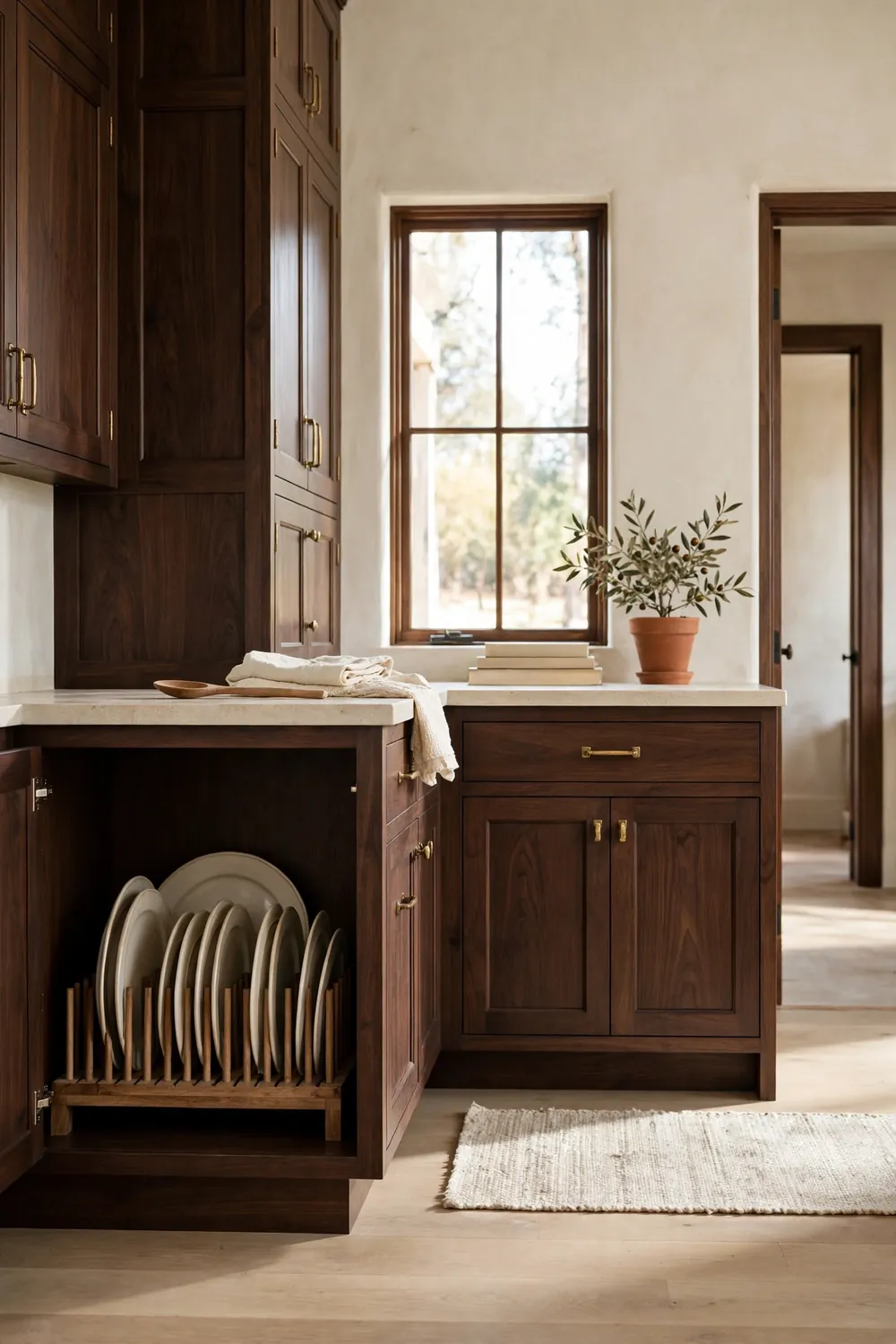
Heavy stoneware plates stacked ten high can crack, since the ones at the bottom take all the weight. A slotted plate rack separates each plate, so you lift one without dragging the rest. It stops the clink and slide that chips rims.
Choose a rack rated for the weight of your dishes, since cheap plastic ones bow under stoneware. Place it on the lowest shelf you can, because heavy plates belong where lifting is safest. Your plates last longer, and setting the table feels easier on busy nights.
17. Vertical Dividers for Trays and Boards

Baking sheets and cutting boards stored flat become a heavy pile. You must lift the stack to reach the bottom piece. Vertical dividers turn a deep cabinet into a filing cabinet, and each tray and board slides out like a folder. No more avalanches when you pull one out.
Use a tension-style divider or a fixed rack sized to your cabinet width. Sort by size with the biggest boards at the back. Keep weekly cookie sheets in front and the roasting pan behind. Flat items finally have a home that respects their shape.
Care and Upkeep
An organized cabinet stays organized with a little care through the year. Once each season, pull everything out of one cabinet. Wipe the shelves with warm soapy water. Check for expired cans and stale spices before you put things back. Toss what you no longer use, since clutter creeps back fast.
Retighten the screws on slide-out trays twice a year. Check stick-on hooks too, since loaded organizers loosen over time. Replace torn shelf liner and wipe turntables where drips collect. When a new gadget arrives, give an old one away, so it never holds more than its system can carry.
Frequently Asked Questions
How do you organize kitchen cabinets that are too deep to reach?
Deep cabinets work best with pull-out trays or sliding baskets. The back of the shelf comes to you, so nothing hides out of reach. Store daily items in front and backups in back to cut down on deep reaching.
What is the best kitchen cabinet storage for renters?
Renters do best with products that need no drilling. Over-the-door racks, tension rods, stick-on hooks, stackable risers, and turntables all come off cleanly when you move. They cost little at dollar stores or Target. Measure your cabinets before you shop so it all fits the first time.
How do you keep a small kitchen organized without adding cabinets?
Small kitchens stay tidy when every item earns its space. Start by removing duplicates and tools you never use. Use the inside of doors and the space under shelves for extra room. A one-in-one-out rule for gadgets keeps the system from filling up again.
How often should you clean out kitchen cabinets?
A quick wipe and sort twice a year keeps most cabinets in good shape. Check the dates on cans and spices each time, and toss anything stale. If a cabinet feels cramped again, remove a few pieces before adding new organizers.
Make It Your Own
Doubled space does not come from a bigger kitchen. It comes from risers that use the height and trays that reach the back of every shelf. Start with the one cabinet that annoys you most, and let the calm spread from there on busy mornings.
When you find the setup that clicks,