Toy Storage Ideas: 21 Solutions for Living Rooms and Bedrooms
The morning after a birthday party, the living room tells the whole story. Wrapping paper crinkles under the coffee table. New toys sprawl across the rug, and the old toys have already been shoved into corners. Every parent knows that scene by heart.
Kids toy organization gets easier when every toy has a home of its own. These toy storage ideas work for living rooms and bedrooms alike. They range from under-sofa bins to closet systems the whole family can keep up with. Pick one corner, start there, and build from what works.
The goal is simple. Storage your kids can actually use, in rooms that still feel calm and grown-up when the toys are put away.
1. Roll a Storage Cart Between Rooms
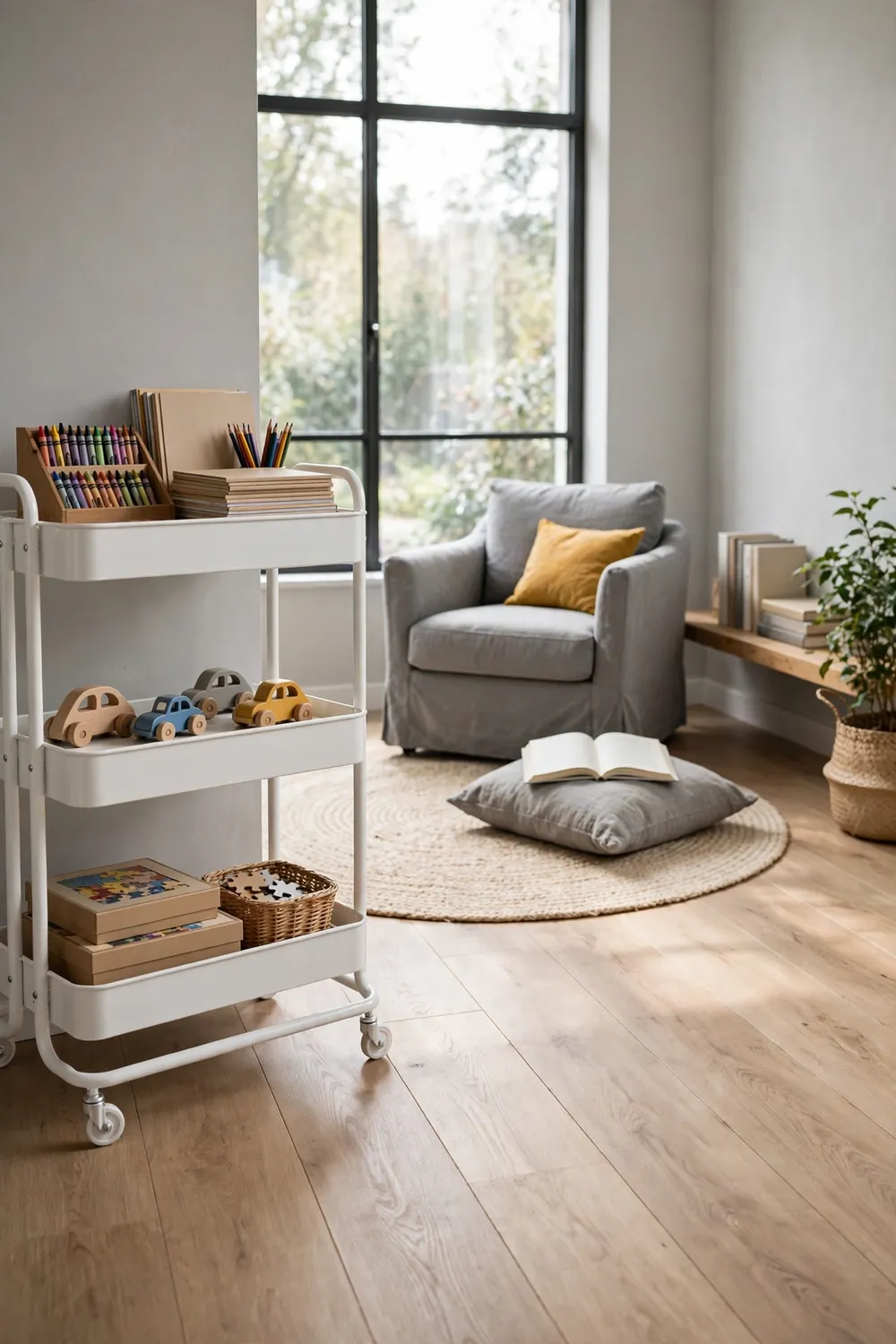
A three-tier rolling cart works like a portable toy station. Load the top shelf with crayons and coloring books, and use the lower shelves for cars and puzzles. Wheel it into the living room for playtime and roll it into a bedroom closet when guests come over.
Carts cost little at Target or IKEA, and the casters lock so it stays put on hard floors. Keep heavier items on the bottom shelf so the cart never tips.
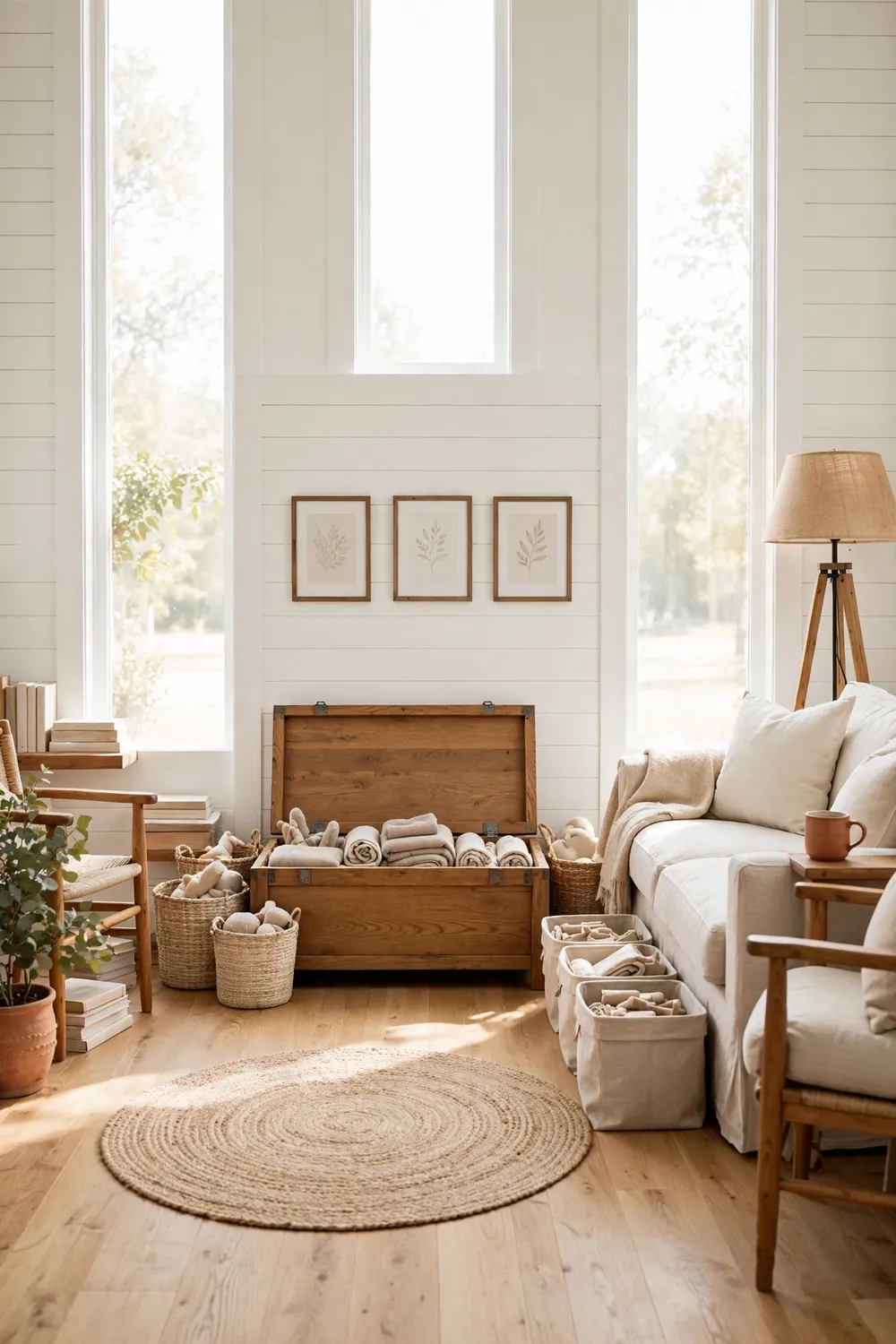
2. Hide Toys Inside a Storage Ottoman
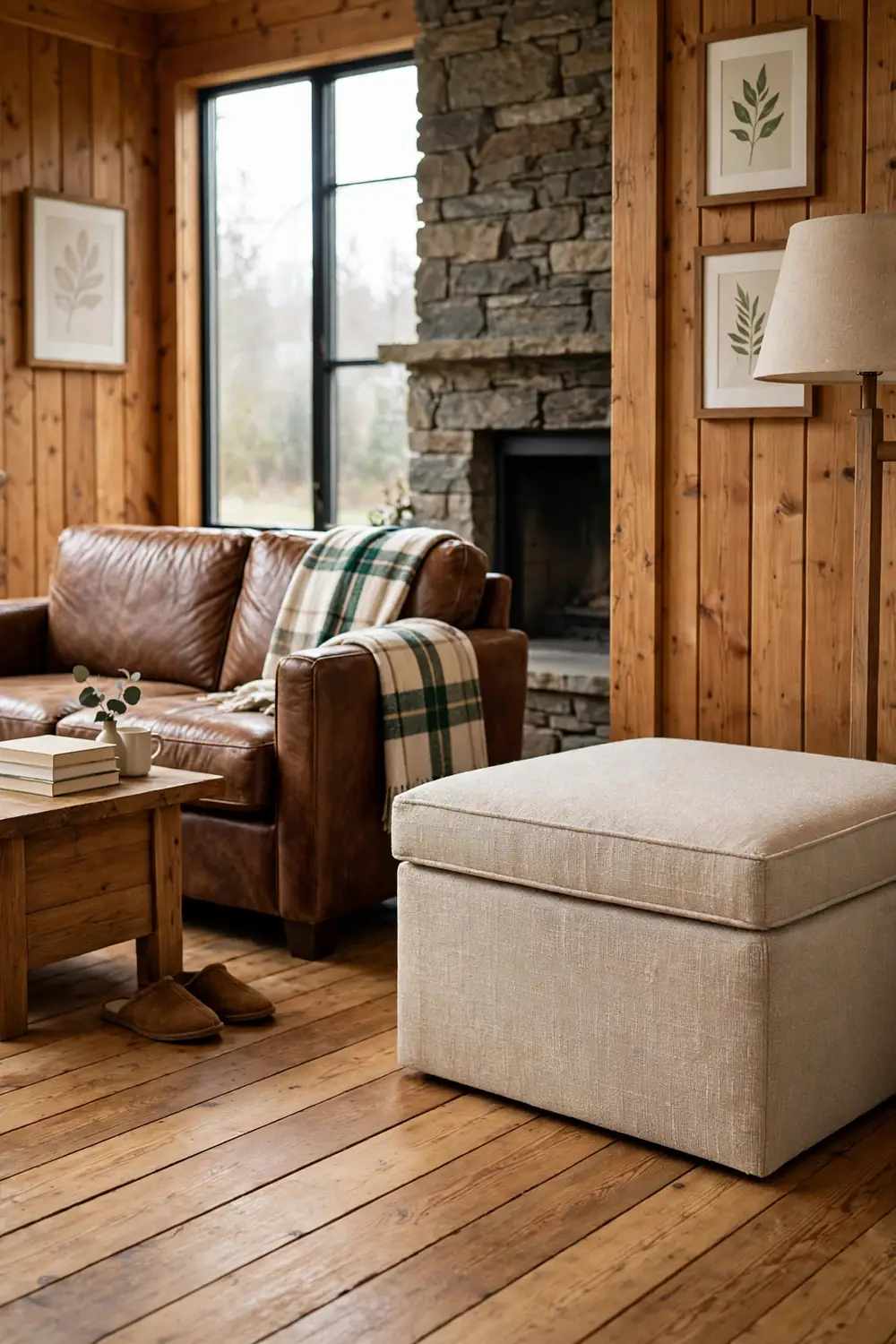
A storage ottoman holds a surprising amount of toys while looking like regular furniture. Pick one with a wide, deep interior so board games and dolls fit without a fight. It doubles as a footrest or an extra seat when guests come over.
Living room toy storage like this keeps the whole space calm after bedtime. Just close the lid and the room looks grown-up again. The flat top also gives you one more surface for a lamp or a tray of remotes.
3. Line a Wall With Picture Ledges

Shallow picture ledges turn a blank wall into a display for books and small figurines. Mount two or three ledges in a row at kid height so little hands can reach everything. The toys stay visible, so they get played with every day.
Ledges cost just a few dollars each at IKEA or the dollar store, and two screws hold each one steady. Wipe them down now and then, since small shelves collect dust fast in a play space.
4. Fill a Cube Shelf With Fabric Bins
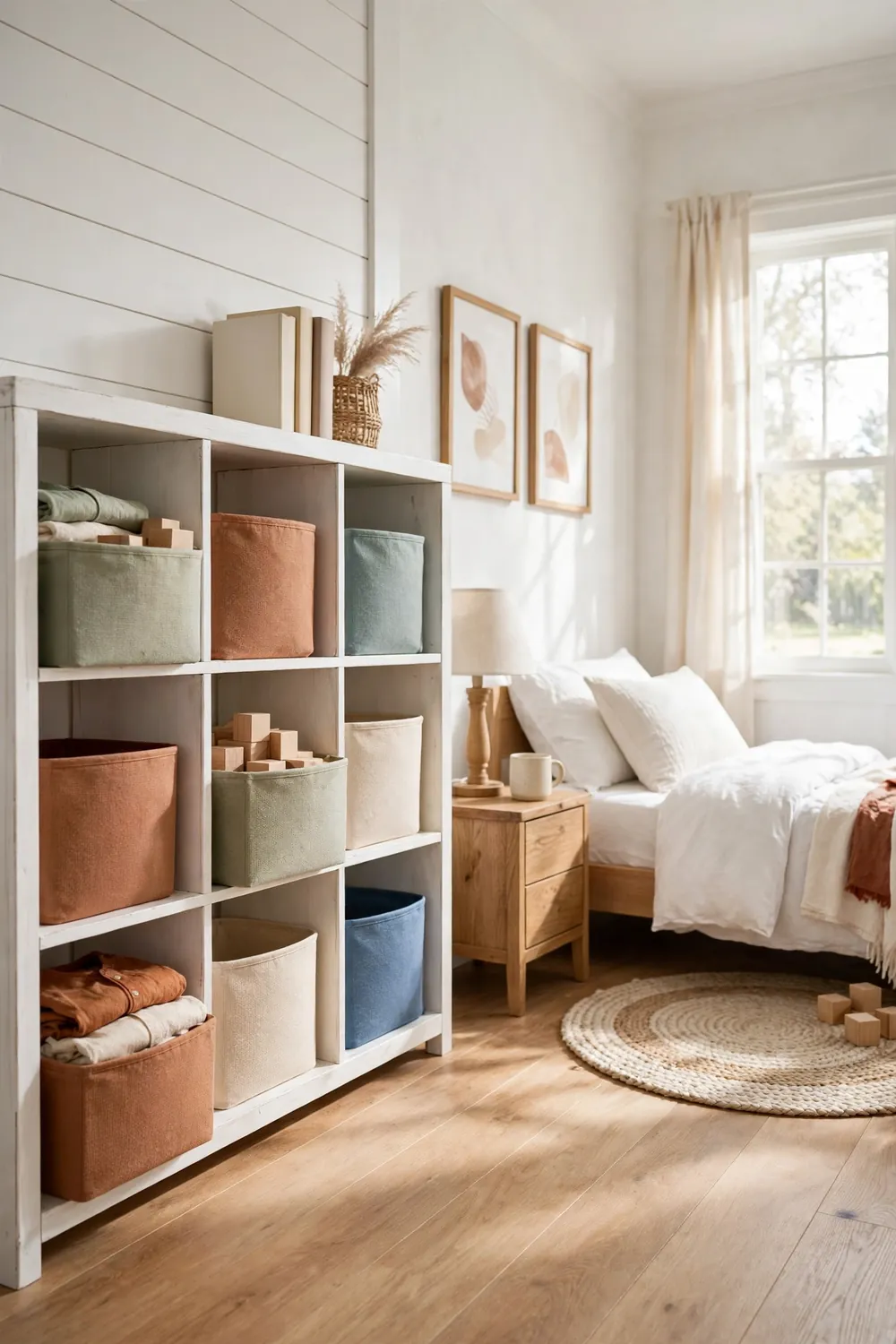
A cube shelf with fabric bins is the classic kids room workhorse. Each cube gets its own bin with a job of its own, like blocks or dress-up clothes. Kids can pull a bin out, play, and push it back without any help.
Look for a sturdy shelf at Target, Walmart, or IKEA and anchor it to the wall so it cannot tip. Matching bins in two colors keep the whole unit looking neat.
5. Slide Flat Bins Under the Sofa

The space under the sofa is wasted storage in most homes. Low, flat bins on wheels slide right under and hold board games or action figures. Kids can pull them out themselves and push them back when they finish.
Measure the clearance under the sofa before buying, since most sofas allow about six inches. Clear bins help kids see what is inside without dumping everything out on the floor. Wheeled bins work best on hard floors and low rugs. They hold plush toys too, and these stuffed animal storage ideas show more ways to keep them off the floor.
6. Label Open-Front Bins on a Low Shelf
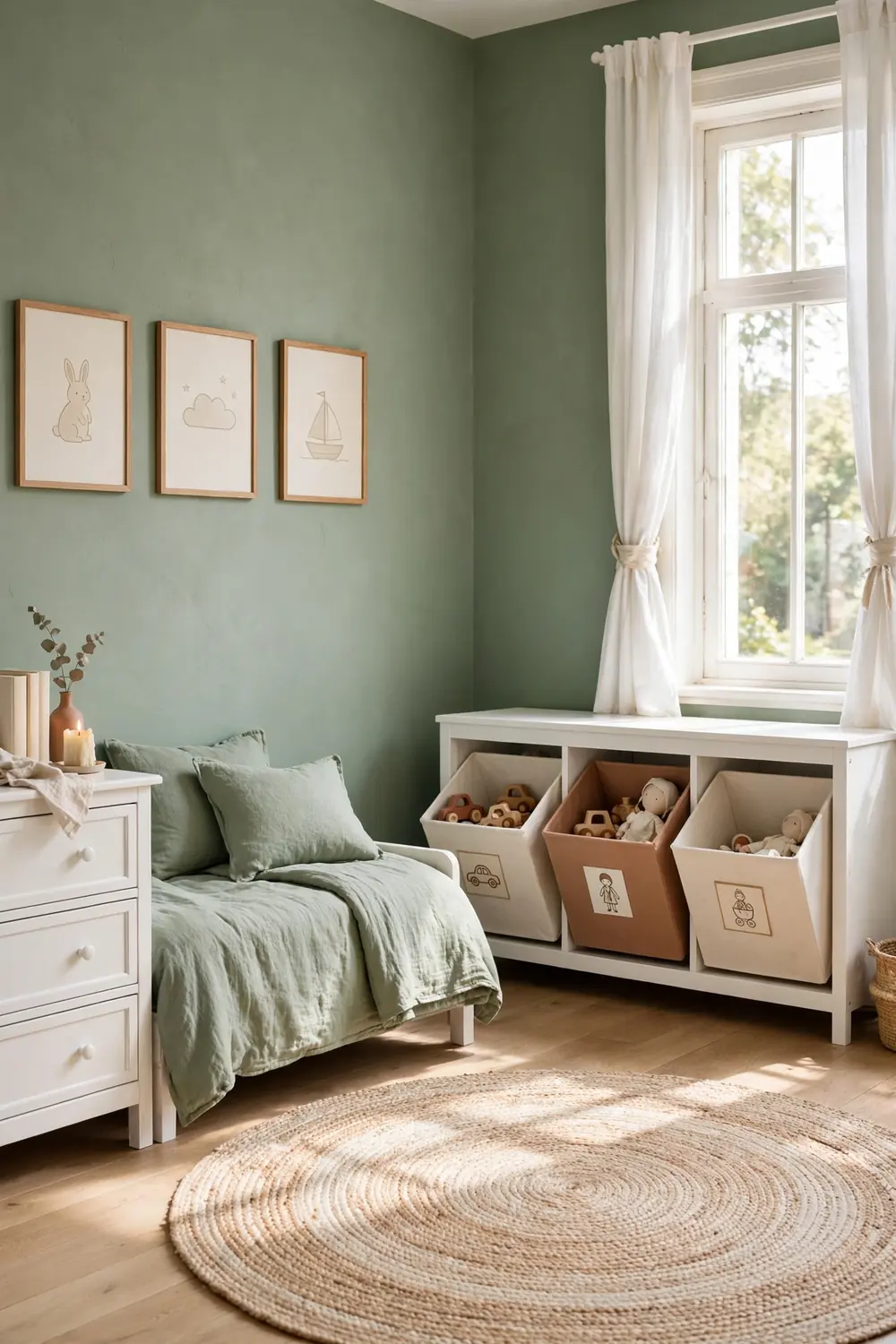
Open-front bins tilted forward show their contents at a glance, so cleanup takes seconds. Set them on a low bookcase and label each one with a word or picture: cars, dolls, blocks, art. Even toddlers can match a toy to its label.
Toy storage bins like these come cheap at the dollar store or Walmart. Keep the shelf against a wall and put the heaviest bins on the bottom row so it stays steady.
7. Hang an Over-the-Door Organizer
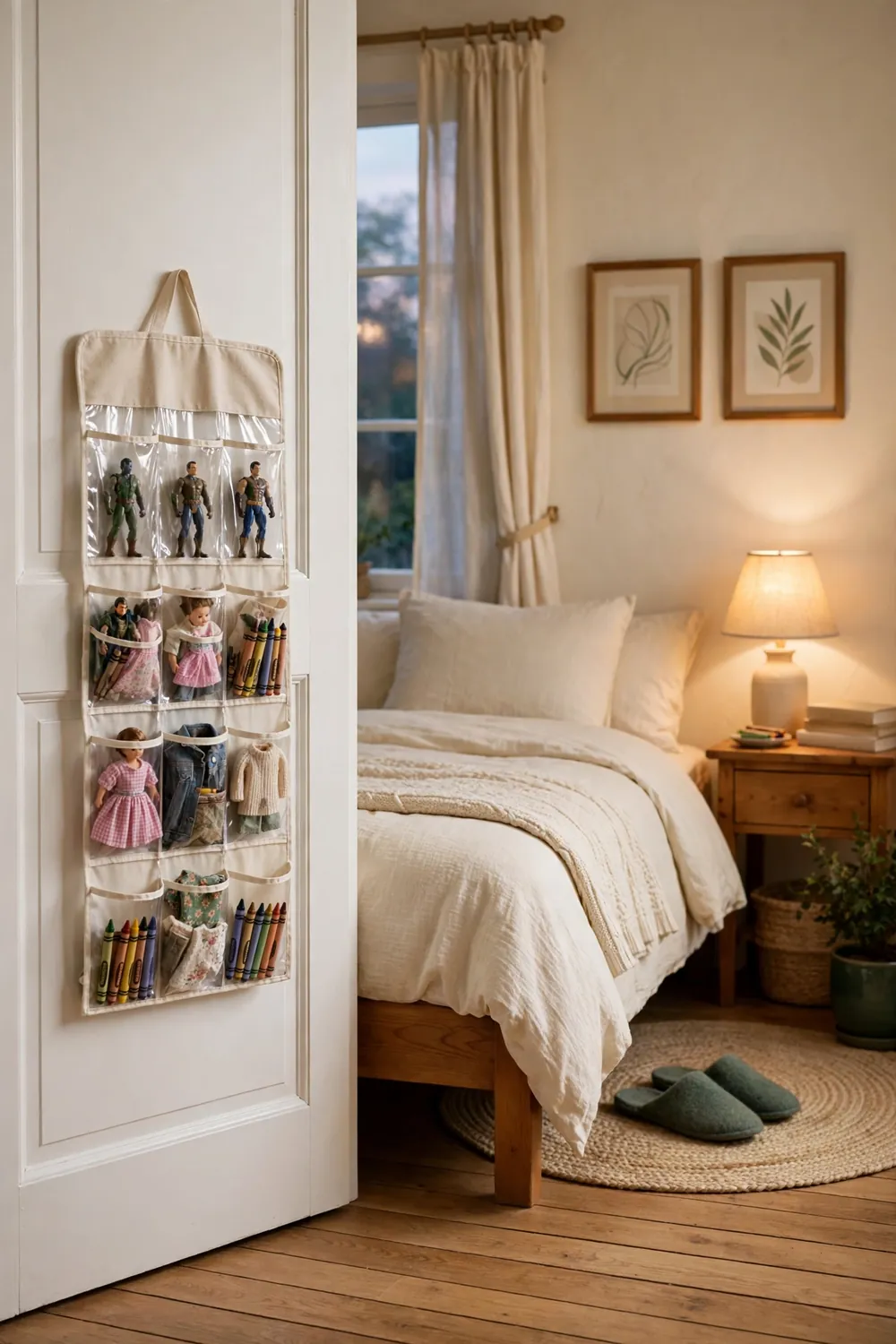
An over-the-door shoe organizer turns the back of a bedroom or closet door into storage for small toys. Fill the clear pockets with action figures or doll clothes. Everything stays visible and off the floor.
This trick costs just a few dollars and needs no tools at all. Hang it low enough that kids can reach the bottom rows on their own. Use the top pockets for things only grown-ups need.
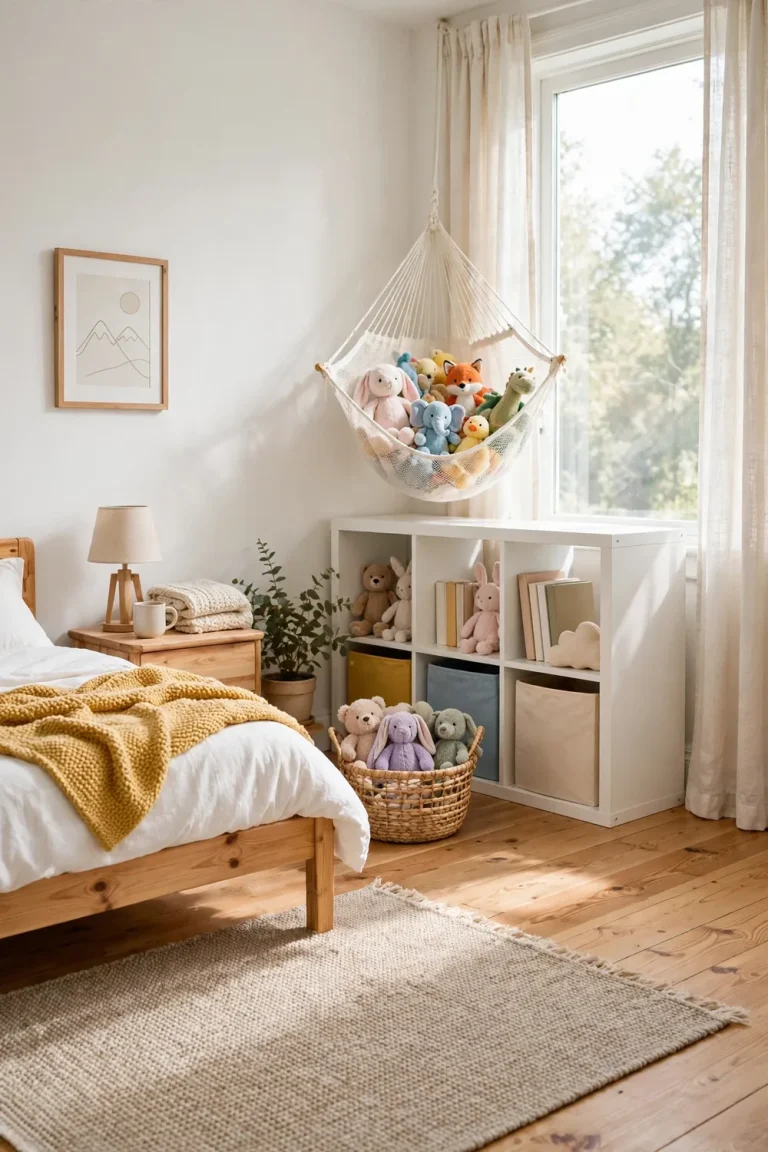
8. String Up a Toy Hammock in the Corner
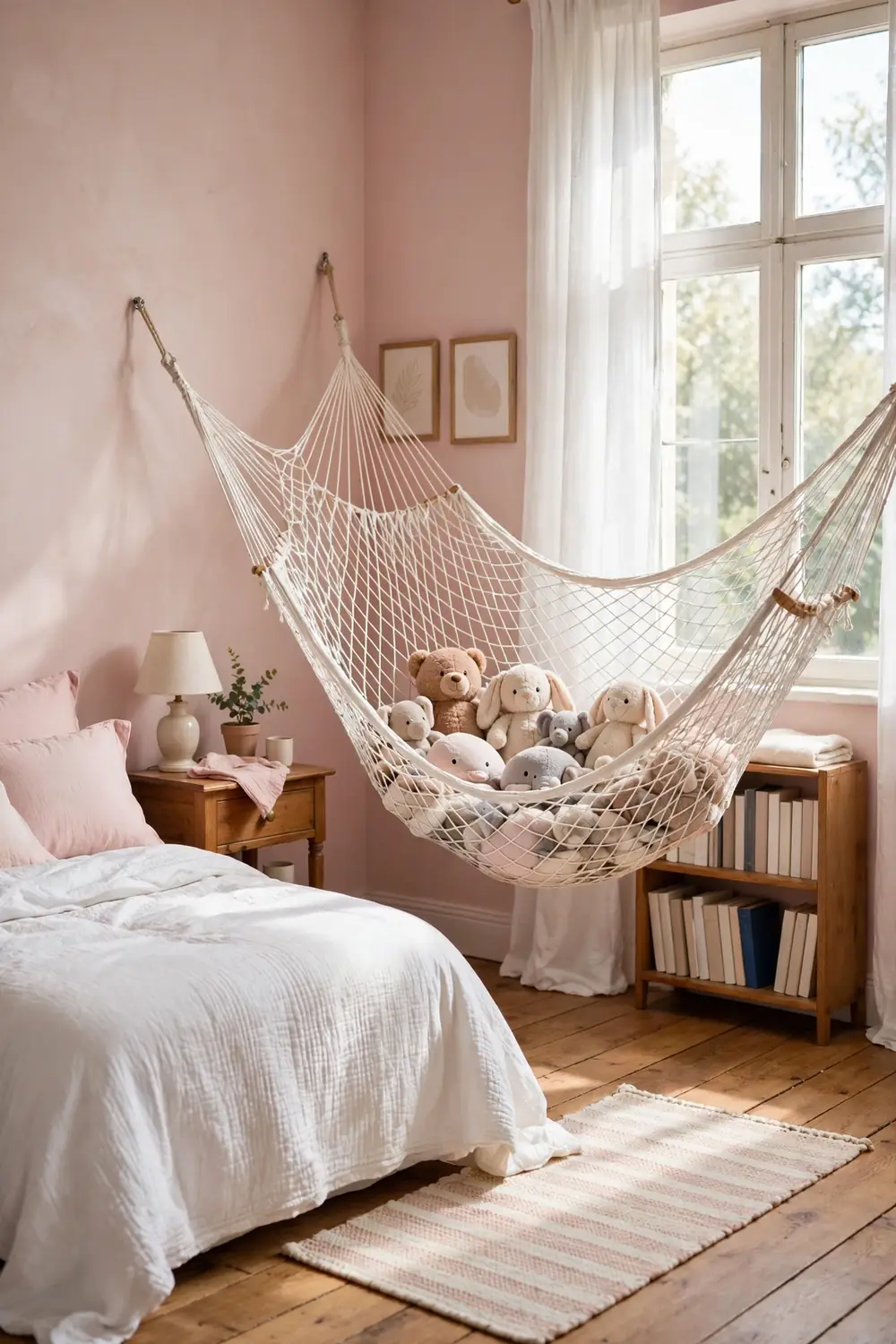
Stuffed animals multiply fast, and a corner hammock gives them all a home. Hang the stretchy net high in a bedroom corner and toss the plush toys in. The pile looks cute instead of messy, and kids can grab their favorite in seconds.
Most hammocks hold dozens of stuffed animals and screw into the wall with simple hooks. Keep it clear of the door swing so nothing gets snagged. Hang it high enough that the pile stays out of walkways.
9. Tuck Toys Into a Bedroom Bench
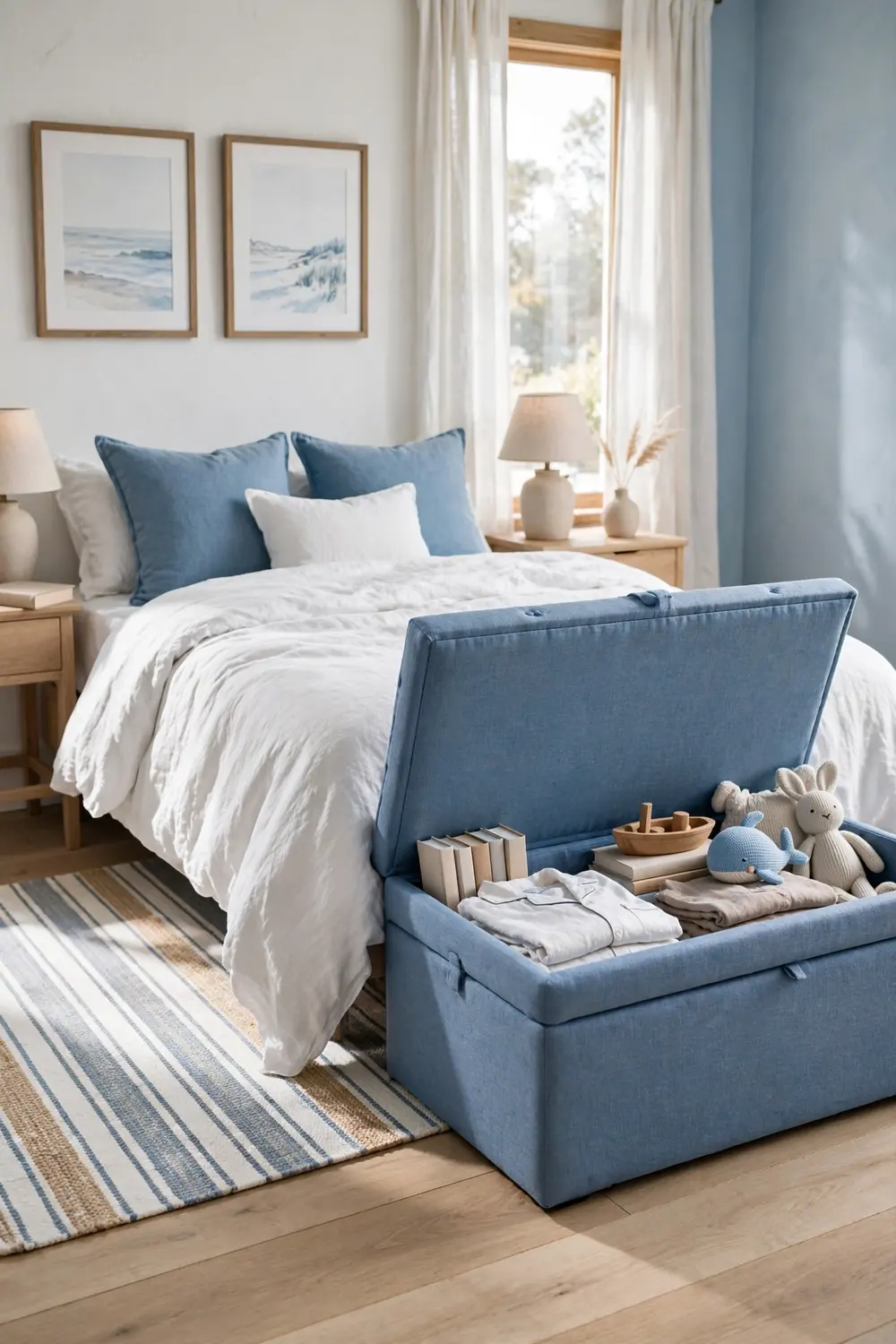
A storage bench at the foot of the bed hides pajamas and quiet-time toys. Kids can sit on it to pull on shoes in the morning. At night they flip the lid to put toys away. Choose a bench with soft-close hinges so little fingers stay safe.
Padded tops work best in bedrooms since the bench doubles as seating. Wipe down vinyl tops often, and vacuum fabric ones to keep dust from building up.
10. Stack Clear Bins With Lids
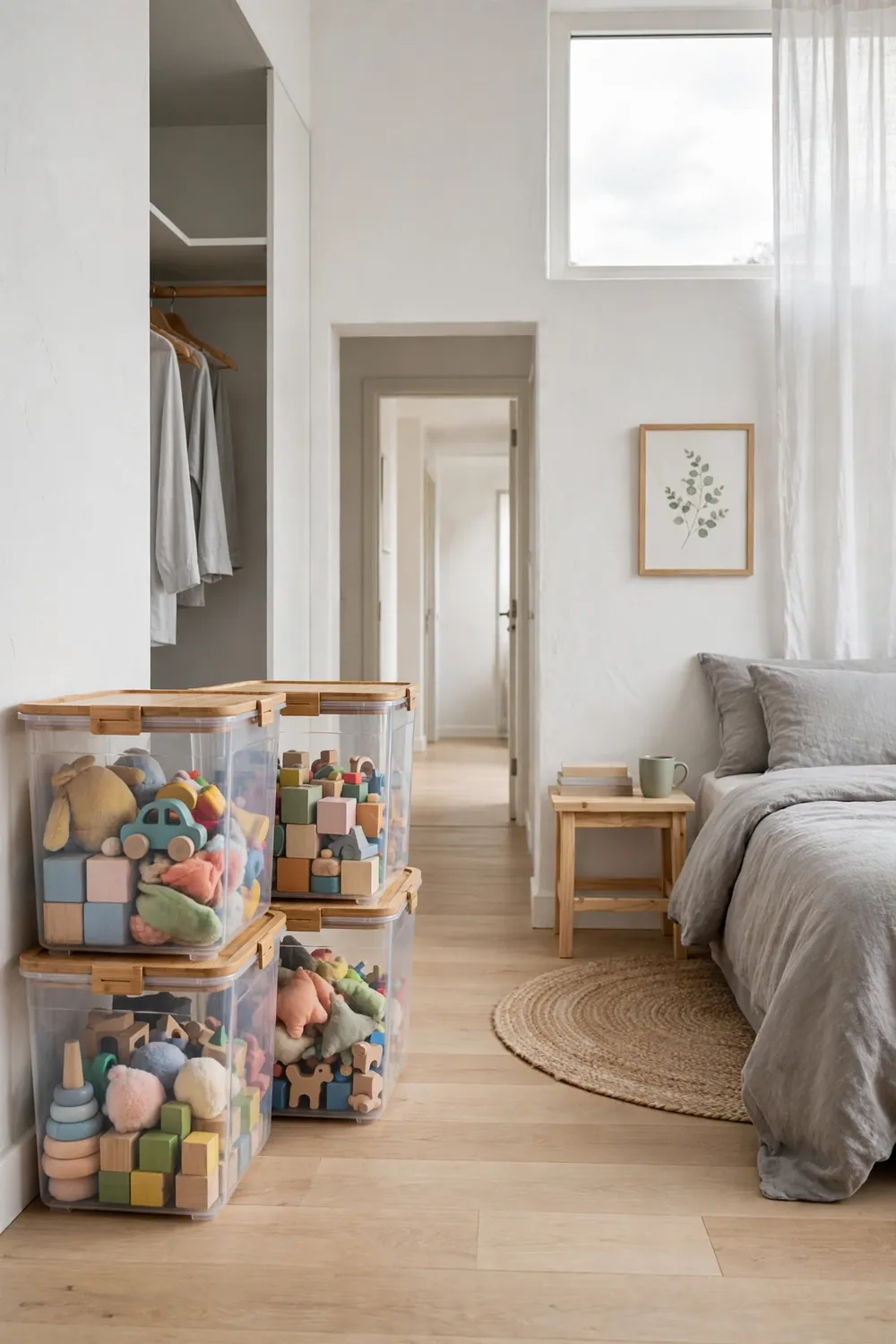
Clear stackable bins with lids are the easiest way to see every toy at once. Stack them two or three high in a closet or against a bedroom wall. Lids keep dust out and let the bins stack straight without sliding.
Buy one size so the stacks line up neatly against the wall. Label the front of each bin so kids put toys back in the right spot. Keep the most-used bin at the easiest height to reach.
11. Corral Small Toys in Divided Trays

Small toys like beads and game pieces vanish into big bins. Divided craft trays or tackle boxes keep every tiny piece in its own slot. Kids can carry the whole tray to the table and put it back when they finish.
Snap the lids shut before the tray goes on a shelf, or the pieces will scatter. Keep one tray per set so pieces never mix, and store the trays flat so nothing tips.
12. Keep the TV Console Closed and Calm
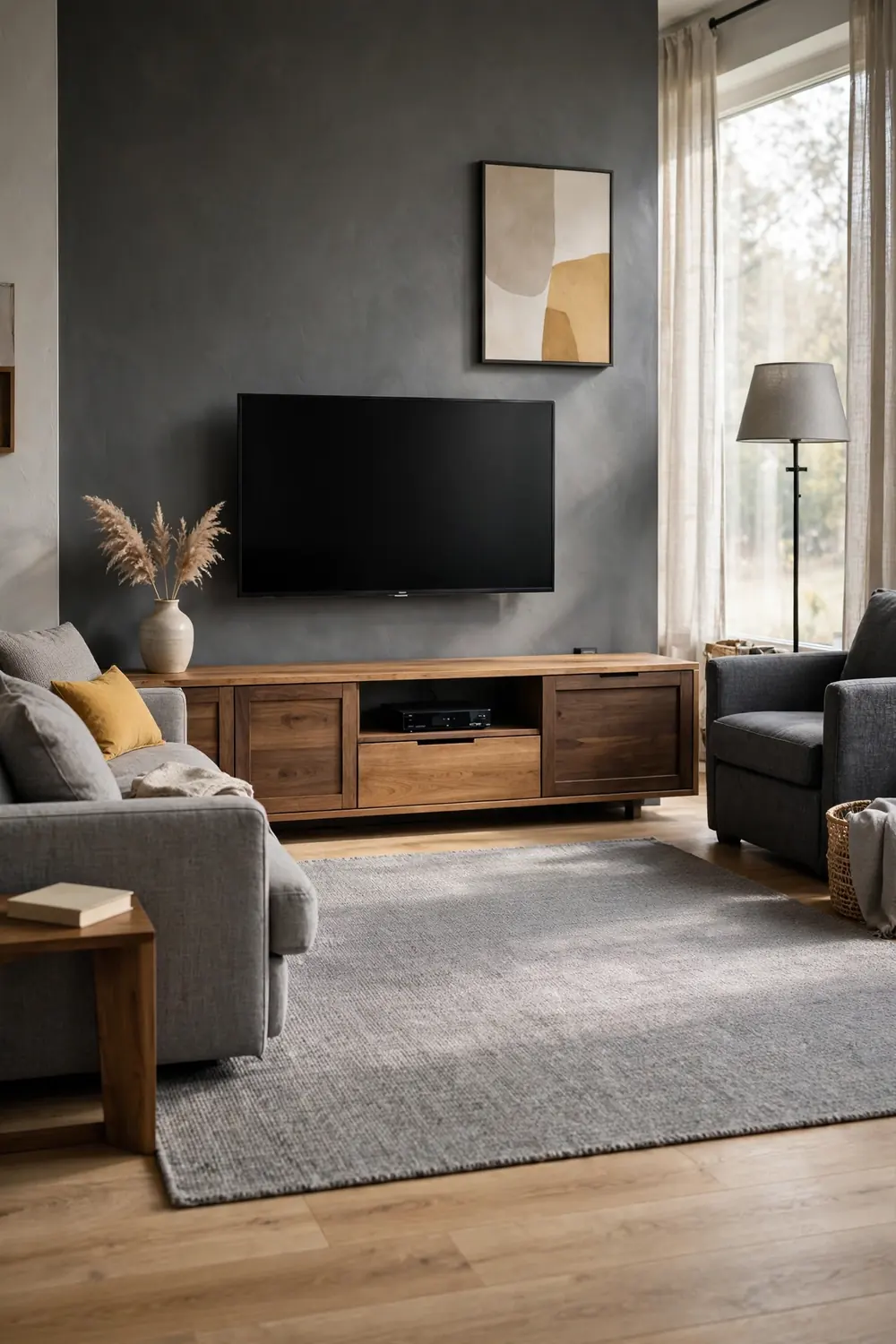
A TV console with closed doors hides a whole toy collection in the living room. Use the cabinets for board games and the toys that come out after dinner. Closed doors mean the room looks tidy even when cleanup is rushed.
Pick a console with adjustable shelves so tall boxes fit inside. Leave one shelf open for the cable box so it stays cool, and use baskets inside deep cabinets for smaller toys.
13. Use Rolling Drawers Under the Bed
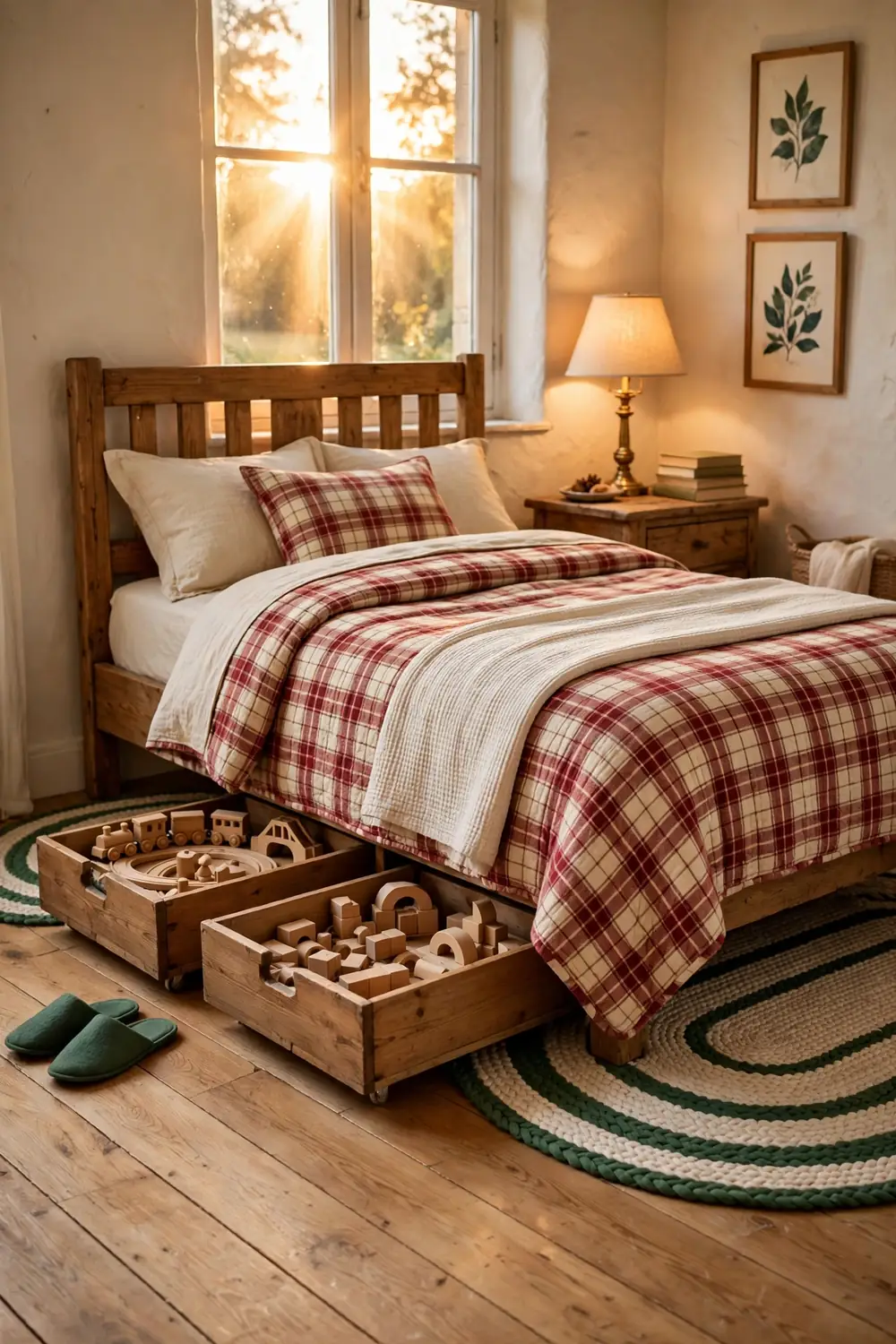
Under-bed drawers on wheels turn dead space into a toy garage. They fit train sets and building sets the kids use every day. Pull a drawer out in the morning, roll it back at night. Label the front of each drawer so kids know what goes where.
Measure the bed frame height first, since most frames fit drawers about eight inches tall. Dust the drawers now and then since floors collect it, and add felt pads if they scratch wood floors.
14. Hang Dress-Up Clothes on Wall Hooks
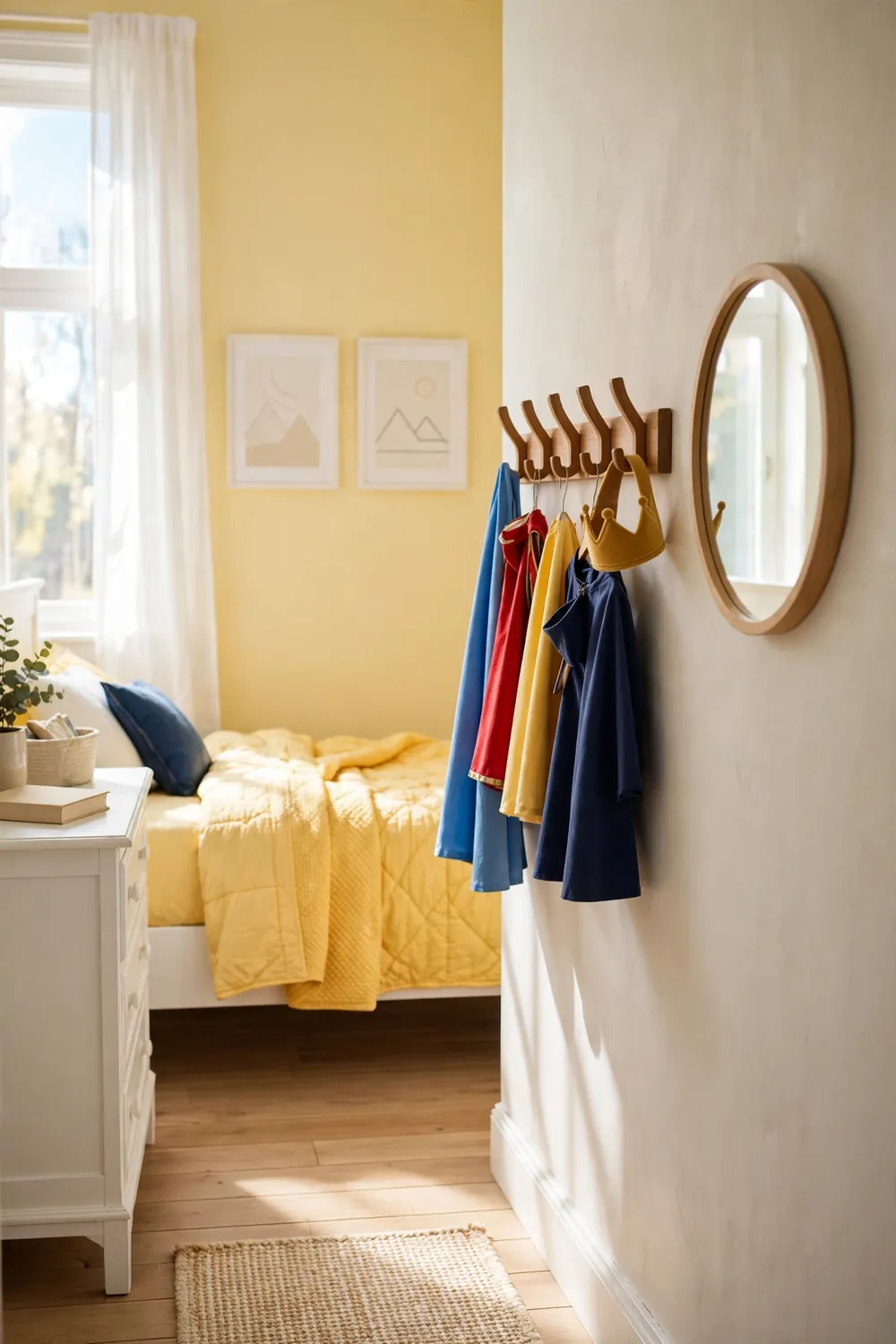
Dress-up clothes end up in a tangled pile without a plan. A row of sturdy wall hooks at kid height gives every cape and crown its own spot. Hang a small mirror nearby so kids can check their costumes.
Space the hooks about a foot apart so bulky costumes do not crowd each other. Use hooks rated for a few pounds each. Mount them into a stud so they hold through years of dress-up play.
15. Add Hanging Shelves to the Closet Door

Fabric hanging shelves turn a closet rod into six instant cubbies. Fold clothes in the top shelves and use the bottom ones for toys and games. The shelves hang in seconds with no tools at all.
This works in reach-in closets and walk-ins alike. Keep heavier toys on the lower shelves so the unit hangs straight. Fold outgrown clothes out to make room for more storage. The pockets also hold shoes or folded blankets in a pinch.
16. Choose a Coffee Table With Hidden Storage
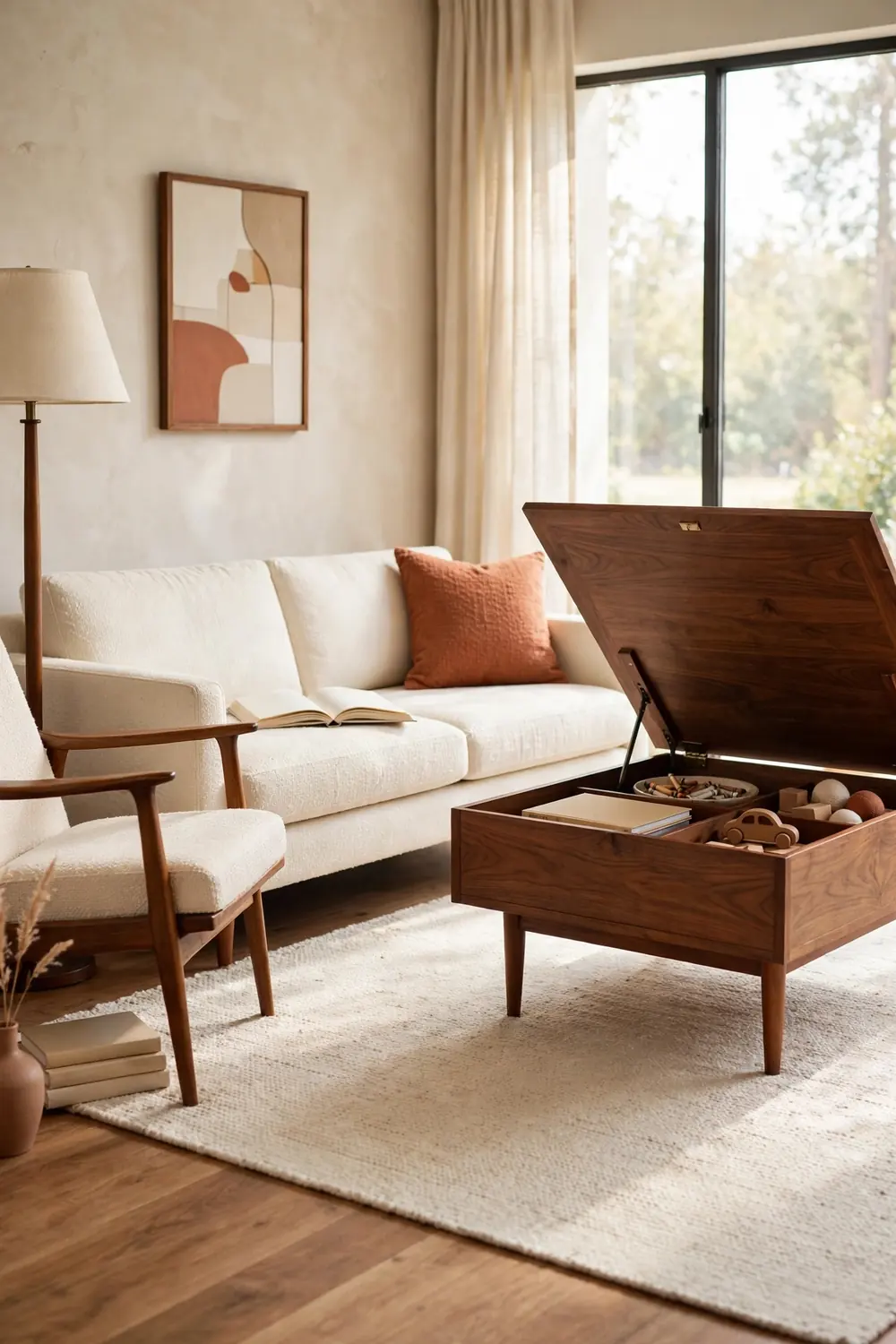
A lift-top coffee table hides remotes and coloring books inside its base. The top lifts up and toward you for drawing or puzzles, then drops back down flat. From the sofa, nobody can tell it holds toys at all.
Check that the lifting mechanism moves smoothly before buying. Keep the inside tidy with one small tray for loose items, and teach kids to lower the top gently. The storage base usually holds much more than it looks like it would.
17. Build Up a Corner With a Tall Shelf
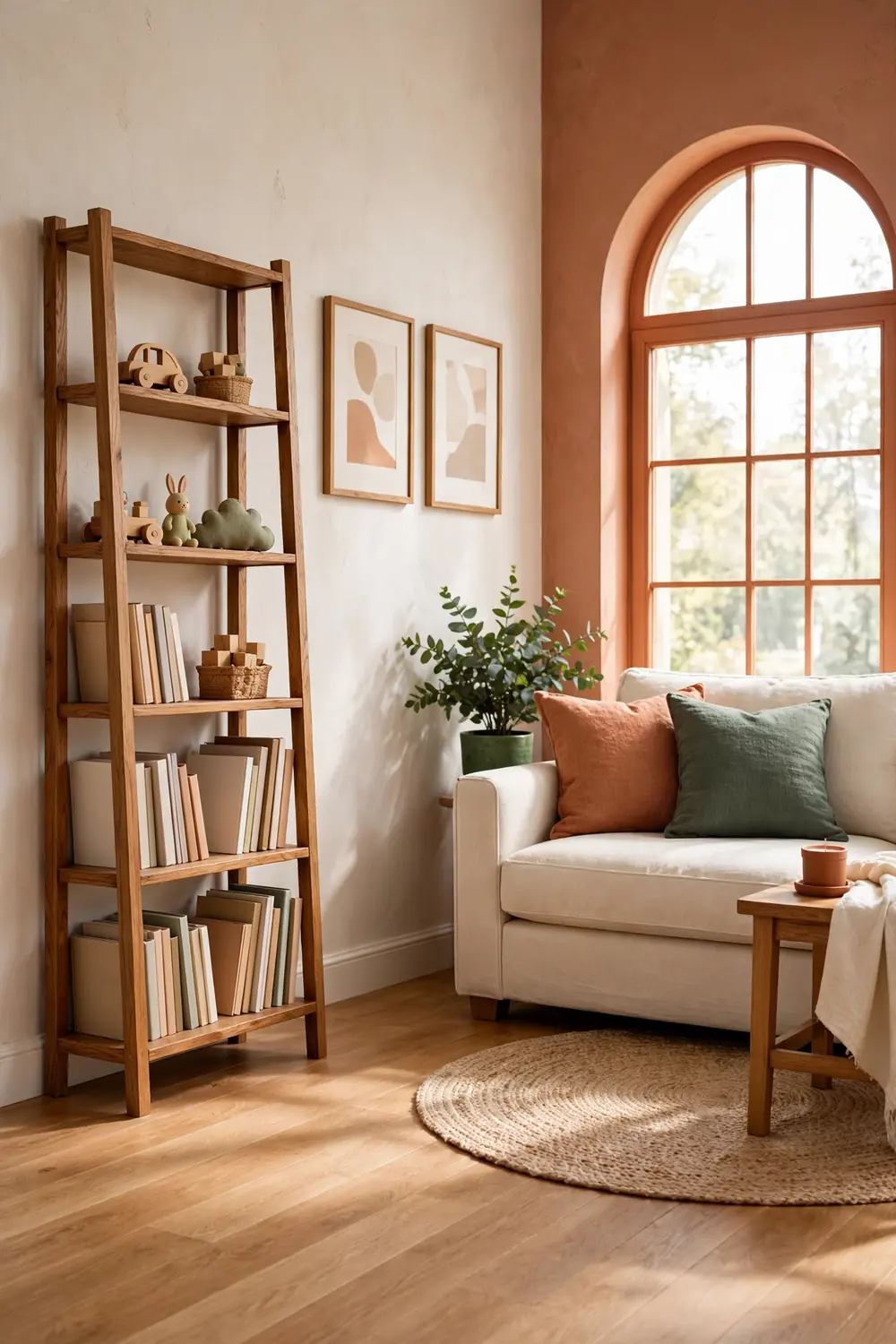
A tall, narrow bookshelf uses vertical space most rooms waste. Store books on the lower shelves where kids can reach, and put display toys or keepsakes up high. Anchor it to the wall so it cannot tip forward.
A five-foot shelf fits most corners without crowding the room. Face it toward the play area so kids see their books. Save the very top shelf for items that are only for looking.
18. Drop Daily Toys Into Woven Baskets
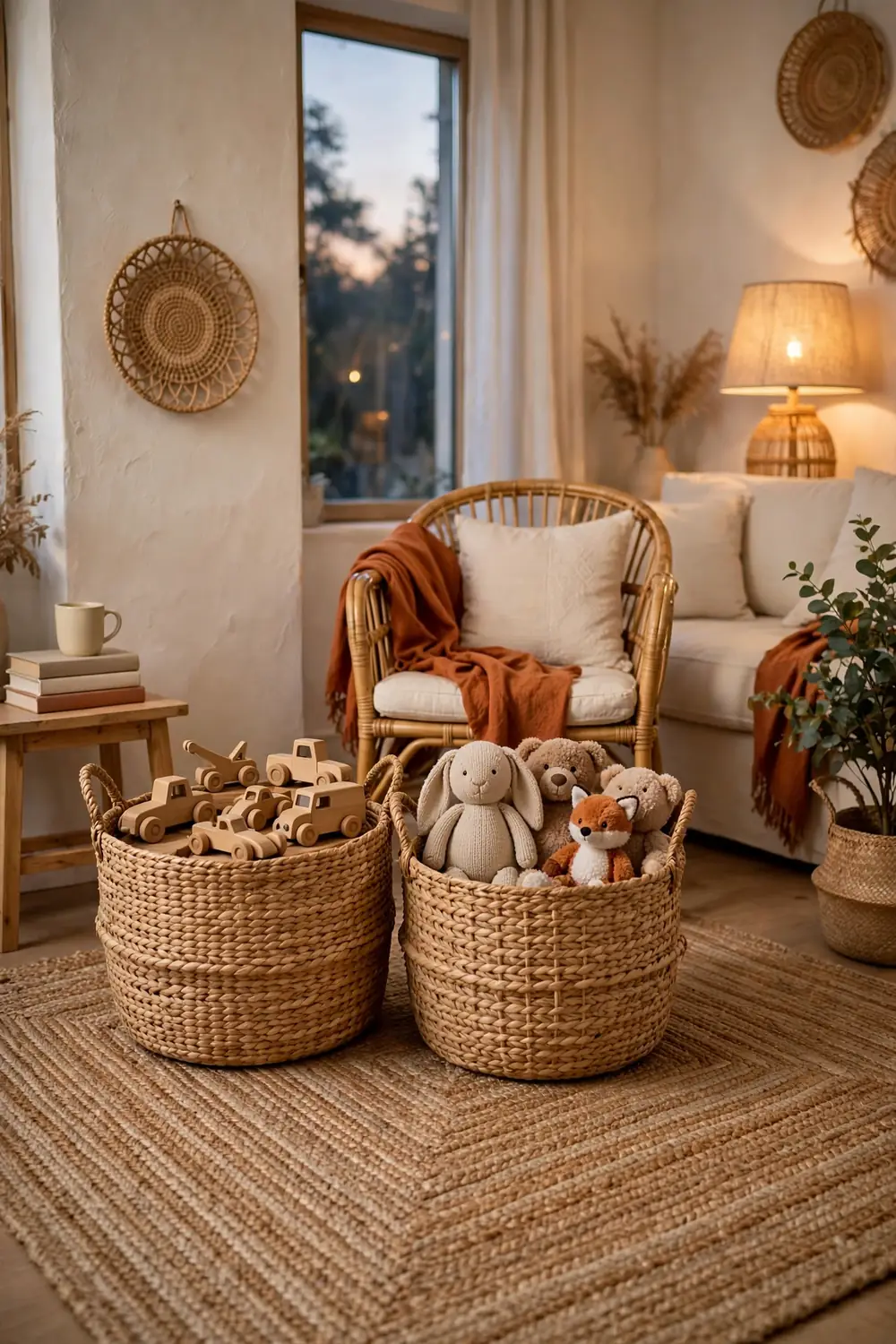
One big woven basket per room handles the daily toy drift. Toss in whatever is out at bedtime: cars and stuffed animals. Try these stuffed animal storage ideas. At bedtime, do one quick sweep and toss everything in. Baskets look warm and natural, so they fit any room style.
Choose baskets with handles for easy carrying from room to room. Line them with a cloth bag if small pieces slip through the weave. Keep one basket per floor for bigger homes.
19. Sort Art Supplies in a Tiered Cart
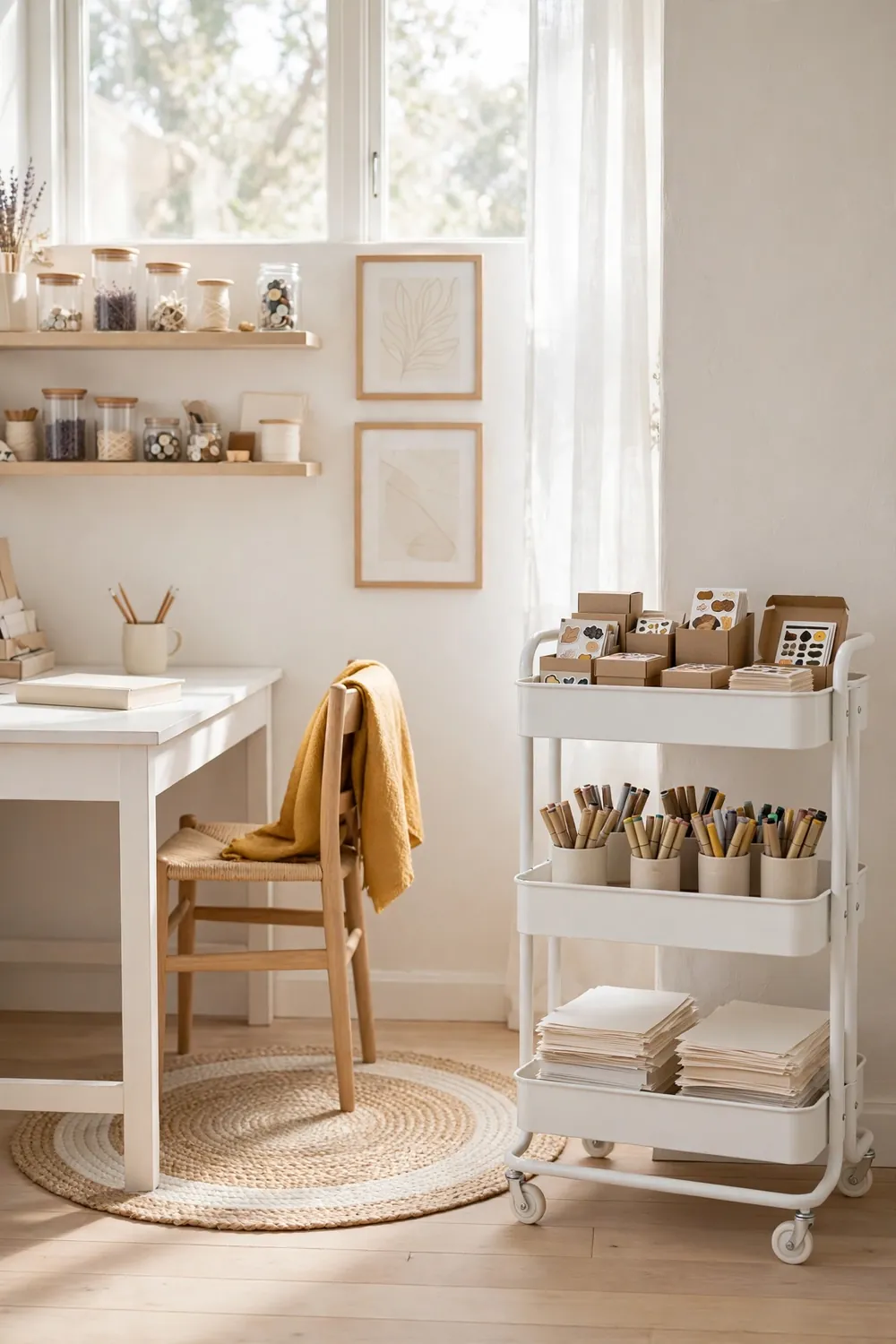
Art supplies spread everywhere without their own home. A tiered rolling cart keeps paper on the bottom and all the small supplies up top. Roll it to the table for craft time and park it in a corner after.
Cups or small jars inside each tier stop markers from rolling around. Wipe the cart down when paint or glue escapes, and restock paper before it runs out. A small trash cup on the cart catches scraps during craft time.
20. Label Bins With Photos for Little Kids
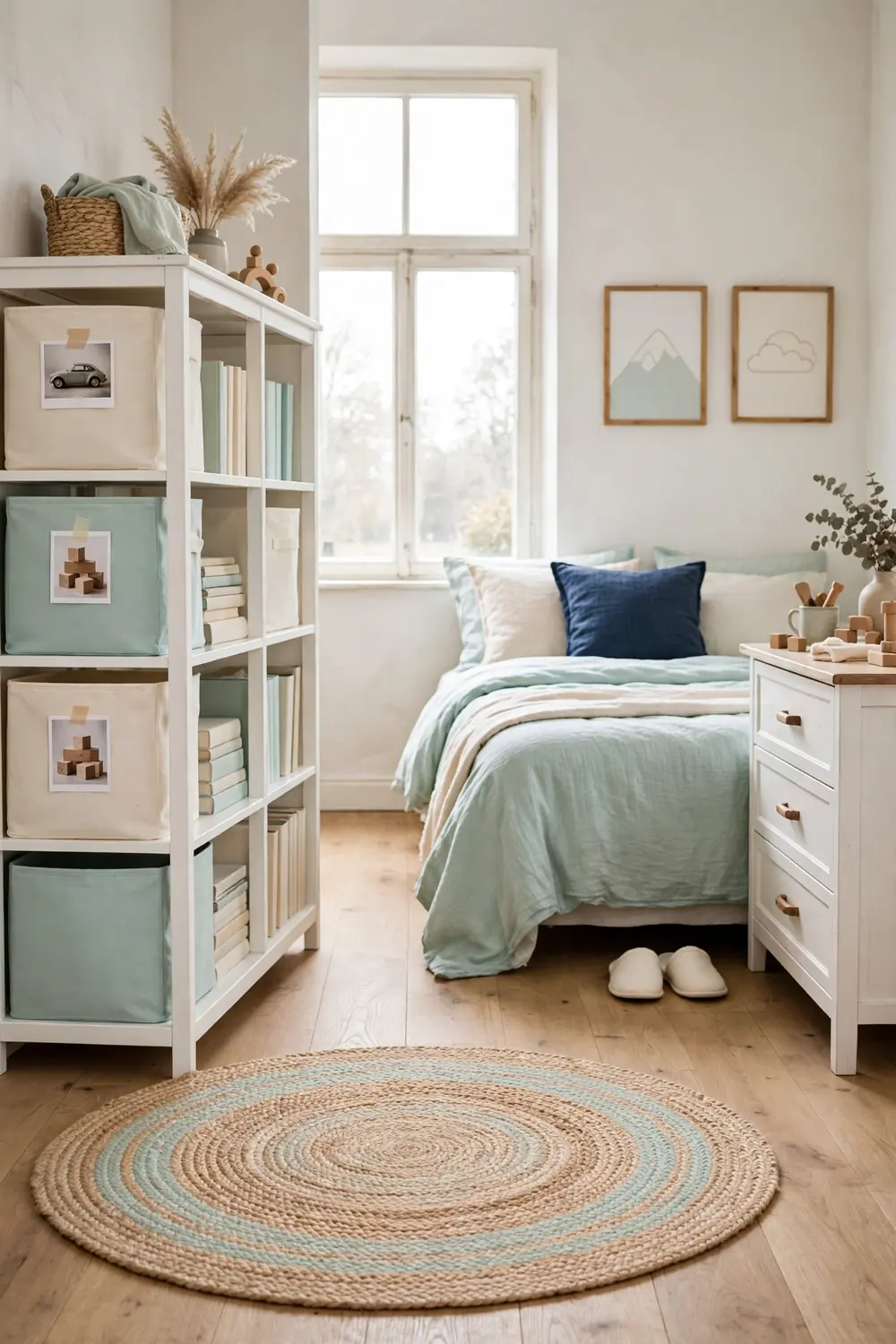
Kids who cannot read yet can still clean up with photo labels. Tape a photo of the bin's contents to the front: cars on the car bin, blocks on the block bin. Matching the toy to the picture turns cleanup into a game.
Print the photos at home or the library and cover them with clear tape. Swap the photos when the bin's contents change. Let kids help take the pictures so they buy into the system.
21. Give Every Play Zone a Home Base
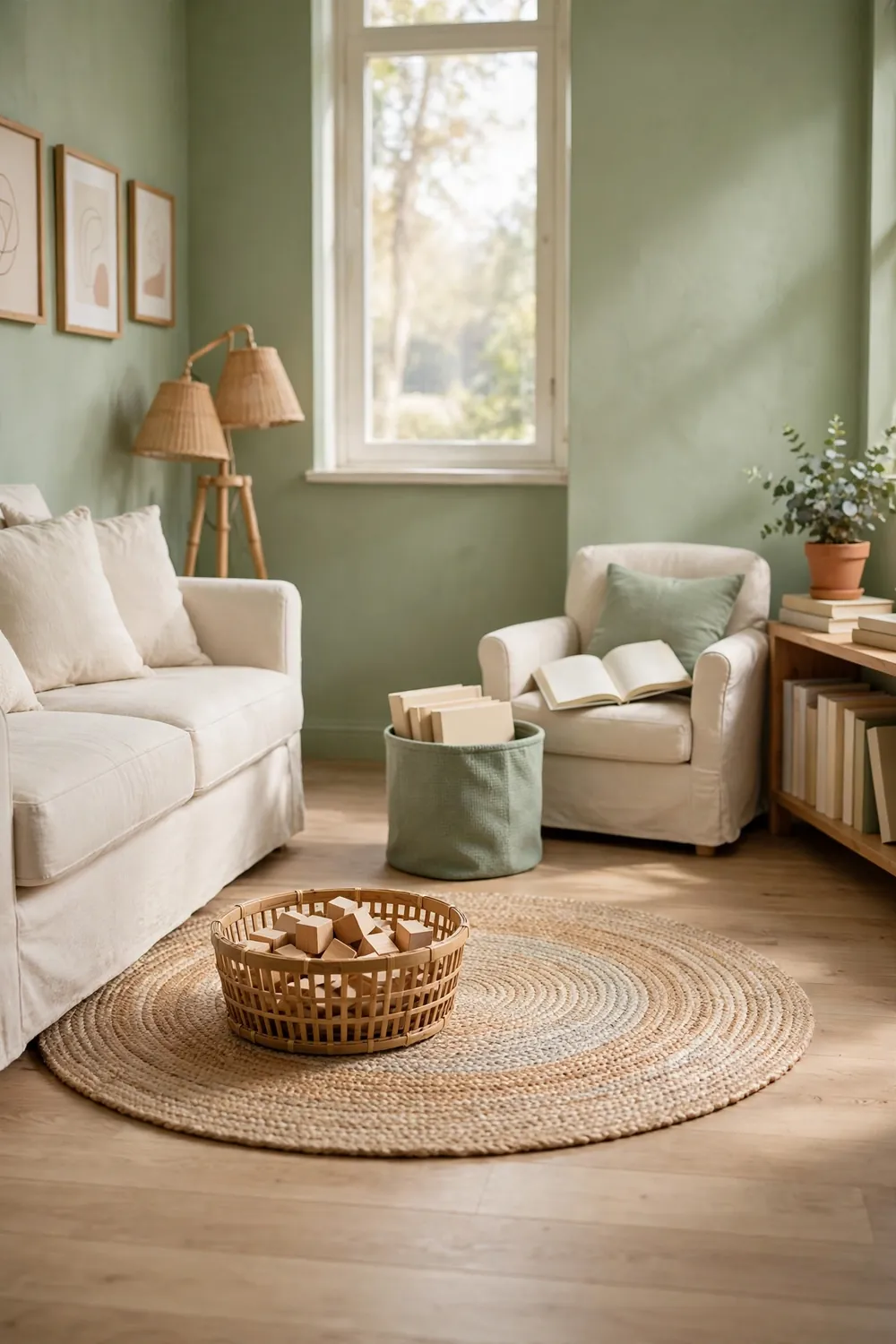
Pick one small bin or basket for each play zone: the living room rug and the reading corner. When playtime ends, everything in that zone goes back in its own bin. Kids learn fast when the rule stays the same everywhere.
Keep the bins small so cleanup never feels huge. Empty them into the main storage once a week so they stay useful. Keep one spare bin for the toys that travel between rooms.
Frequently Asked Questions
How do you store small toys like LEGO pieces so they do not get lost?
Give small toys one home and never let them float around the room. Divided trays with snap lids work well for LEGO bricks and game pieces, with a large flat tray under the build area to catch strays. When playtime ends, sweep every piece into its tray before the bin goes back on the shelf. A quick five-minute pickup keeps tiny pieces from ending up under the sofa.
How can you teach kids to actually put their toys away?
Make cleanup a short daily habit. Set a five-minute timer before dinner or bedtime and tidy together while music plays. Labels with pictures show kids exactly where each toy goes, and a one-in-one-out rule stops new toys from piling up. Praise the effort every time so the habit sticks.
Which toy storage ideas work best when two kids share one room?
Give each child their own color of bin or basket so there is no fighting over whose is whose. Shared toys like blocks and art supplies can live in the middle of the room where both kids reach them. A low shelf with one side for each child keeps everything fair and easy to find.
How do you keep toy storage from looking messy in the living room?
Closed storage hides the chaos fast. Ottomans and TV consoles with doors keep toys out of sight when guests come over. Stick to one or two bin colors across the room so everything matches. Keep just one open shelf for the toys worth showing off.
Give It a Try
The trick is giving every toy a home before the pile grows. One bin, one shelf, or one corner at a time is plenty to start. Add another fix only after the first one is working well.
Before long, cleanup takes minutes and the rooms feel calm again. Tuck this idea away for spring cleaning.