

How to Make a Weekly Cleaning Schedule You Will Stick To
Sunday night arrives and the laundry basket is full again. Dishes sit in the sink, dust covers the shelves, and the bathroom mirror has spots you noticed days ago. You tell yourself next week will be new, but next week looks a lot like this one. The problem is not you. Without a clear weekly cleaning schedule, chores pile up until the whole house feels too big to start.
A good schedule fixes that by spreading the work across the week. Short daily tasks keep messes small, and one deeper clean day handles the rest. You spend less time each day and never face a whole-house marathon again. This guide walks you through building a weekly house cleaning plan that fits your real life, with steps you can start this week.
Take an Honest Walk Through Your Home

Grab a notepad and walk through your home like a guest seeing it for the first time. Look at each room and jot down what needs work most. The kitchen may need the stove wiped, the bathroom may need the tub scrubbed, and the living room may need the shelves dusted. Note the jobs you dread, since those are the ones that keep getting pushed back.
Time each task roughly so you know what a room really costs you. A bathroom often takes twenty minutes, a kitchen takes thirty, and a bedroom takes fifteen. These numbers help you build a weekly cleaning schedule that fits your real week.
Keep the list short and honest. You are not writing down every deep-clean job, only the work that keeps the home feeling fresh. Deep jobs like oven scrubbing and closet sorting can wait for their own day later.
Do a Few Small Jobs Every Day

Daily jobs are the secret behind every cleaning routine schedule that lasts. Small tasks take ten minutes or less, and they stop mess from building up. Make the beds, wipe the kitchen counters, run the dishwasher, and do a quick sweep of the entry floor. When these get done, the house stays close to clean all week.
Tie each job to a habit you keep. Wipe the bathroom sink while you brush your teeth, and fold one load of laundry while dinner cooks. Habits stick when they ride on top of routines you already keep.
Do not add more than four or five daily jobs at the start. You can always add one more once the first few feel easy. A short list you finish beats a long list you skip.
Give Each Day One Focus Room

Break the work down by room, with one focus room for each day. Monday can be the kitchen, Tuesday the bathrooms, Wednesday the bedrooms, and Thursday the living room. You spend thirty to forty-five minutes in one room and leave the rest alone. The week feels lighter because no single day asks too much.
Write one short task list for each room and keep it the same each week. For the kitchen, that might mean the stove, the sink, and the trash. For the bathroom, the toilet, the mirror, and the floor. Use the same list each week and the work turns into a habit you do by rote.
Leave Friday open as a catch-up day. What you skipped during the week lands here, and if nothing slipped, Friday is free.
Pick One Main Cleaning Day

Even with daily jobs and focus rooms, you need one day for the whole-house basics. Pick the day that fits your life, like Saturday morning or a quiet weeknight. On this day you vacuum each room, mop the hard floors, dust the main surfaces, and change the sheets. One steady push of an hour or two covers it all.
Start in the farthest bedroom and work toward the front door so you never walk across a clean floor. Carry all you need in one caddy so you are not hunting for supplies. Play music or a podcast to make the time pass faster.
End the day by taking out the trash. Waking up to a fully clean house shows you why the schedule works, and it gives you a fresh start for the week.
Write It Down and Put It on the Fridge

A schedule only works when you can see it. Write your cleaning checklist schedule on paper or a small whiteboard and stick it on the fridge. List the daily jobs down one side and the focus rooms across the week. Checking off a box feels good, and the list reminds you what is next without any thinking.
Keep the words short so anyone in the house can follow it. If kids are old enough, give them one or two boxes of their own, like emptying small trash cans or dusting low shelves. A shared list spreads the work across the family.
When a week gets busy, cross off the extras and keep only the basics. The list is a guide you can bend. What matters is that you keep going, even on the weeks when you do less.
Keep a Small Caddy of Safe Basics
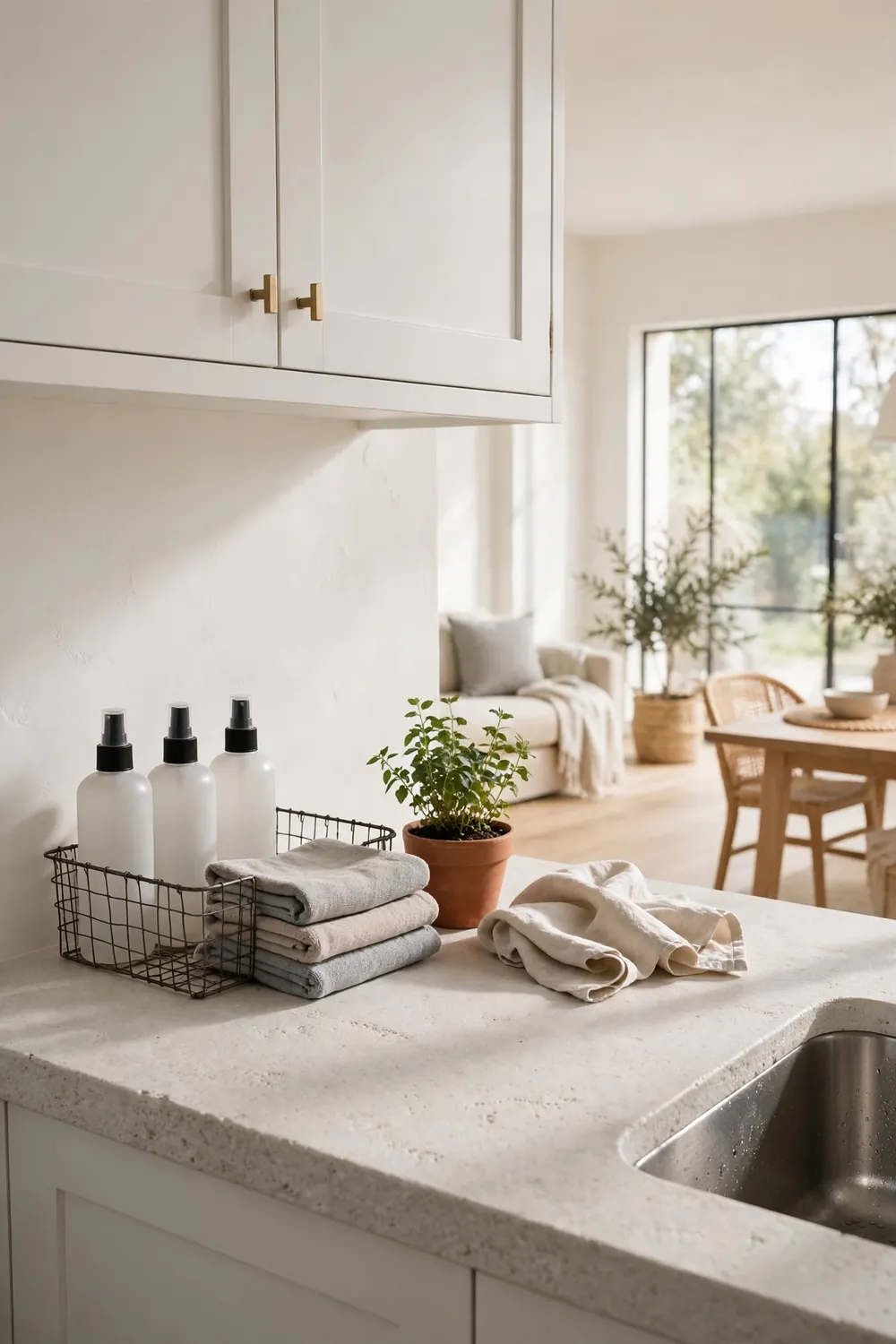
You clean faster when the supplies are already together. Keep a small caddy with an all-purpose cleaner, dish soap, baking soda, and a stack of microfiber cloths. These few items handle most weekly jobs without a trip to the store. You can find them all at dollar stores, Target, or Walmart for a few dollars each.
Use products safely each time. Test a new cleaner on a hidden spot first, open a window when a product smells strong, and never mix bleach with ammonia or vinegar. Strong mixes can make fumes that hurt your lungs. Wear gloves for the bathroom and the oven, and rinse cloths well when you are done.
Put the caddy back in the same spot after each use. When supplies live in one place, you start cleaning in minutes.
Look Back and Fix What Slips

No schedule survives the first month unchanged, and that is fine. At the end of each month, look at your list and mark what kept slipping. Maybe the bathrooms need more time, or the daily jobs feel like too many. Move a task to a new day or drop one that never mattered.
Ask the family what is working for them too. A plan everyone can live with lasts longer than a perfect plan one person runs alone. Small changes keep the schedule real.
Give the new version two weeks before you judge it. A weekly schedule is a habit you build over time. Keep what works, fix what does not, and your home stays in good shape all year.
Frequently Asked Questions
Where should you start if the house is already a mess?
Start with one room and one timer. Set it for twenty minutes, clear the clutter first, and wipe the main surfaces. Do not try to deep clean the whole house in a day. Once one room feels calm, move to the next room on another day, and your weekly schedule will keep each room from sliding back.
How can you follow a weekly cleaning schedule with a full-time job?
Keep the daily jobs under fifteen minutes and move the focus rooms to evenings or weekends. Split a big day across two short sessions if one long session feels like too much. A robot vacuum or a simple mop with a washable pad can cover floors while you do other things. The schedule bends to your week, and a short week of basics still beats a skipped week.
What should change for a large family or pets?
Add one extra laundry day and vacuum high-traffic floors twice a week, since more people and pets make more mess. Give each child one age-fit job, like sorting socks or wiping baseboards with a damp cloth. Keep pet beds washable and shake them out outside once a week. These small add-ons keep a big household running without doubling your time.
How long should the whole week’s cleaning take?
Most homes take three to five hours of actual cleaning per week when the work is spread out. Daily jobs run ten to fifteen minutes, focus rooms take thirty to forty-five minutes each, and the main cleaning day takes one to two hours. Bigger homes and pets push that number up a little. Track your time for two weeks and you will know your real number.
Where to Start
A good schedule turns a big job into small daily wins. You always know what needs doing, nothing piles up, and the house stays close to clean without a weekend marathon. Start with the daily jobs this week, add the focus rooms next week, and let the habit grow at your pace.