
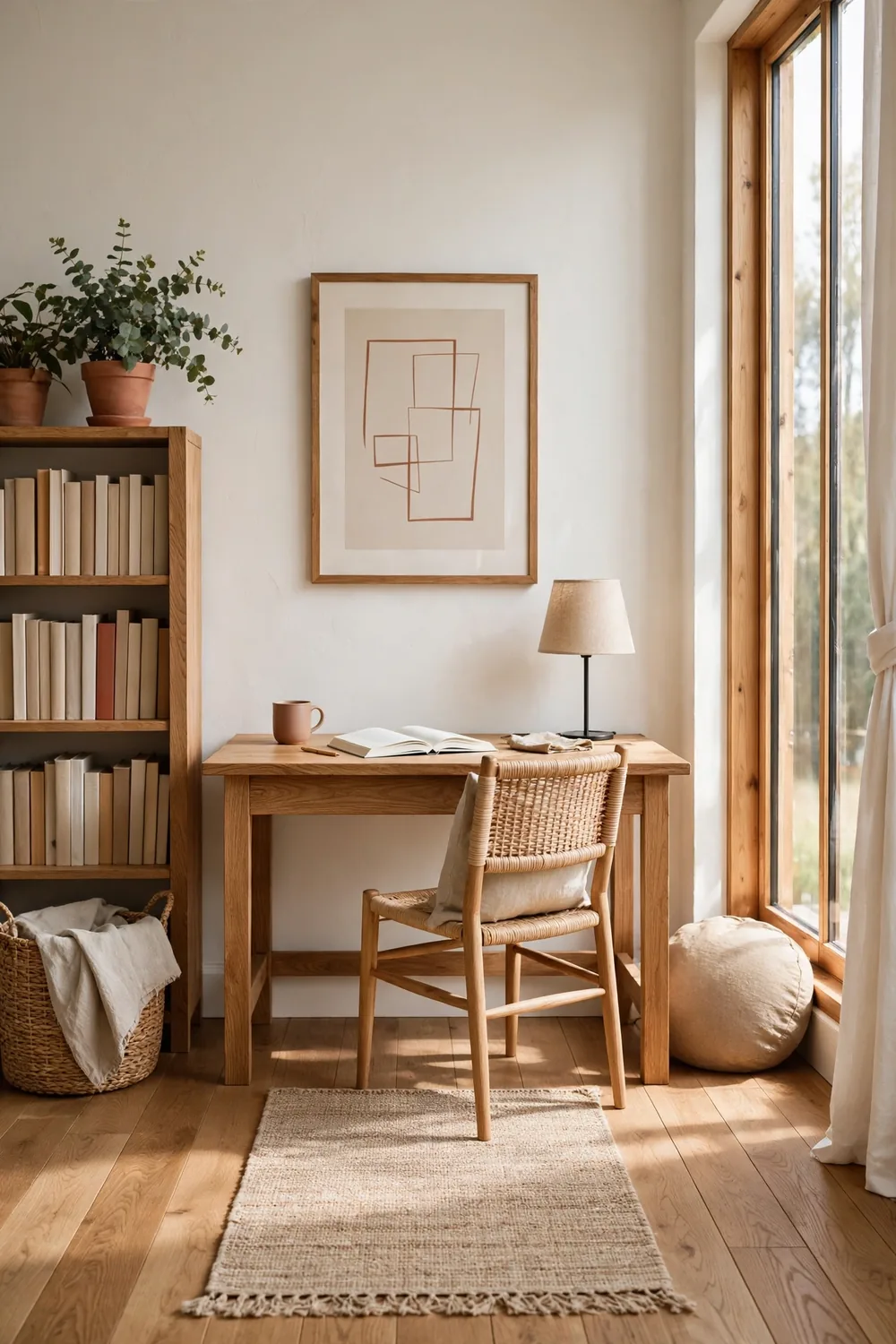
DIY Desk Ideas for Small Spaces
That empty corner by the window or the narrow wall next to your bed can hold a real desk. You don’t need a spare room or a big budget to build one that works. These DIY desk ideas turn a simple board and a few brackets into a work spot that fits your life.
Every idea below uses materials from the hardware store or craft store, with most costing less than a takeout dinner. You will find real measurements and drying times with each build, so you can buy exactly what you need. Pick the design that suits your space, then grab your tools and make a desk that feels like it was always meant to be there.
Floating Wall-Mounted Desk

A 3/4-inch plywood board, 48 inches wide and 20 inches deep, makes a strong floating desk. Mount two heavy-duty L-brackets into wall studs at 29 inches high, then set the board on top and drive screws up from below. Sand the edges with 120-grit sandpaper and seal with two coats of polyurethane, waiting four hours between coats.
The desk holds a laptop and a notebook, and the floor below stays open for a chair. Let the finish cure a full day before you load it up. Paint the brackets to match the wall, and add a small shelf above for books.
Two Drawer-Unit Desk
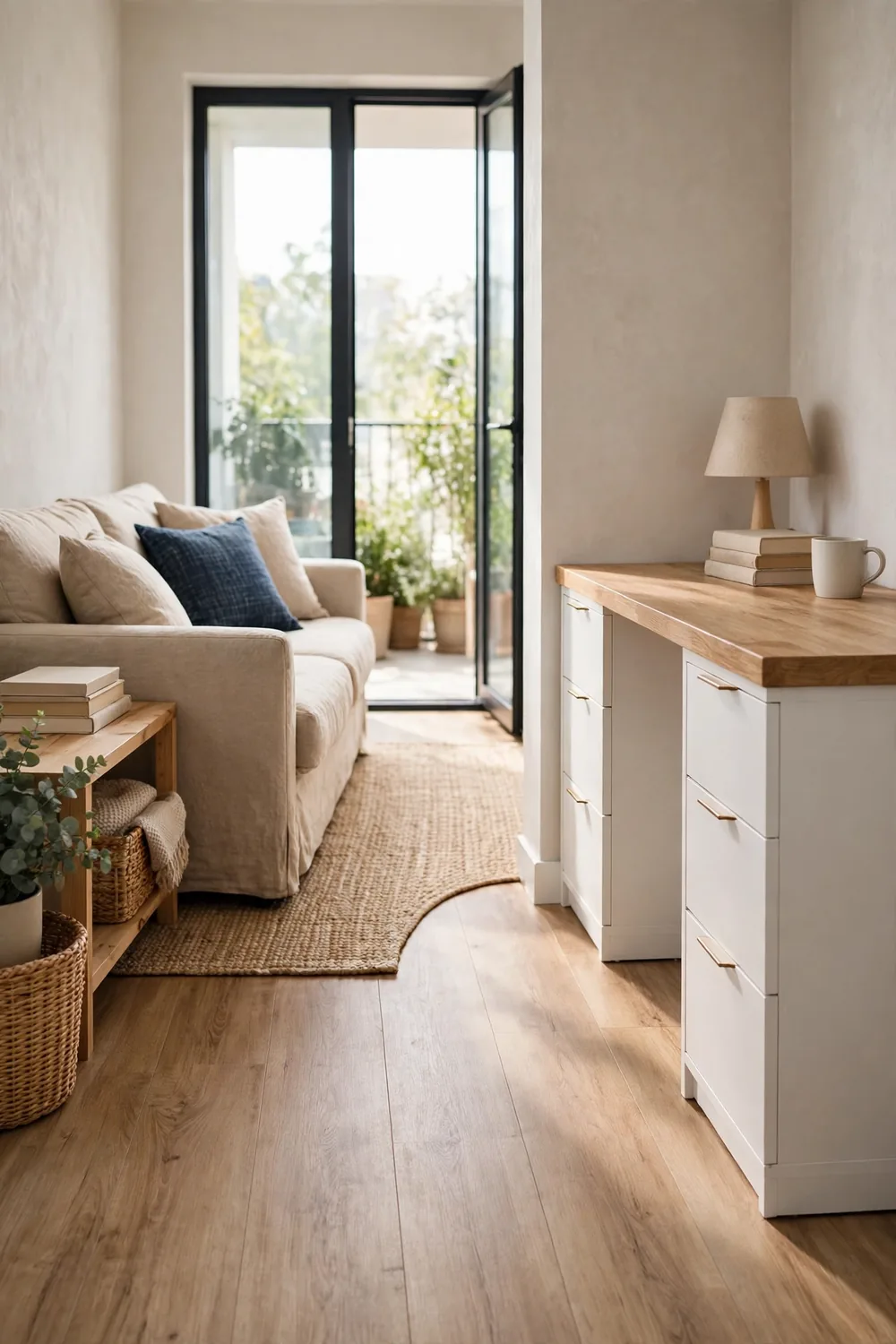
Two three-drawer storage units, about 15 inches wide and 26 inches tall, become solid desk legs. Set them 30 inches apart, then lay a 1-inch-thick laminated board, 48 by 24 inches, across the top. Drive short screws up through the tops into the board so nothing shifts. No drying time means you can work the same day.
The drawers swallow pens and cords, which keeps the desktop clear for real work. Choose white or light wood to keep a small room feeling open. Stick felt pads under the feet if the floor is uneven. A lamp at the back corner leaves the middle free for writing.
Sawhorse Trestle Desk
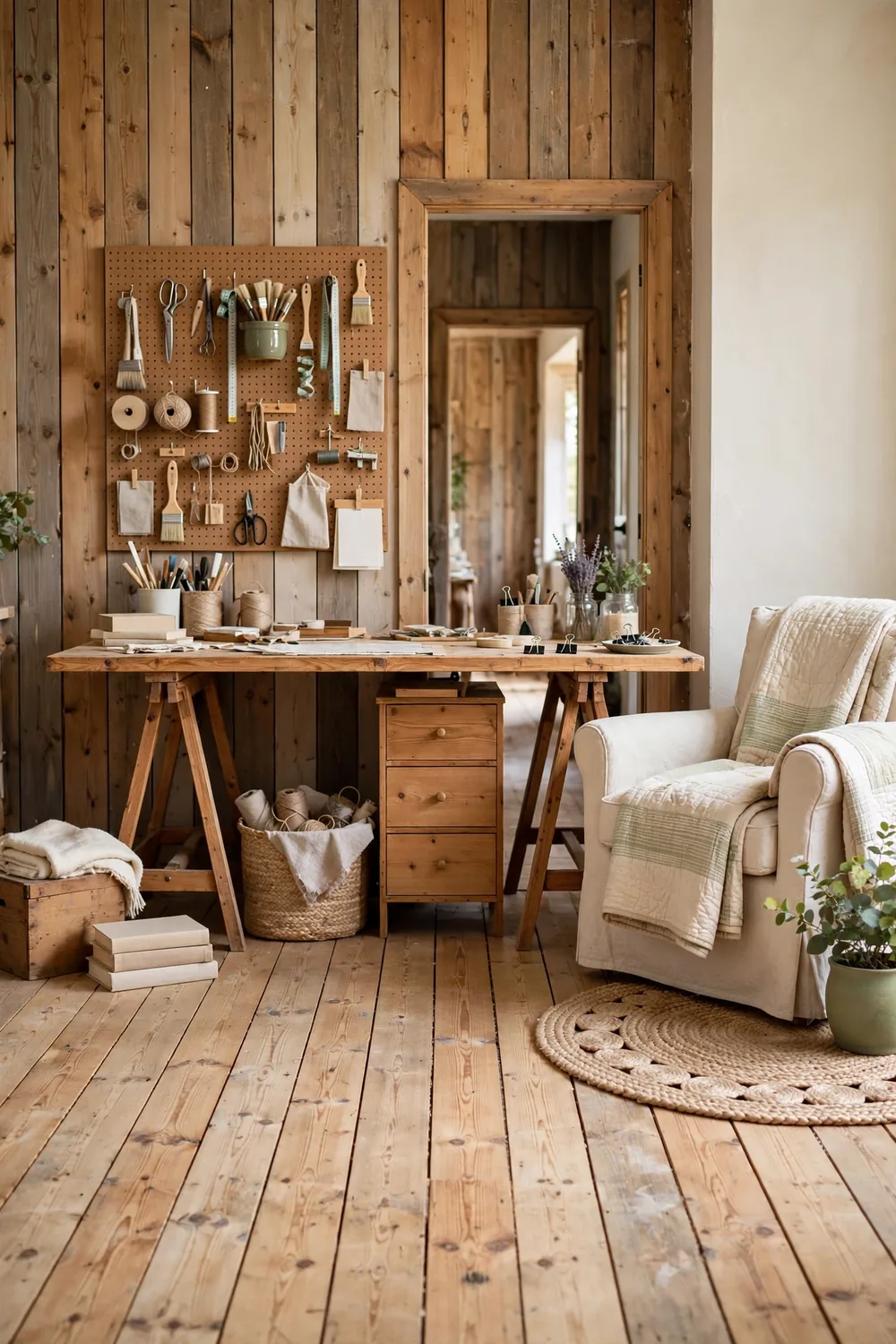
Two wooden sawhorses, 28 to 30 inches tall, support a long pine board for a simple trestle desk. Cut a 1-by-12 board to 60 inches and sand every face with 150-grit paper. Wipe it clean, then brush on two coats of polyurethane with four hours of drying time between them.
The space between the sawhorses fits a storage basket or a small set of drawers. When you need the room, the top lifts off and the sawhorses fold flat. This is a good pick for renters because the wall stays untouched. Keep the board at least 10 inches deep so a laptop fits with room to spare.
Closet Nook Desk
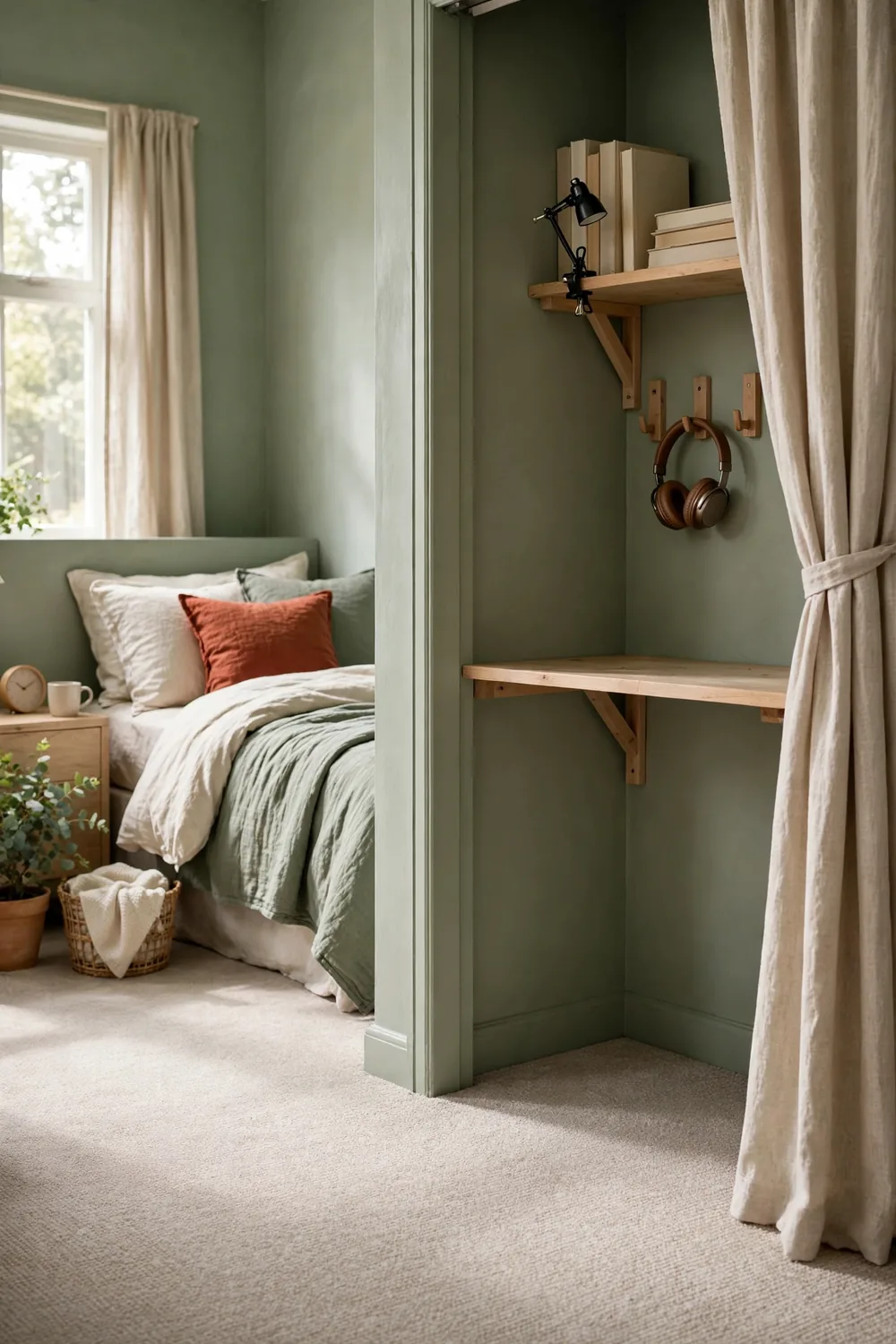
A reach-in closet, 30 to 48 inches wide, hides a great desk spot. Pull the doors off their tracks and set a 3/4-inch board, cut to fit the width, at 30 inches high on wall cleats. Screw through the cleats into the studs so the desk can hold real weight. Paint the inside walls a light color and let it dry six hours.
Hang a small light under the shelf. The shelf becomes book storage, and wall hooks hold your headphones. Hang a curtain if you want the office to vanish at night. See more small home office ideas for tight spaces. Measure the closet depth so the board does not stick out past the frame.
Wall-Mounted Drop-Leaf Desk
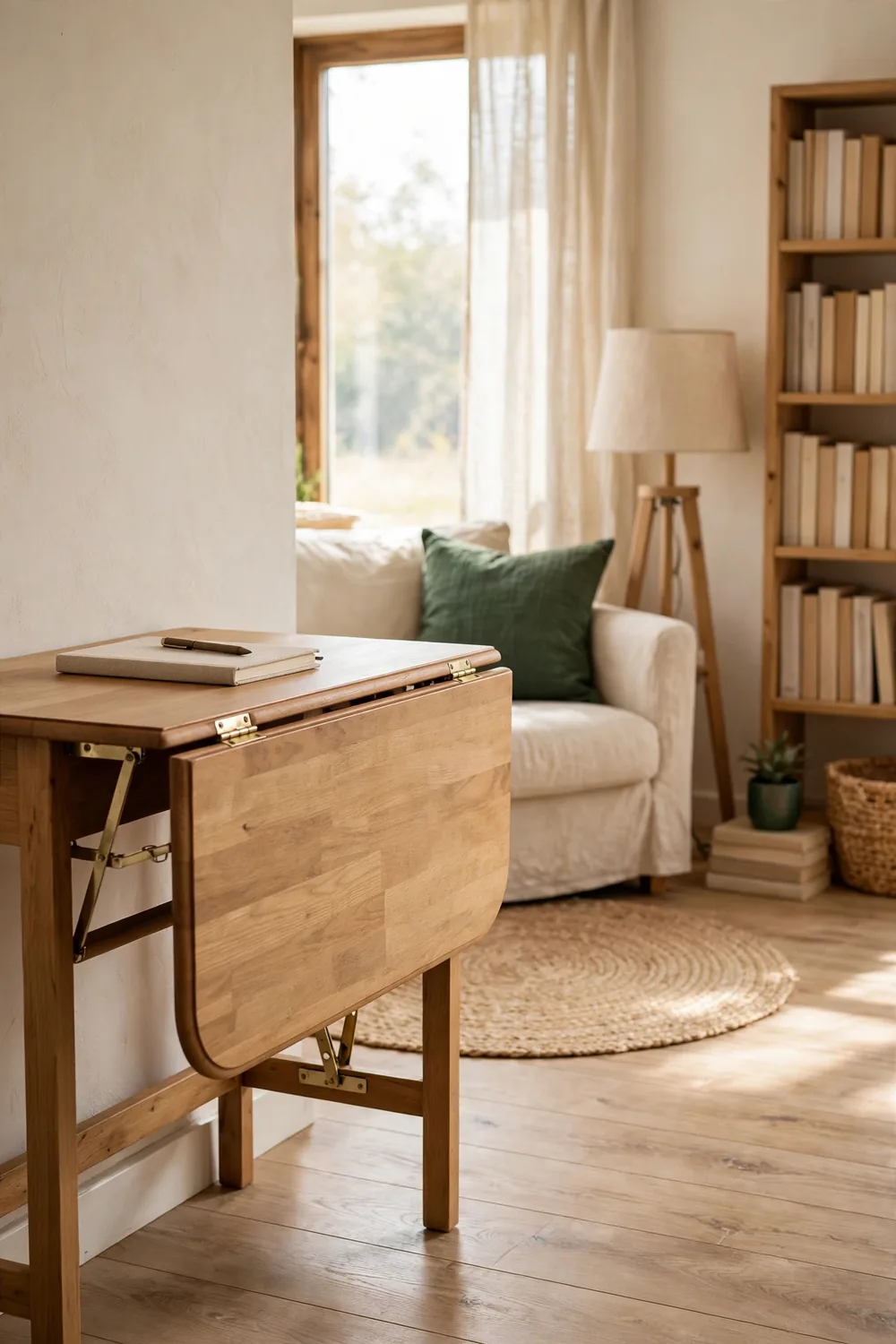
A 36-by-20-inch board on a piano hinge gives a desk that folds away flat. Screw a 2-inch wall cleat into studs at 29 inches high, then attach the hinge between the cleat and the board. Two folding shelf brackets under the front edge carry a laptop. Fold it up when dinner needs the room.
Sand the board smooth and seal it with one coat of sealant, which needs four hours to dry. A small lip at the back edge keeps pens from rolling off. This design suits a studio apartment or a shared bedroom where floor space matters. Press down firmly on the brackets before you trust them.
Crate and Board Desk

Four wood crates, each 12 by 12 by 18 inches, stack into two sturdy towers. Place two crates on each side with the openings facing out, then set a 3/4-inch plywood top, 48 by 20 inches, across them. Screw the top down into the crate frames so the desk feels solid. The cubbies swallow books and craft supplies.
Sand the crates with 120-grit paper and seal them with a clear coat that dries in four hours. Paint the crates one color for a tidy look. Line the cubbies with fabric bins to hide clutter. Keep the total height near 30 inches so a chair tucks under.
Repurposed Door Desk
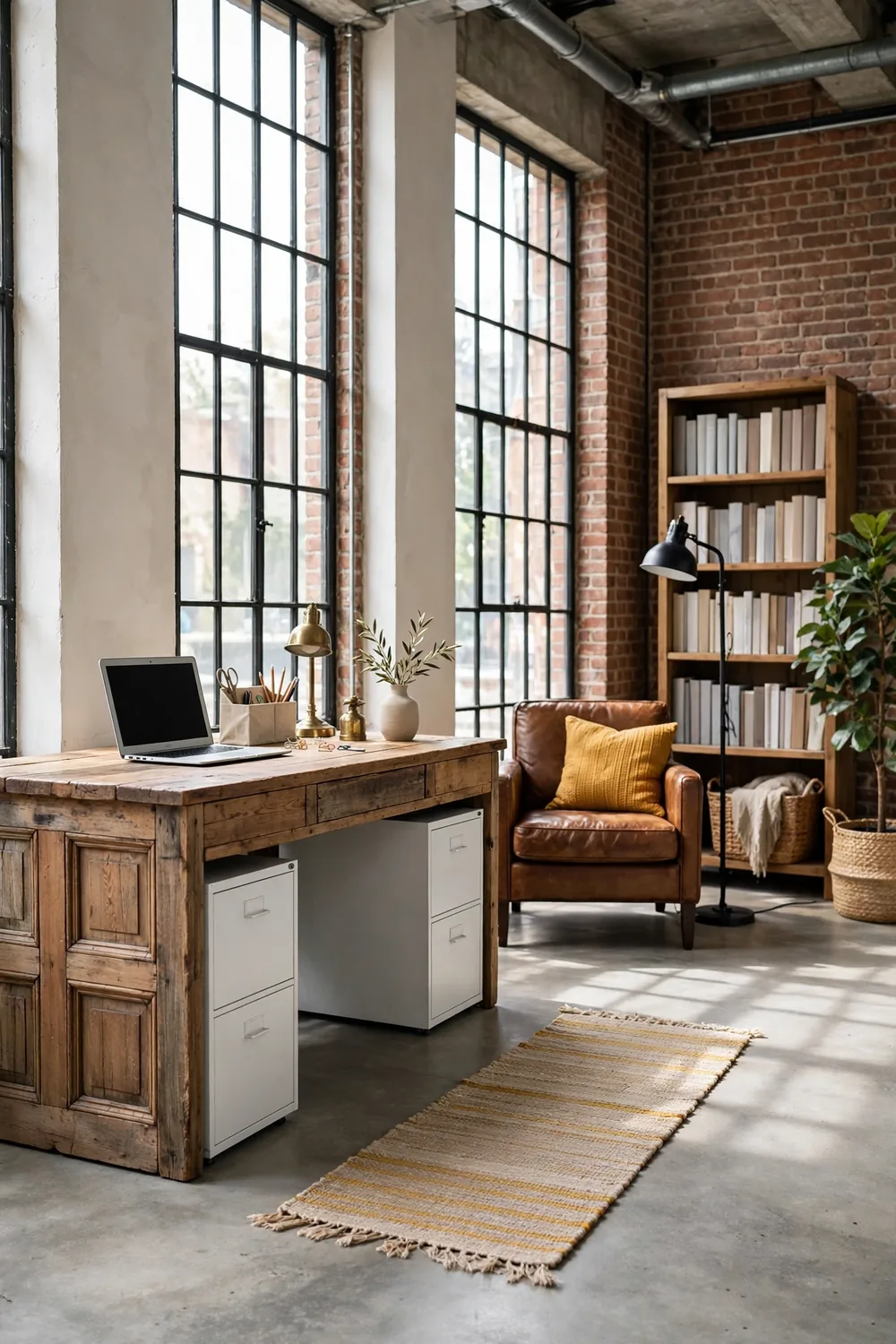
An old solid-core door, usually 30 by 80 inches, makes a generous desktop for almost no money. Grab one from a thrift store, sand it with 120-grit paper, and wipe it clean. Set it on two file cabinets or four screw-on legs, and brush on two coats of polyurethane with four hours between coats.
Let the finish cure overnight before you set up your computer. Fill old knob holes with wood filler and let it harden two hours before sanding flat. A door this wide leaves room for two work zones. Run a power strip under the back edge to keep cords off the floor.
Corner L-Shaped Desk
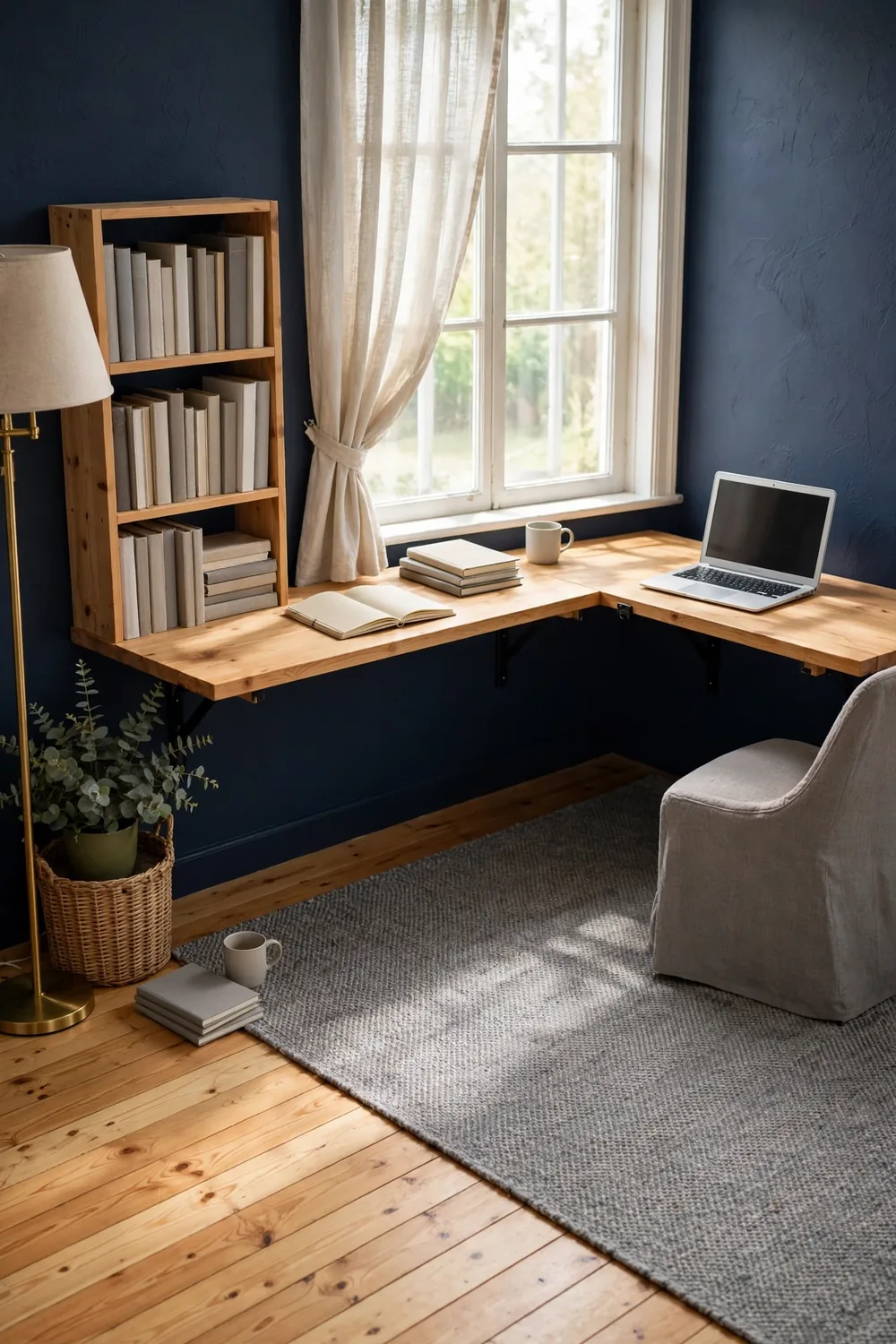
A corner holds more desk than you think. Cut two 3/4-inch boards, each 42 by 20 inches, and join them with a flat corner bracket to form an L. Screw 2-inch cleats into the studs on both walls at 29 inches high and rest the boards on top. Add one leg under the outer corner to keep long spans stiff.
The two arms give a computer zone and a writing zone without taking over the room. Paint the boards to match your walls so the desk melts into the corner. Hide chargers with cable clips under the back edge. Check the chair’s turning room before you commit.
Pipe Frame Industrial Desk
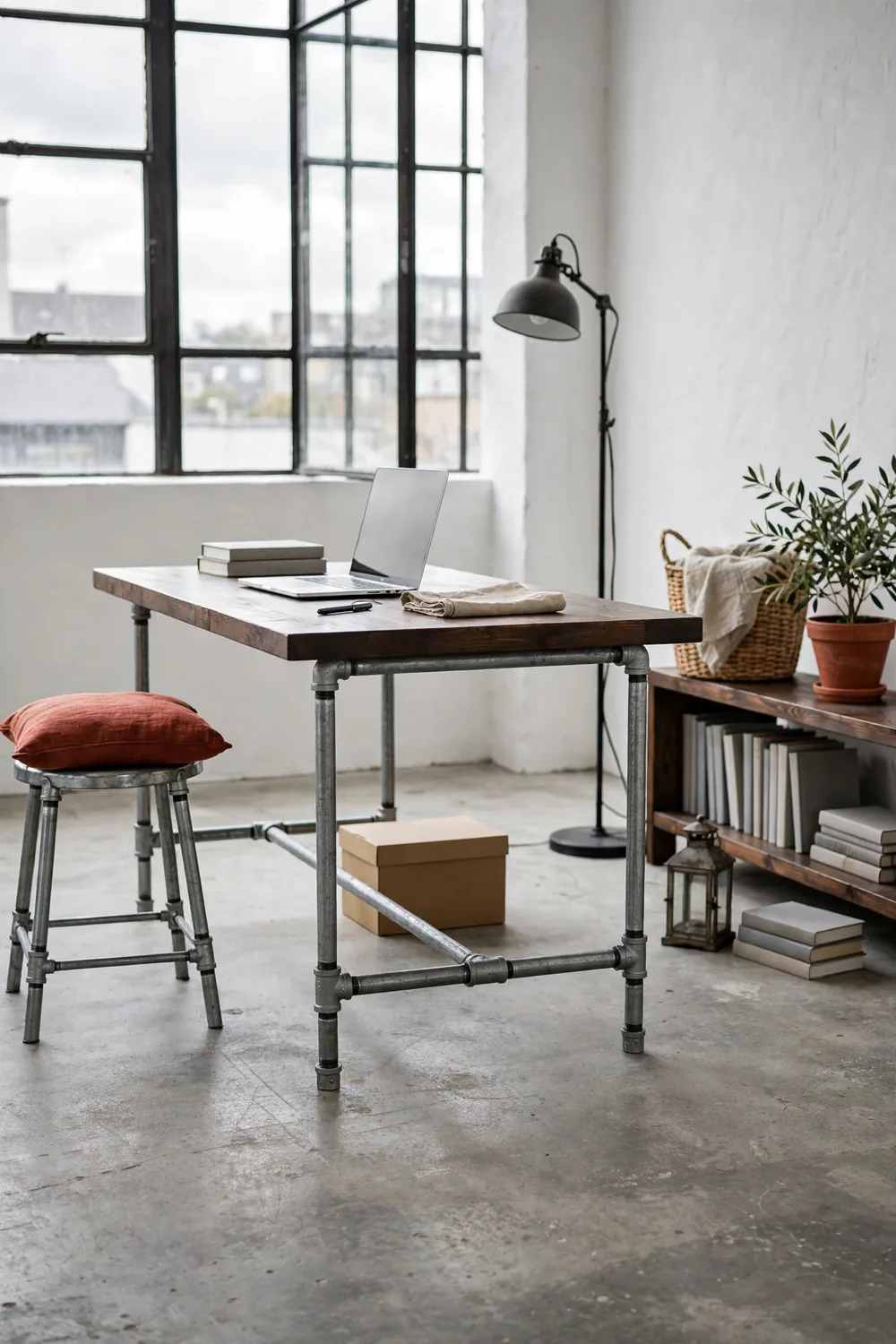
Galvanized pipe legs bring an industrial look that suits small lofts and studios. Buy four 3/4-inch pipes cut to 29 inches, plus four floor flanges and four end caps. Screw the flanges to a 54-by-24-inch pine top and twist the legs in by hand. Sand the top and stain it dark, then seal with two coats of clear varnish.
Let the stain dry six hours, then let the topcoat cure a full day. The open frame keeps the desk light, and the space below fits a small filing box. Wipe the pipes with a damp cloth before assembly. Stick rubber feet on the flanges to protect wood floors.
Desk With Pegboard Back
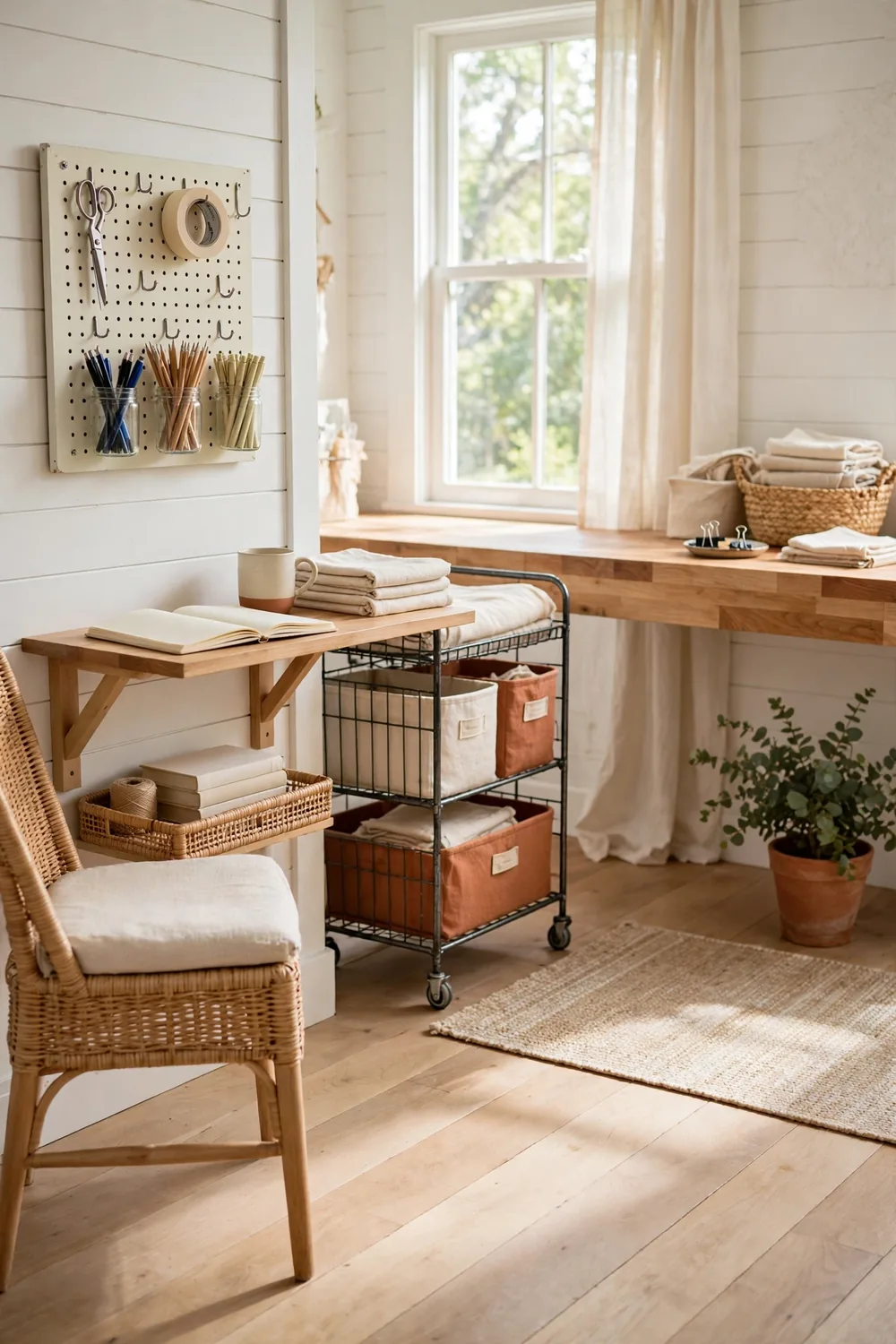
A 36-by-18-inch desktop on two wall brackets pairs well with a pegboard above it. Mount the desk at 29 inches on brackets screwed into studs, then hang a 24-by-24-inch pegboard on the wall behind it. Paint the pegboard with two coats of acrylic paint, allowing two hours of drying time between coats.
Hooks and small shelves on the pegboard hold scissors and tape, so the desk stays clear. This setup suits crafters and students who need supplies in reach. Keep the pegboard a light color so the wall does not feel heavy. A clip-on lamp on the desk edge adds light without more drilling.
Rolling Cart Desk
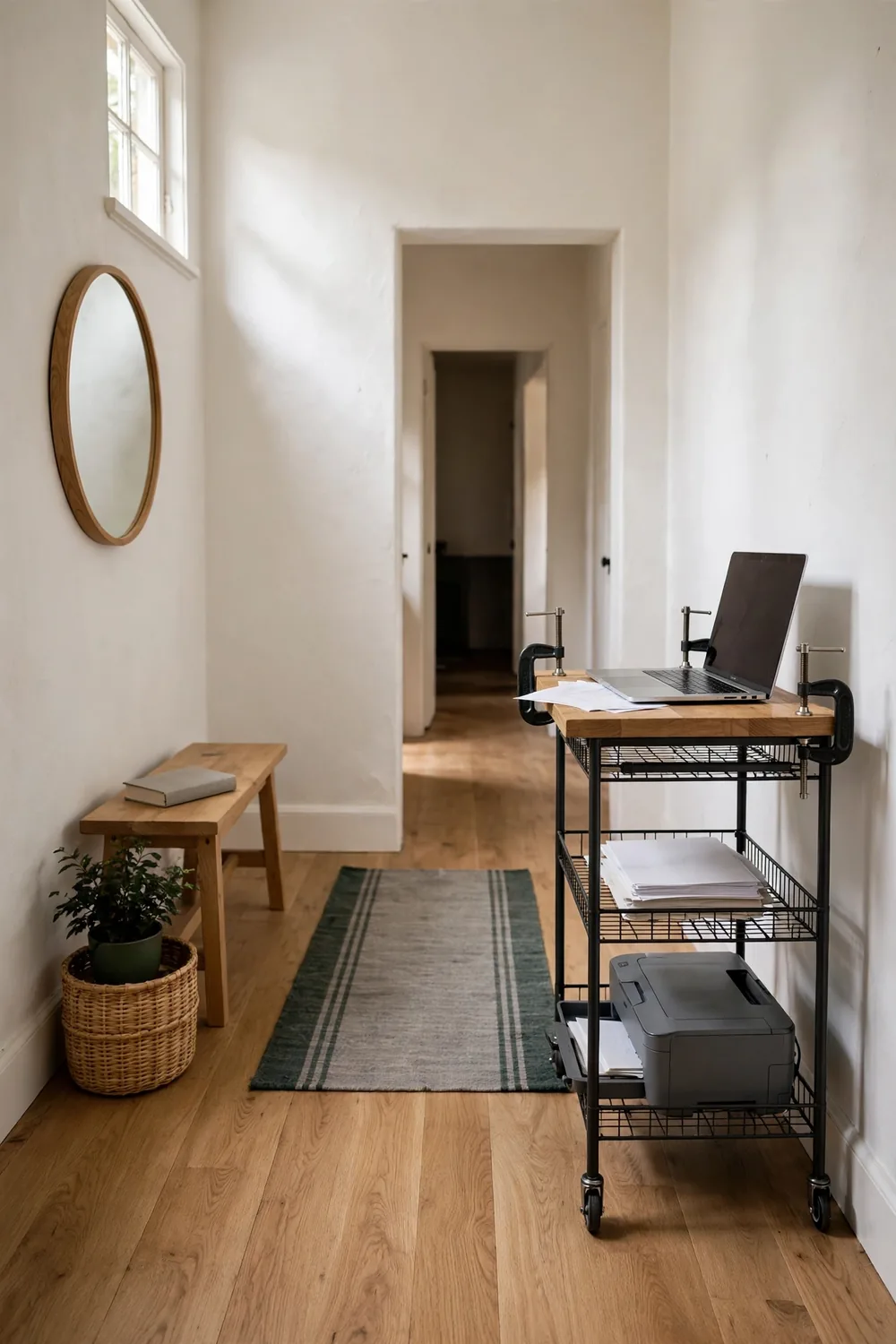
A three-tier metal utility cart, about 30 inches tall, rolls anywhere you need a desk. Clamp a 30-by-18-inch wood board on top with two small C-clamps, and the cart becomes a laptop station. Sand the board and seal it with one coat of clear sealant, which dries in four hours.
The lower shelves hold your printer and paper, so everything travels together. Lock the wheels when you work so the desk stays put. This is a smart pick for a home with no room for a fixed desk, because it tucks into a closet at night. Keep cords short so nothing drags when you roll it.
Under-Window Desk
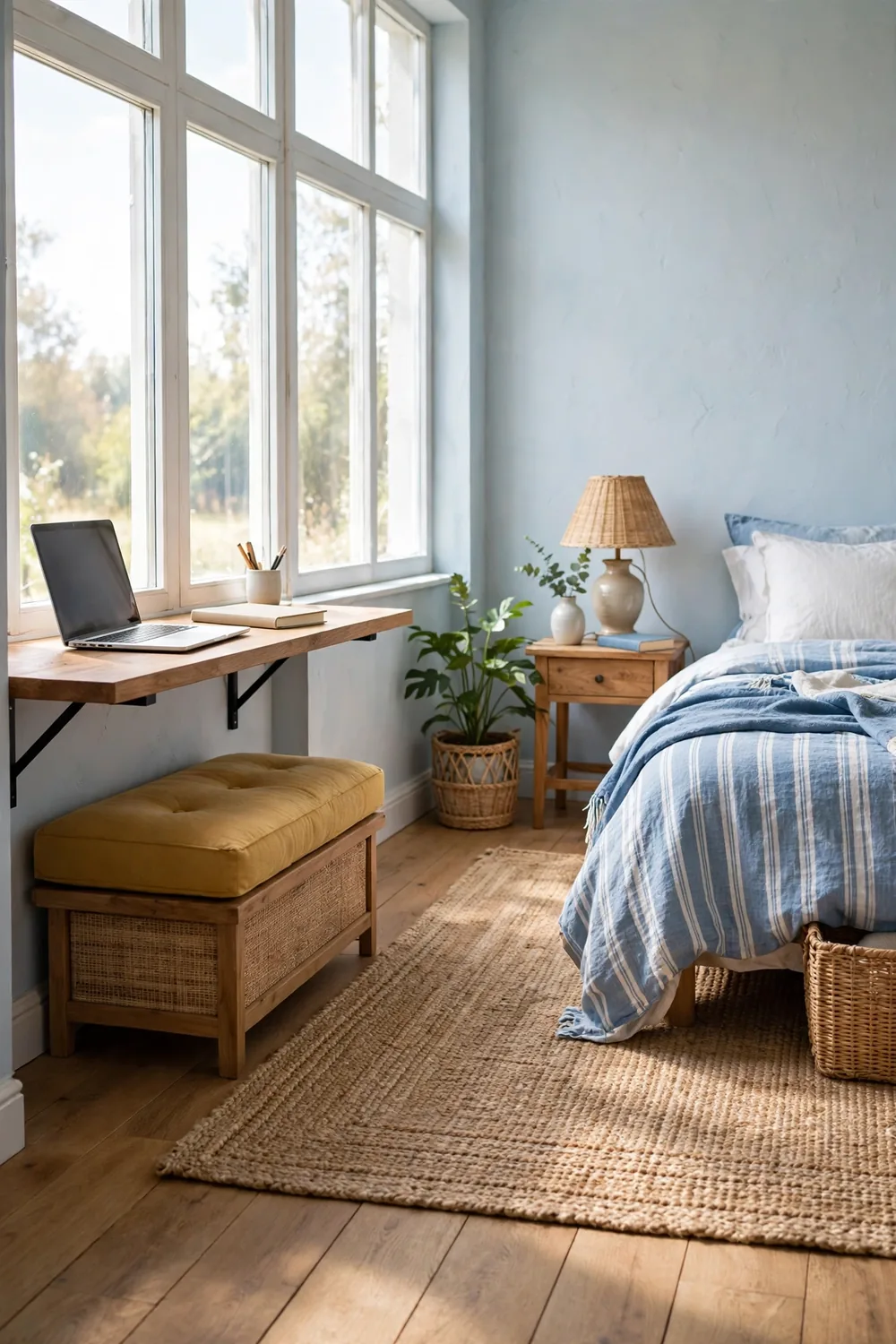
The wall under a window is often wasted space. Screw a 60-by-16-inch board to the wall at 29 inches high, with brackets every 24 inches. The window light falls right on your work, which saves you from buying a desk lamp. Sand the board smooth and seal it with two coats of sealant, four hours apart.
A narrow depth like this suits a laptop and a notebook better than a big monitor. Slide a cushion-topped storage bench below to double the use of the spot. Keep the windowsill clear so the curtains still close. This build works well in a bedroom where the bed takes up most of the floor.
Leaning Ladder Desk

A leaning ladder shelf, about 60 inches tall, turns a blank wall into a desk with storage. The desktop board, 32 by 16 inches, sits on the lower rungs at 29 inches high, while the upper shelves hold books and plants. Buy one unfinished, or build it from 1-by-3 pine and wood screws.
Sand every piece with 150-grit paper, then paint or stain it and let it dry fully, about six hours for paint. Anchor the top to the wall with a small L-bracket so it cannot tip. The footprint stays about 16 inches deep, so it fits behind a door. Style the upper shelves lightly to keep dusting easy.
Fold-Down Wall Desk

A fold-down desk gives a full work surface that vanishes when the day ends. Hinge a 36-by-24-inch plywood panel to a wall cleat at 29 inches high with a piano hinge, then add two folding legs to hold it level. A small magnetic latch keeps the panel closed flat against the wall.
Paint the panel the wall color and wait six hours for it to dry before mounting. Screw the cleat into studs, since the desk holds books and a laptop daily. Stick a cork strip inside the closed panel to hold notes. This build suits a guest room that doubles as an office a few days a week.
Pallet Wood Rustic Desk
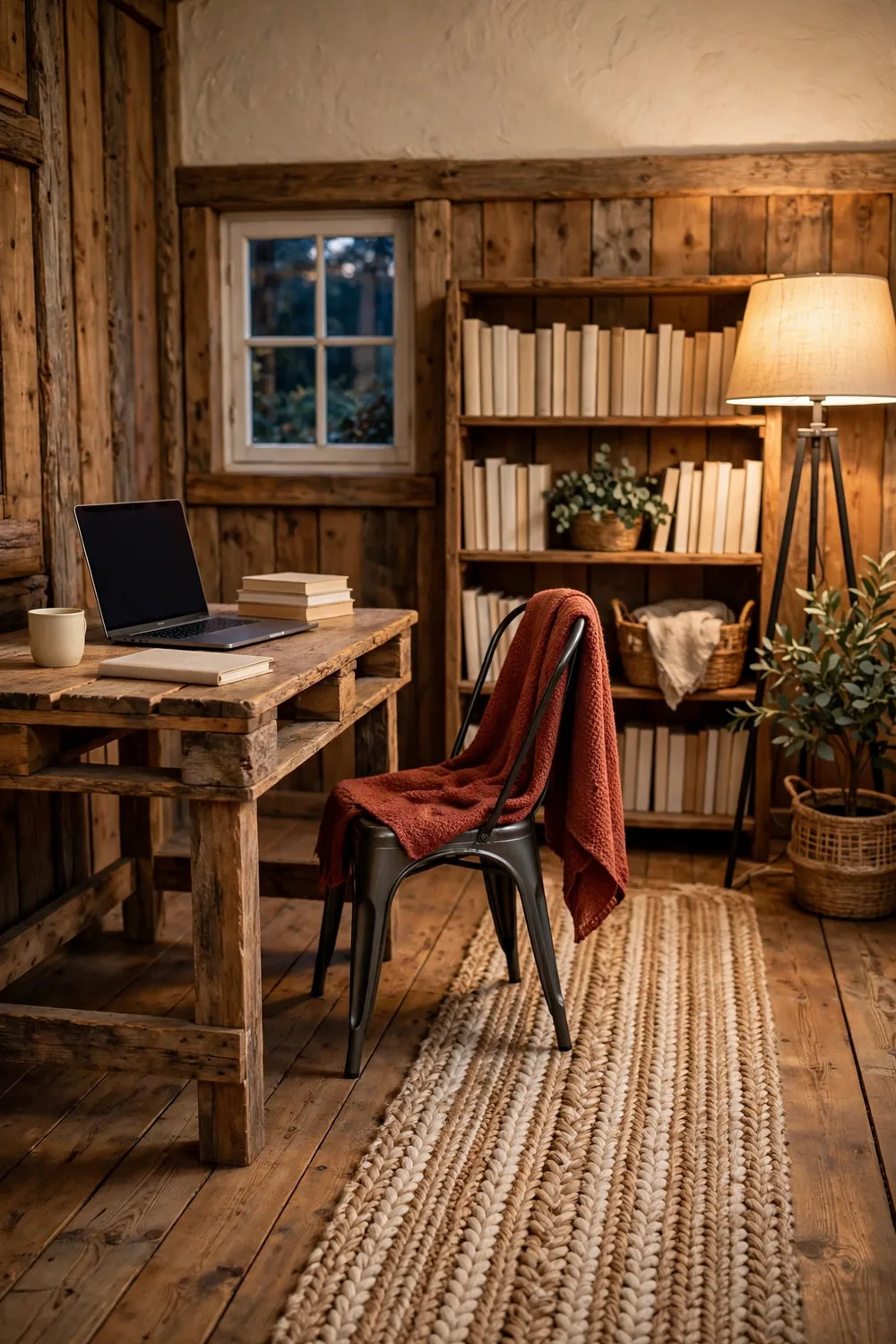
Reclaimed pallet boards make a desk with real character for just screws. Pull the boards apart, pull every nail, and sand them flat. Glue six boards edge to edge into a 48-by-22-inch top and clamp them tight. Let the glue cure for 24 hours. Screw the top to four 2-by-2 legs, 29 inches tall.
Sand the top with 120-grit paper and seal it with two coats of clear varnish, four hours apart. Check each board for stamps or marks, and skip any that look treated. The rustic top hides small dents, which makes it forgiving for a first build. Pair it with a simple metal chair for a workshop feel.
Frequently Asked Questions
What is the best height for a DIY desk?
Most desks feel right at 28 to 30 inches high, with 29 inches the sweet spot for an average chair. If you are tall, add an inch or two to the legs or brackets before you build. Test the height with a table you already own, since fixing it later means rebuilding.
How much weight can a wall-mounted desk hold?
A board screwed into wall studs with heavy-duty brackets holds 50 pounds or more, which covers a laptop and books. Drywall anchors alone are not enough for daily use, so always find the studs with a stud finder. When in doubt, add a third bracket in the middle for extra support.
Which DIY desk ideas work best for renters?
The sawhorse desk and the crate desk need no drilling at all, so your walls stay untouched. The rolling cart desk and the door desk also work, since both stand on their own. Always check your lease before you mount anything, and keep the original hardware if you remove a closet door.
How do you keep a small desk from looking cluttered?
Give every item a home off the desktop, using drawers, a pegboard, or baskets on a lower shelf. Run chargers through cable clips under the back edge so cords never pile up. At the end of each day, clear the surface completely, which makes even a tiny desk feel calm the next morning.
Before You Go
Keep this handy for your next weekend project. Any small corner can work harder than it does right now. With one of these builds, you get a desk sized for your room and your budget, built around the way you actually work. Measure twice and take your time with the finish, then enjoy a workspace that feels truly yours.

One Comment
Comments are closed.