Top 19 Container Garden Ideas for Patios, Decks and Balconies
A bare patio and one lonely chair hold so much promise, and a handful of pots can change the whole mood in a single weekend. These container garden ideas suit patios, decks, and balconies of any size. Most need nothing more than a sunny corner and a watering can.
Containers let you garden without digging, which makes them ideal for renters and anyone with poor soil. You control the soil and the drainage. You can shuffle pots around until the look feels right. Flowers, herbs, and vegetables all thrive in pots when you match each plant to your light.
This list covers 19 approaches that work across most US regions. It runs from the classic thriller-filler-spiller recipe to self-watering tubs that forgive a busy week. Each idea names the plants, the pot size, and the basic care. Start with one pot this weekend and add more as you learn.
1. Thriller-Filler-Spiller Flower Pots

This classic recipe builds a full look from three plant types, so beginners get great results. Set one tall thriller, like purple fountain grass or a dwarf canna, in the center of a large pot. Ring it with mid-height fillers such as geraniums or calibrachoa. Add a spiller like sweet potato vine to pour over the rim.
Pick a pot at least 14 inches wide so roots can spread. Fill it with quality potting mix. Water deeply when the top inch feels dry. Snip off spent blooms to keep new flowers coming until frost. One large pot by the front steps sets the tone for the whole patio.
2. Raised Planter Boxes on the Deck
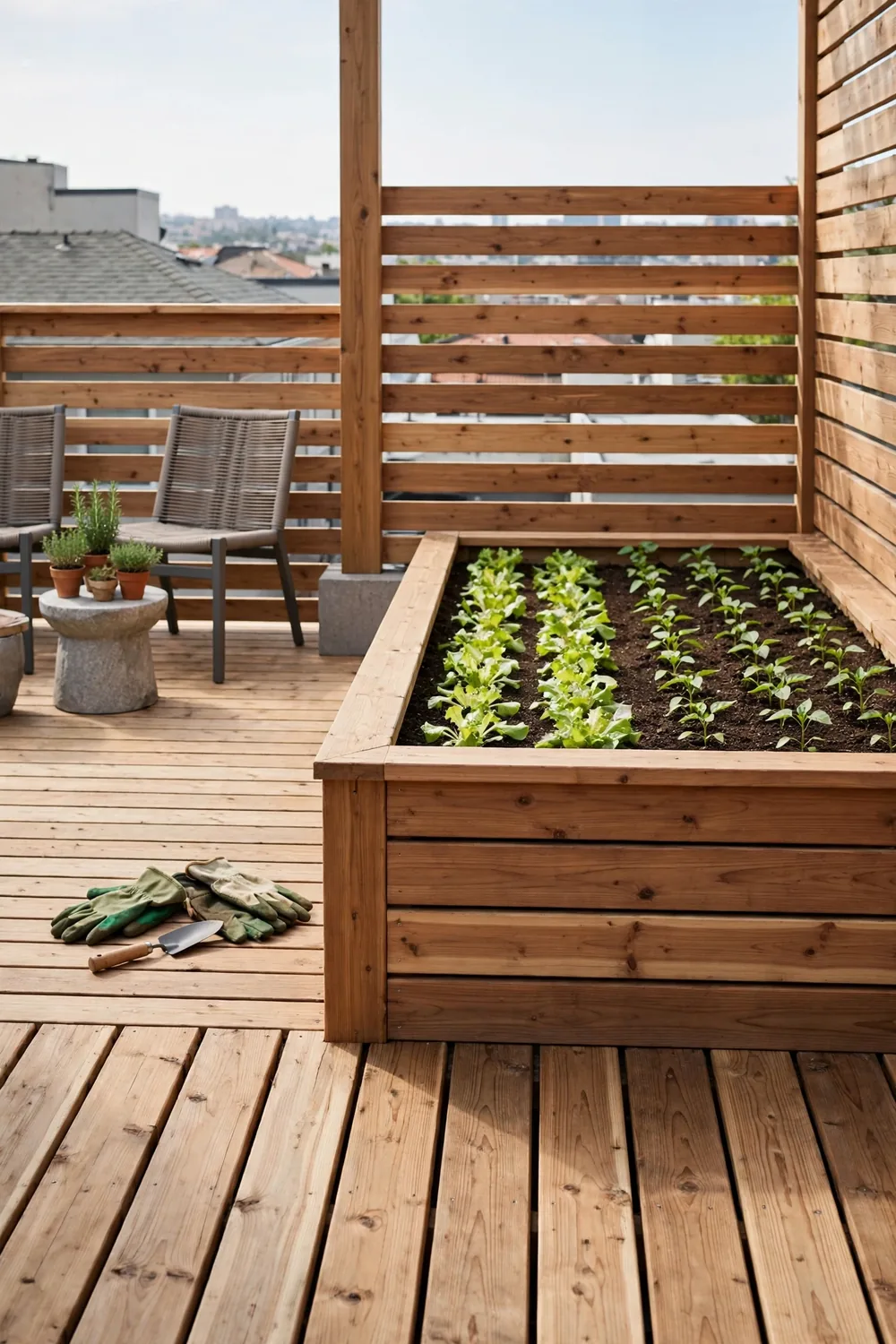
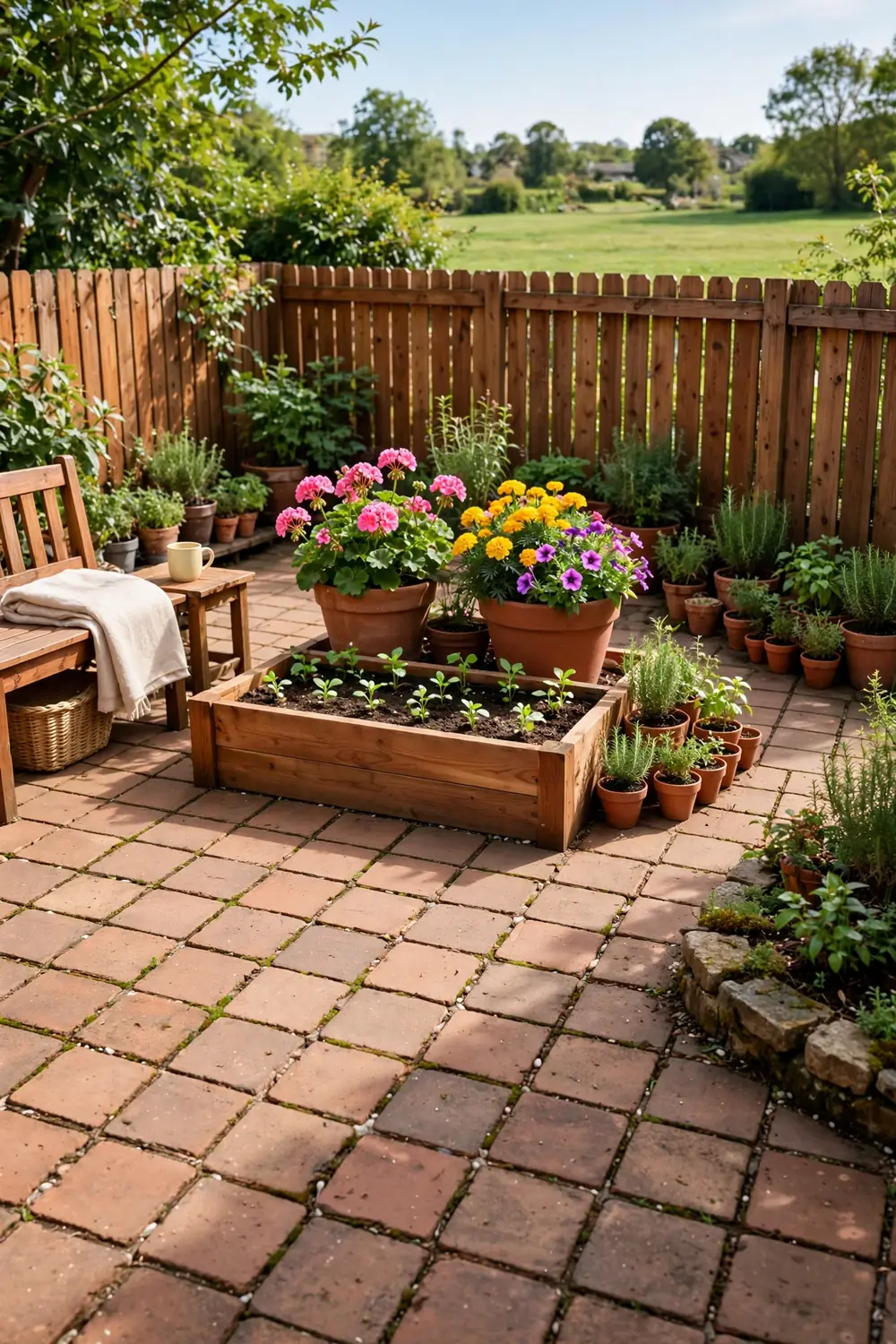
A raised box turns a plain deck into a growing space with almost no bending. Build or buy a cedar box about 4 feet long, 2 feet wide, and 12 inches deep. Drill drainage holes in the base. One box this size holds 8 cubic feet of mix, or four 2-cubic-foot bags of potting soil.
Line the bottom with landscape fabric so water drains but soil stays put. Set the box in full sun. Grow salad greens or bush beans in spring, then swap to spinach or garlic in fall. The height also keeps curious pets away from tender young plants.
3. Hanging Baskets Full of Trailing Color
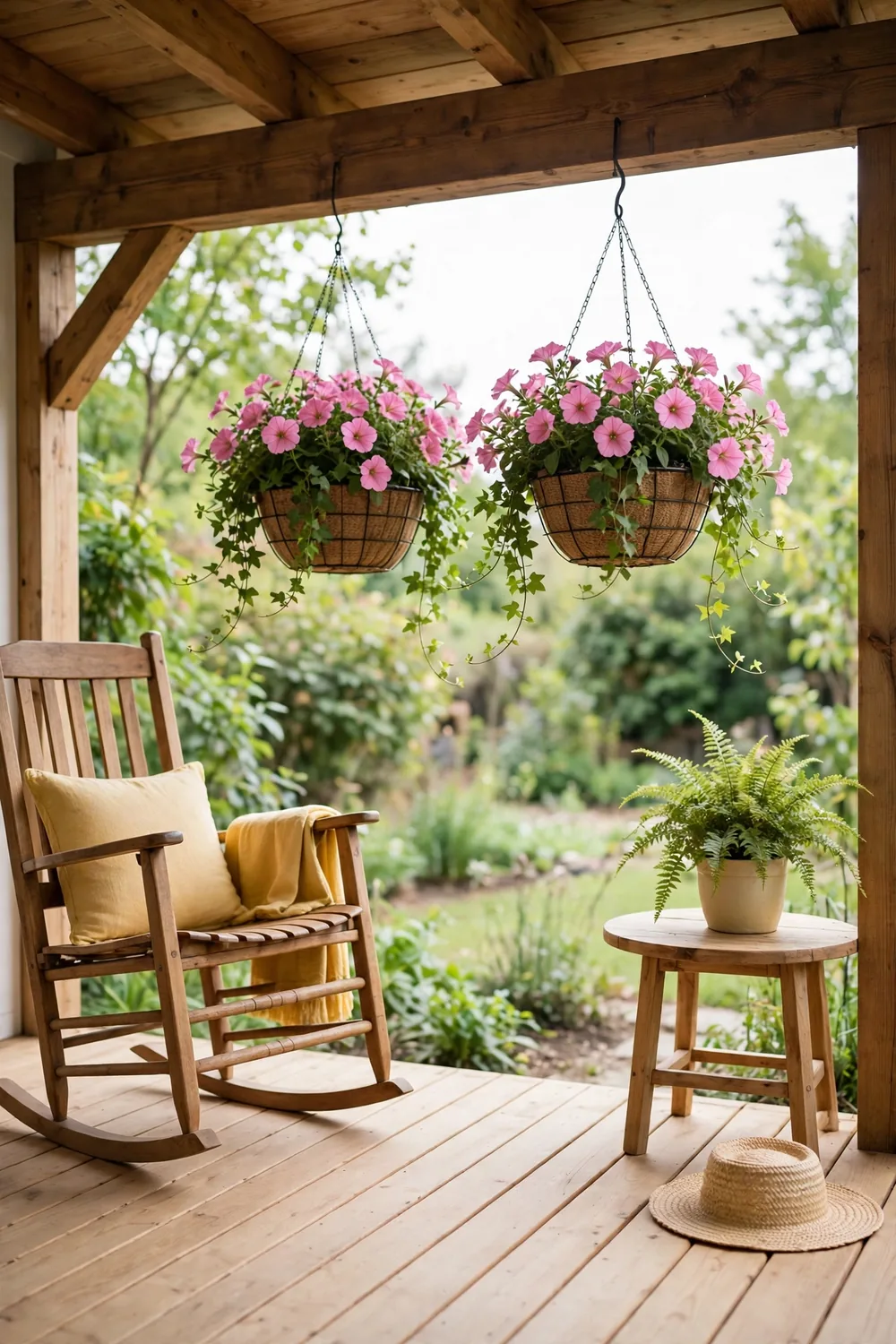
Hanging baskets put color at eye level and use space that floor pots cannot reach. A 12 to 14 inch wire basket lined with coco fiber holds plenty of soil. Plant sun lovers like petunias or trailing geraniums for bright spots. For a shaded corner, choose fuchsia or trailing impatiens.
Baskets dry out fast, so water daily in summer heat. On the hottest days, water twice. A small saucer tucked inside the liner catches drips and protects the deck. Feed with liquid fertilizer every two weeks. Rotate the basket a quarter turn each week so every side fills in.
4. A Kitchen Herb Corner by the Back Door

Fresh herbs taste best minutes after picking, so keep them steps from the kitchen. Group three or four 10 to 12 inch pots by the back door. Give basil and thyme the sunniest spots. Plant mint in its own pot, since its roots spread fast and crowd out the rest.
Pinch basil and mint from the top to keep the plants bushy. Most herbs want full sun and a drink when the top inch of mix dries out. Parsley and cilantro accept a little afternoon shade. Bring tender basil indoors before the first frost, or root cuttings in a glass of water.
5. Balcony Rail Planters With Strawberries
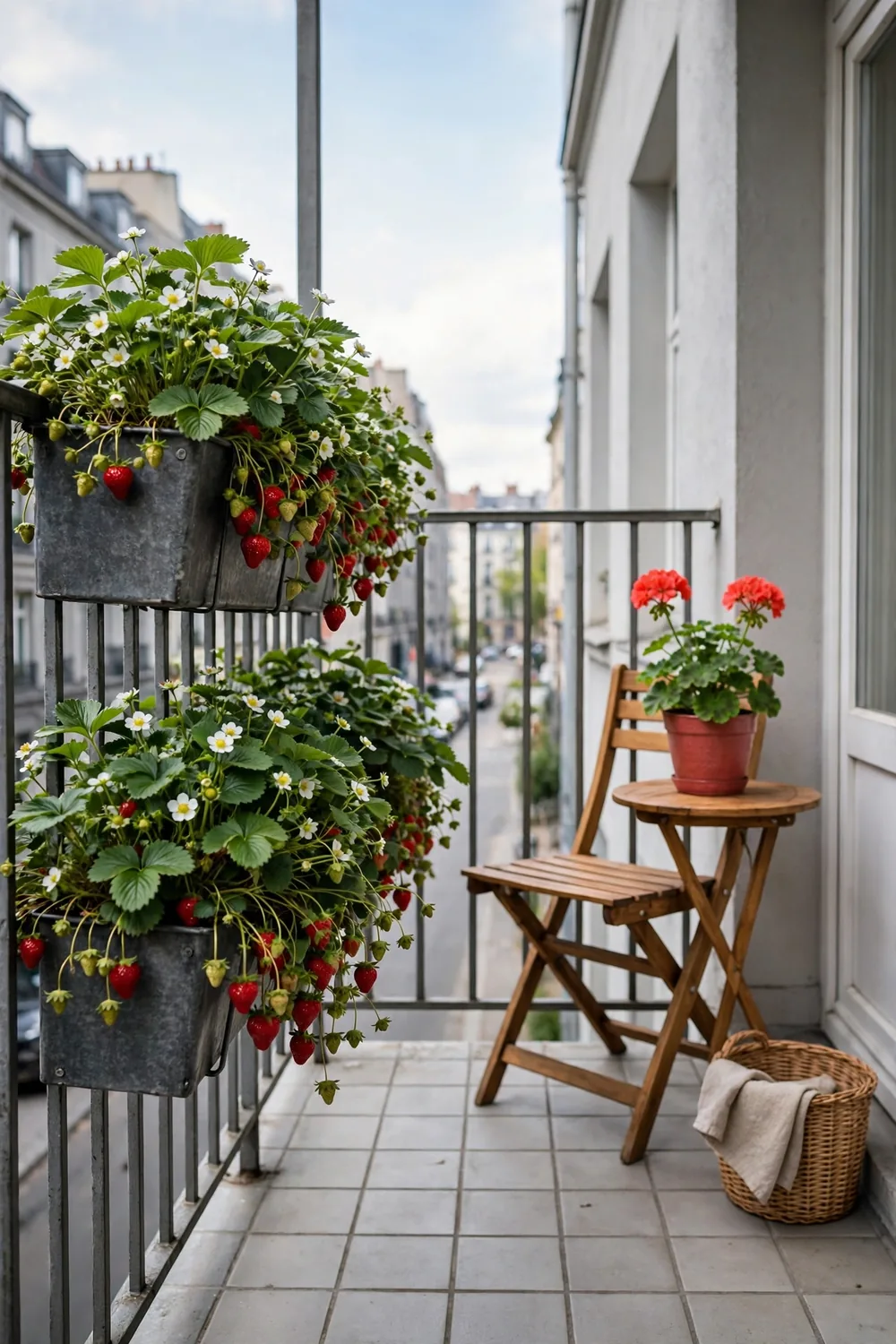
A narrow balcony still grows dessert when the railing does the work. Hang planters made for railings along the sunniest side. They should be at least 8 inches deep. Everbearing strawberries fruit from early summer into fall. They spill over the edge and give you berries plus a green curtain.
Fill the planters with potting mix blended with compost. Water often, since shallow boxes dry quickly. Pick ripe berries every day or two so plants keep producing. Tuck a little straw under the fruit to keep it clean. In cold zones, move planters to a sheltered wall for winter or replant each spring.
6. Self-Watering Containers for Busy Weeks
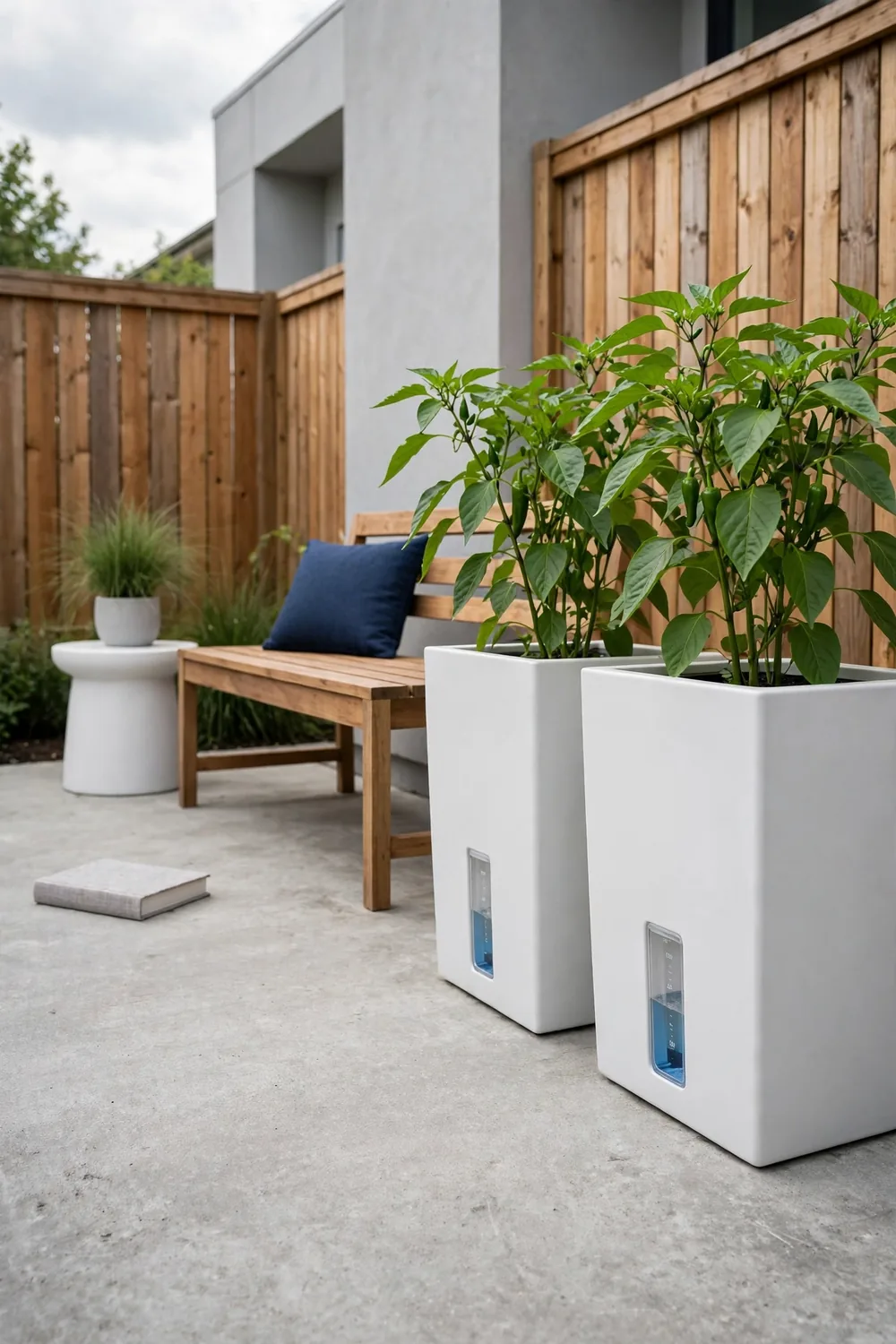
Self-watering pots hide a reservoir under the soil that feeds roots through a wick. Plants drink as they need it. The reservoir in a medium planter lasts several days. That forgives a missed watering during a hot week. Tomatoes, peppers, and thirsty petunias do well in them.
Fill the reservoir through the side tube until the gauge shows full. Top it up every three to four days in summer. Use a light potting mix so the wick pulls moisture evenly. Even with steady water, give the planter the right sun, since water cannot fix deep shade.
7. Sun-Loving Succulent Bowls

Succulents suit the hottest, brightest corner where other plants wilt by noon. Shallow, wide bowls of echeveria and hens-and-chicks make a living mosaic. They ask for very little care. Mix cactus soil with a handful of perlite for drainage. Always choose bowls with holes in the bottom.
Water deeply, then wait until the soil dries out fully before watering again. In most regions these plants live outside from spring through fall. Bring them in before the first hard freeze. A light top dressing of small pebbles keeps leaves dry and stops soil from splashing in rain.
8. Tomato and Pepper Tubs

Homegrown tomatoes taste nothing like store ones. One tub per plant is all it takes. Choose a container that holds at least 5 gallons. Small pots dry out and stunt the roots. Compact determinate types like Patio or Celebrity suit containers, and cherry tomatoes forgive beginner mistakes.
Set the tub where it gets six to eight hours of direct sun. Add a cage or stake at planting time so you never damage roots later. Water on a steady schedule to avoid cracked fruit. Feed every two weeks with tomato fertilizer once flowers appear. Mulch the top with two inches of straw to hold moisture.
9. A Vertical Pocket Planter on the Fence

When floor space runs out, the fence becomes the garden. Fabric pocket planters hang on screws or hooks and turn a blank fence into a wall of green. Plant salad greens and herbs in the top rows where they catch more light. Tuck shade-tolerant impatiens into the lower pockets.
Pockets hold little soil, so water them daily in warm weather. Feed with diluted liquid fertilizer every two weeks. Line each pocket with a little compost at planting time to give roots a head start. Check that the fence can carry the weight when the pockets are soaked.
10. Shade Containers With Hostas and Ferns

A north-facing patio or a deck under big trees still grows a lush garden. Hostas and ferns love bright shade and bring big leaves and rich texture. They need no blooms to look full all season. Pair them with impatiens or begonias for color that glows in low light.
Shade pots dry out slowly, so check the soil before watering. Skip a day when it still feels damp. A yearly top-up of compost keeps the mix rich. Watch for slugs under the pots in wet weather. Set containers on pot feet so air moves underneath.
11. Fall Pots With Mums and Ornamental Kale

Summer flowers fade, but fall containers can look even better. Swap tired pots in September for chrysanthemums in rust and gold. Tuck ornamental kale or cabbage around them for texture that survives light frost. Pansies and violas fill the gaps and bloom until hard freezes arrive.
Choose mums still in tight bud for the longest show. Set fall pots in full sun and water when the top inch dries. Autumn wind dries soil fast. When a hard freeze hits, compost the spent mums and keep the kale for winter interest.
12. A Mini Water Garden in a Half Barrel
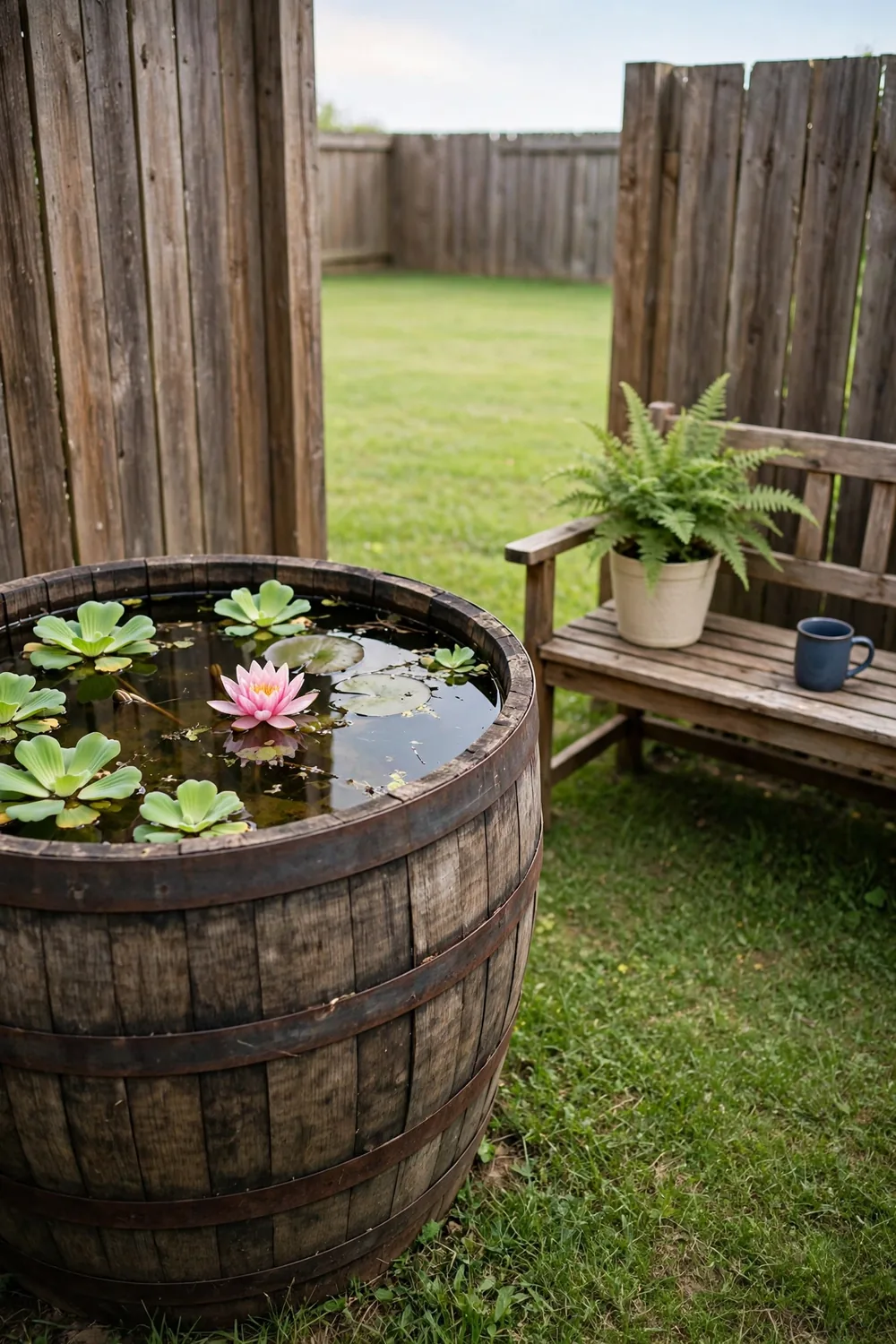
A half whiskey barrel lined with a pond liner becomes a tiny pond. No digging and no pump needed. A dwarf water lily anchors the center. Floating plants like water lettuce shade the surface and keep algae down. The still water draws dragonflies to your yard.
Set the barrel where it gets at least five hours of sun. The lily needs sun to bloom. Top up the water level weekly as it evaporates. Drop in a mosquito dunk once a month to stop larvae. In cold zones, sink the hardy lily below the freeze line for winter.
13. Dwarf Citrus Trees in Big Pots
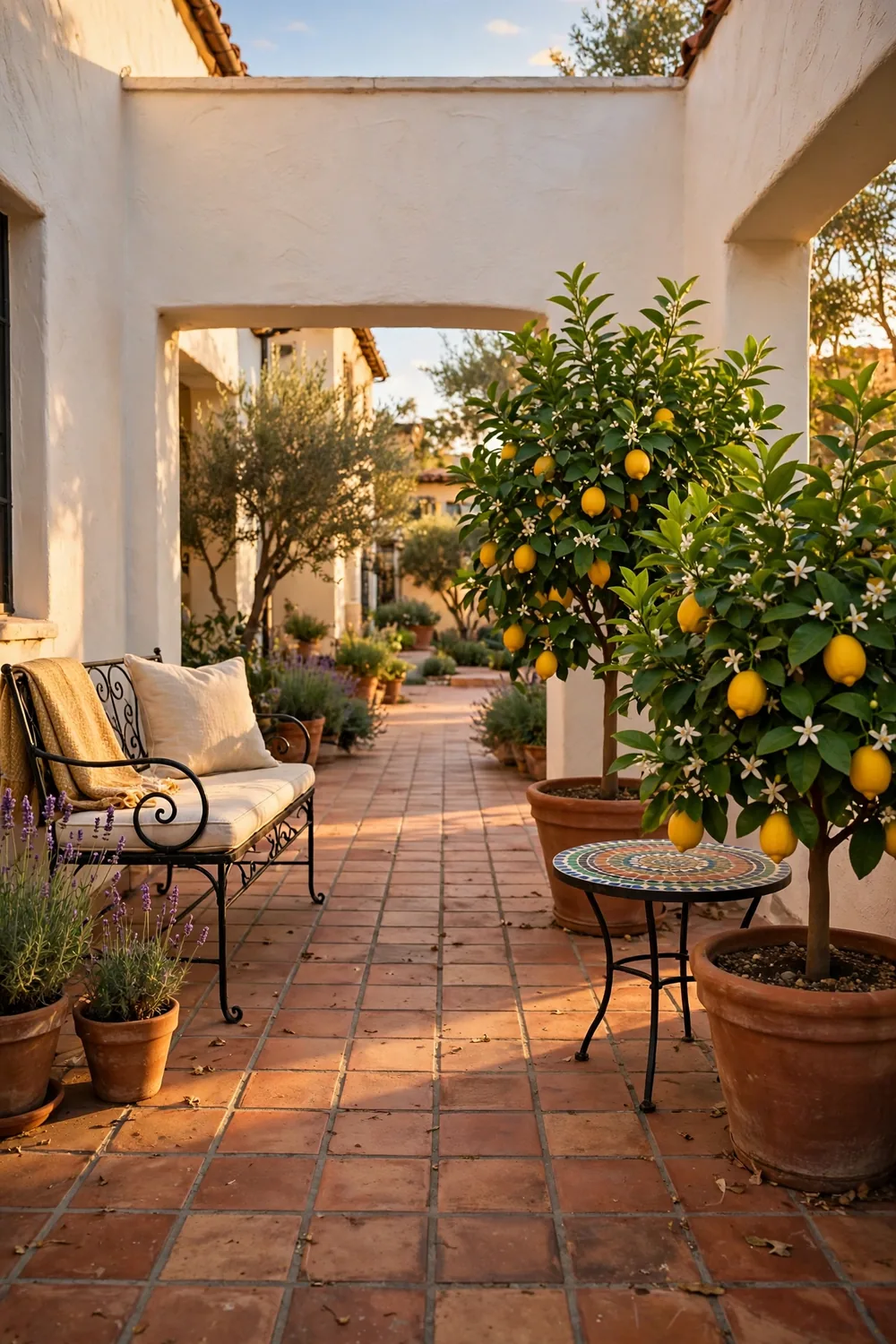
A Meyer lemon or calamondin in a large pot brings fragrant blossoms and real fruit to a sunny patio. Choose a container 16 to 20 inches wide with big drainage holes. Use a citrus or cactus mix that drains fast. Soggy roots are the main killer of potted citrus.
Give citrus full sun and deep, regular water. Let the top two inches dry between drinks. Feed with a citrus fertilizer from spring through early fall. Follow the rate on the package. In zones colder than 9, wheel the pot indoors before the first frost.
14. Cut-Flower Pots for Fresh Bouquets
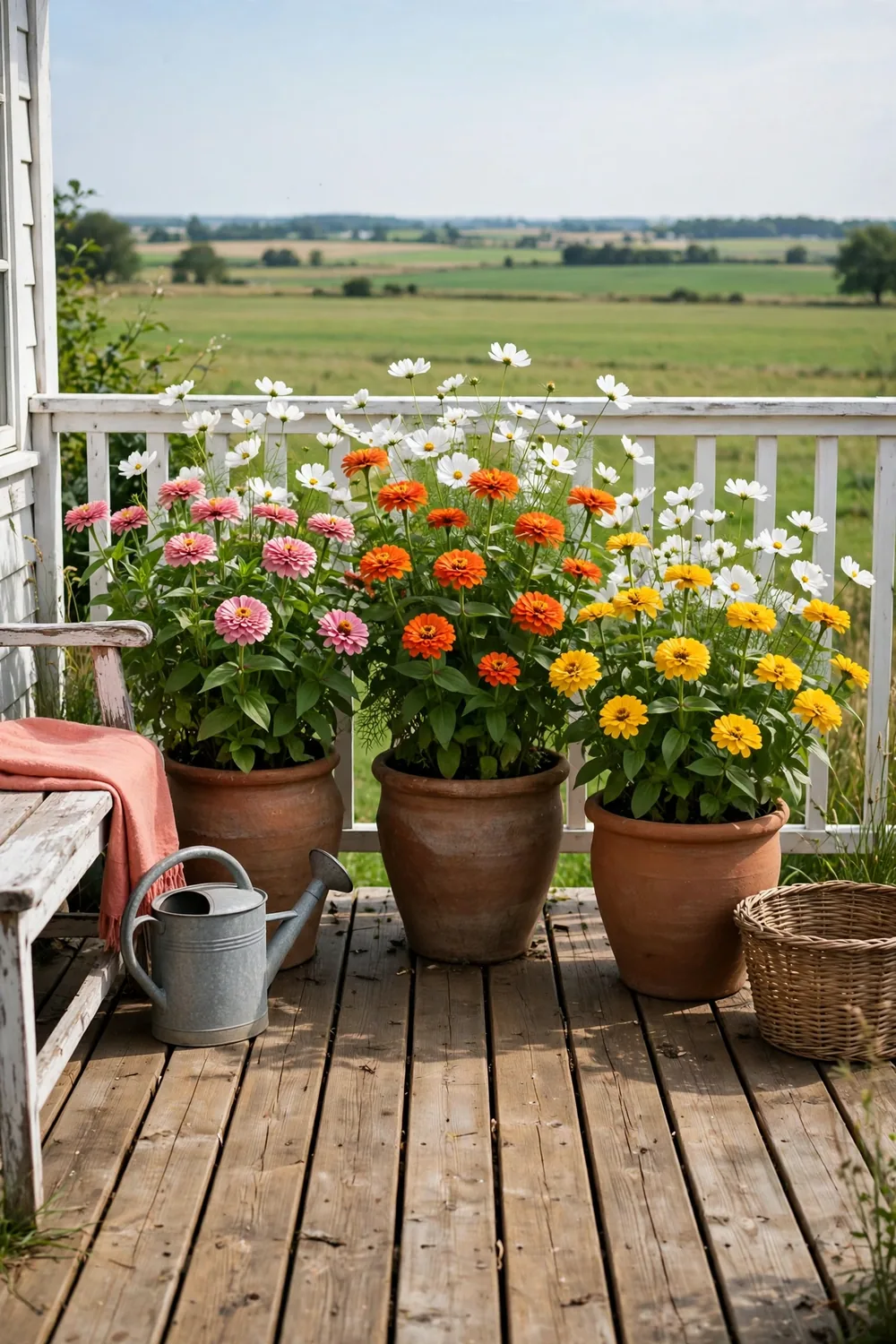
A few pots of zinnias and cosmos supply fresh bouquets from July to frost. Sow seeds directly into 12-inch pots of potting mix after the last frost. Thin seedlings to a few inches apart so stems grow strong. Full sun keeps the blooms coming all season.
Cut stems often, because every cut tells the plant to make more flowers. Sow a new pot every two to three weeks for a steady supply. Strip the lower leaves before arranging so the vase water stays clean. Change the water every two days to stretch each bouquet.
15. Lavender and Rosemary in Terra-Cotta

Lavender and rosemary make natural pot partners. Both want gritty soil and strong sun. Terra-cotta pots suit them because the clay wicks extra moisture away from the roots. English lavender and upright rosemary handle most US summers with ease. Brush past them on a warm day and the scent fills the air.
Mix potting soil with a third coarse sand or fine gravel. These Mediterranean plants demand sharp drainage. Water only when the soil dries out. Never let the pots sit in a saucer of water. Bring rosemary indoors before frost in cold zones, and leave hardy lavender out with a gravel mulch.
16. Pet-Safe Pots for Homes With Dogs and Cats
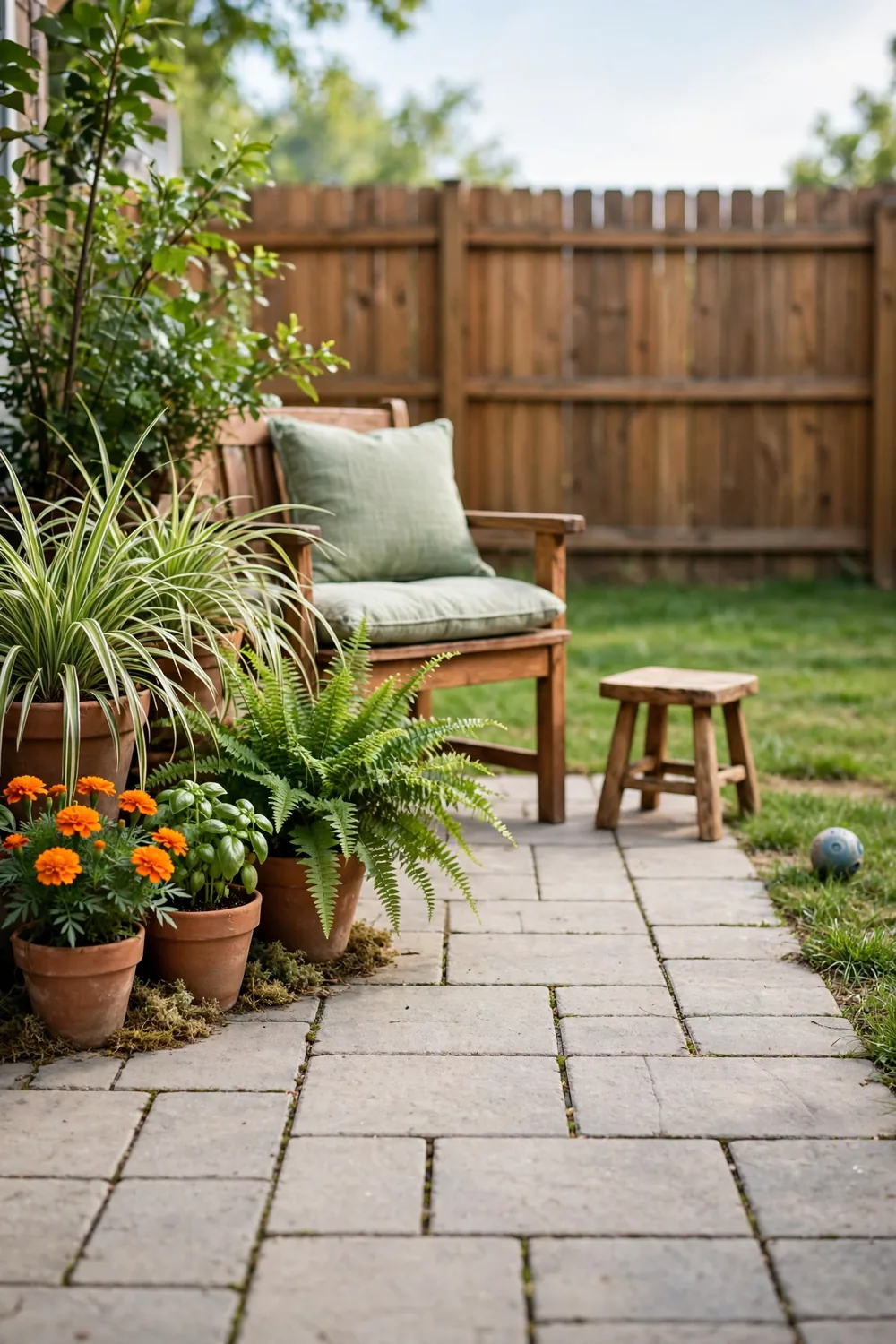
Curious pets chew leaves, so choose plants that forgive a nibble. Spider plants and Boston ferns are safe picks that still look great in pots. Keep these planters at pet height on the patio. The animals soon learn which plants to sniff and which to leave alone.
Some common container plants are dangerous, so keep them out of reach or skip them. Lilies can be fatal to cats even in small amounts. Sago palm is highly toxic to dogs, and oleander harms both. Check the ASPCA plant list before buying, and ask nursery staff whether a plant is pet-safe.
17. Layered Bulb Pots for Spring Color
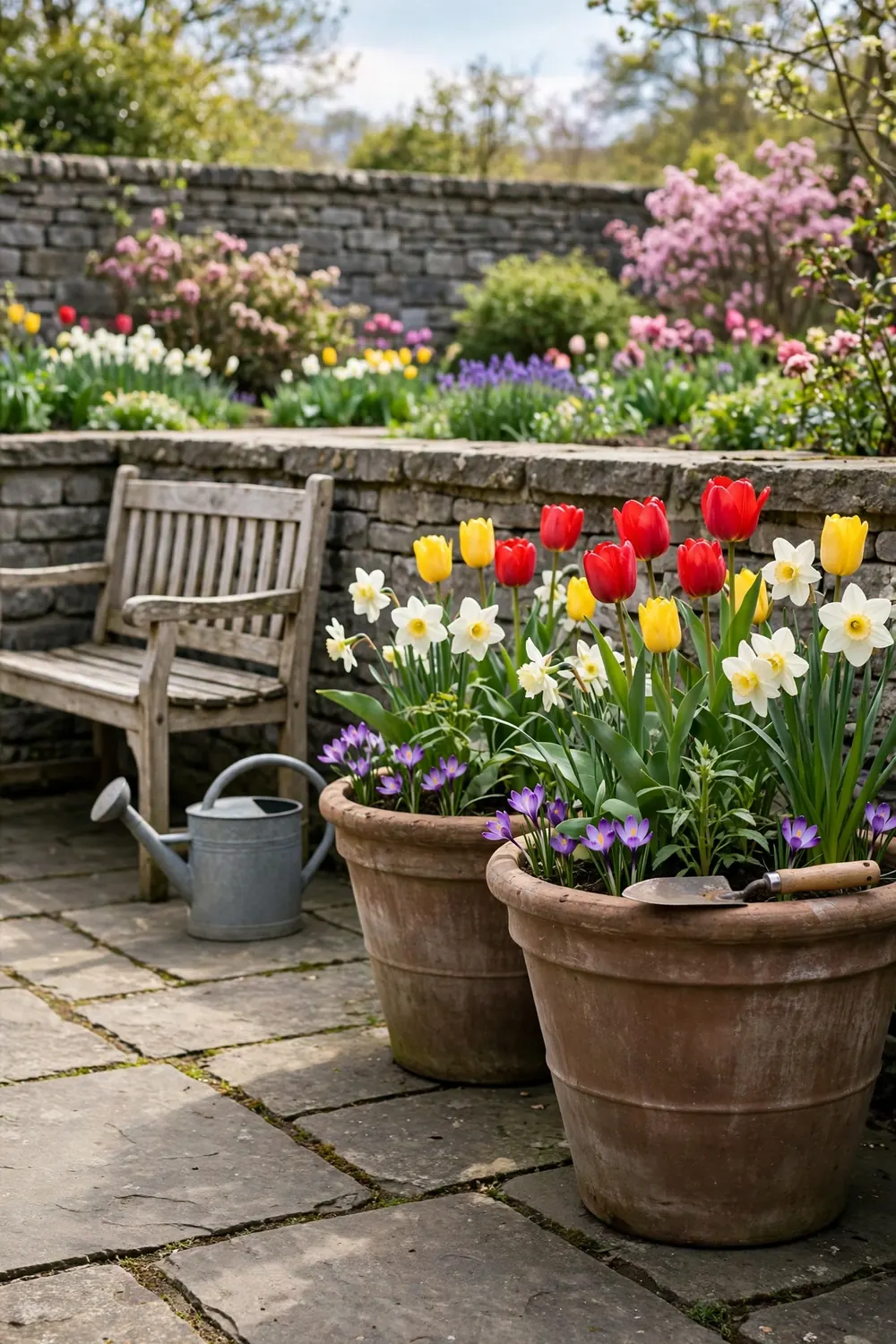
One pot can bloom for two months when you layer bulbs like a lasagna. In fall, plant tulips deepest in a 14-inch pot. Add a middle layer of daffodils. Finish with crocus near the surface. Each layer wakes up in turn, so the pot never sits empty in spring.
Use plain potting mix and water once after planting. Then let winter rain and snow do the rest. Bulbs need a cold rest, so this suits regions where winter drops below 45 degrees for weeks. After blooms fade, let the leaves yellow fully before cutting them back.
18. Upcycled Buckets and Crates for Rustic Charm

Old buckets and wooden crates become charming planters for the price of a drill bit. Drill three or four half-inch drainage holes in the bottom of each one. Roots rot fast in standing water. A coat of outdoor paint in a soft color ties mismatched finds together.
Line wooden crates with landscape fabric so the soil stays in and the wood lasts longer. Fill with light potting mix for the best drainage. Keep each container light enough to move when full. Metal tubs heat up in full sun, so give them afternoon shade or plant heat lovers in them.
19. Pollinator Pots for Butterflies and Bees
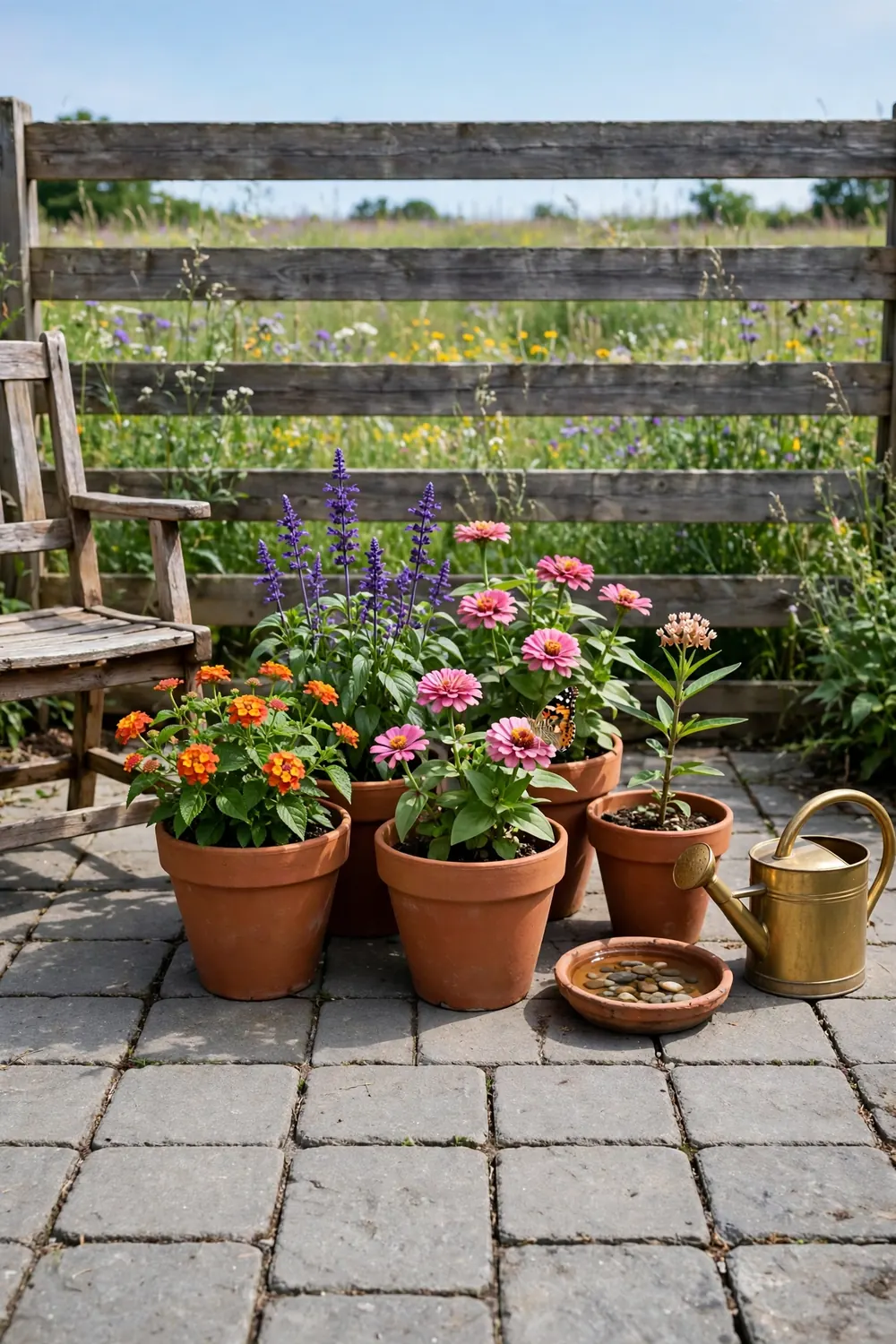
A cluster of nectar-rich pots turns any balcony into a butterfly stop. Lantana and salvia bloom for months and draw butterflies and bees from blocks away. Add a small milkweed plant. It gives monarch caterpillars the one plant they can eat. Place the cluster where you can watch the visitors from your chair.
Group three to five pots together so pollinators spot the patch from the air. Skip every spray on these plants. Even organic insecticides harm the insects you want to attract. Deadhead the zinnias and salvia to stretch the bloom season. Leave a shallow dish of water with pebbles nearby for thirsty bees.
Frequently Asked Questions
What kind of soil should go in outdoor planters?
Use a bagged potting mix, never soil dug from the yard. Yard soil compacts in pots and suffocates roots. A good mix holds compost, peat or coir, and perlite for drainage. Each spring, swap the top two inches of old mix for fresh compost.
How often should you water container plants?
Most containers need water once a day in summer heat. Hanging baskets and small pots may need two drinks on the hottest days. Poke a finger two inches into the mix and water deeply when it feels dry there. Morning is the best time to water.
Do potted plants need fertilizer to thrive?
Yes, because every watering washes nutrients out of the drainage holes. Mix slow-release granular fertilizer into the potting soil at planting time. That feeds plants steadily all season. Heavy feeders like tomatoes and petunias also like a liquid feed every two to four weeks.
Which container garden ideas work best on a shady balcony?
Shady balconies grow leafy greens like lettuce and arugula. These crops prefer cool light anyway. Herbs such as mint and parsley do well with just a few hours of morning sun. For color, plant impatiens or begonias, and save sun-lovers like tomatoes for brighter spots.
Happy Gardening
Container gardening rewards small starts. One pot of herbs or a single bright flower tub can spark a lasting habit. Each season teaches you more about your light, your watering rhythm, and the plants that love your space. Start with the idea that fits your sun and schedule, then add another pot when the first one thrives.