
How to Plant Garlic in Fall for a Summer Harvest
Pushing garlic cloves into cool October soil feels full of promise. Dinner next July is already underway. Planting garlic in fall gives each clove a head start. Roots settle in before winter. Growth resumes early in spring, which leads to bigger, tastier bulbs. The work itself is simple, and the bed needs little attention while the ground stays frozen.
You will need a sunny bed, seed garlic, compost, straw, and basic hand tools. Everything here works for zones 3 through 9, with small timing shifts noted where they matter. The steps are simple, and most of the waiting happens while winter does its quiet work.
Pick the Right Week for Your Zone

Garlic needs about a month of mild weather after planting. That gives roots time to settle before the ground freezes. In zones 3 through 5, that usually means late September into October. Zones 6 through 8 do best from mid-October into November. Zones 9 and warmer can wait until November or early December. A simple rule works for every region. Count back four to six weeks from the usual hard freeze, and plant inside that window.
A soil thermometer removes the guesswork if you own one. When the soil a few inches down reads near 50 degrees on a fall afternoon, the time is right. Planting too early can push up tender shoots that winter cold harms. Planting too late leaves cloves in cold soil with no roots at all. Jot the planting date on a calendar so next fall gets easier.
Choose Between Hardneck and Softneck

Garlic falls into two broad groups, and your climate decides which one thrives. Hardneck types suit zones 3 through 6, where winters run cold. They grow a stiff central stalk and form fewer but larger cloves. In spring they send up a curly flower stalk called a scape, which tastes mild and sweet when cooked. Their bulbs keep for about four to six months after harvest.
Softneck types prefer zones 7 and warmer. They pack more, smaller cloves into each head and never form a scape. Their soft necks braid well for storage. Those bulbs often keep nine months or longer. Buy seed garlic from a garden supplier, since grocery store heads may carry disease and often come from unknown varieties. A half pound of seed garlic plants a four-foot row.
Build Rich, Loose Soil

Garlic roots feed best in loose soil that drains well and holds water. Pick a bed that gets at least six hours of sun a day. Work two to three inches of compost into the top six to eight inches of soil. A 4-by-8-foot bed needs about five cubic feet of compost for a two-inch layer, which is roughly three bags from the garden center. Aim for a soil pH between 6.0 and 7.0, which most bagged compost blends already support.
Heavy clay stays too wet and can rot cloves over winter. Raised beds or mounded rows are worth the effort where drainage is poor. Break up any clods and pull out stones and old roots before planting. Straight, even bulbs form in clear soil with nothing blocking them. Rake the surface smooth and level when you finish.
Set Each Clove Pointy Side Up

Break each head into single cloves on planting day. Keep the papery skins on, since bare cloves dry out and grow poorly. Choose the largest, firmest cloves for planting and save the small inner ones for cooking. Push each clove into the soil with the pointed end up and the flat root plate down. Set them two inches deep in mild regions and three inches deep where winters run harsh.
Space the cloves six inches apart in every direction, with rows eight to ten inches apart. Firm the soil gently over each one so no air pockets remain. Water the bed deeply to settle everything in. Mark the rows with a simple stake so spring weeding does not disturb the young shoots.
Blanket the Bed With Straw Mulch
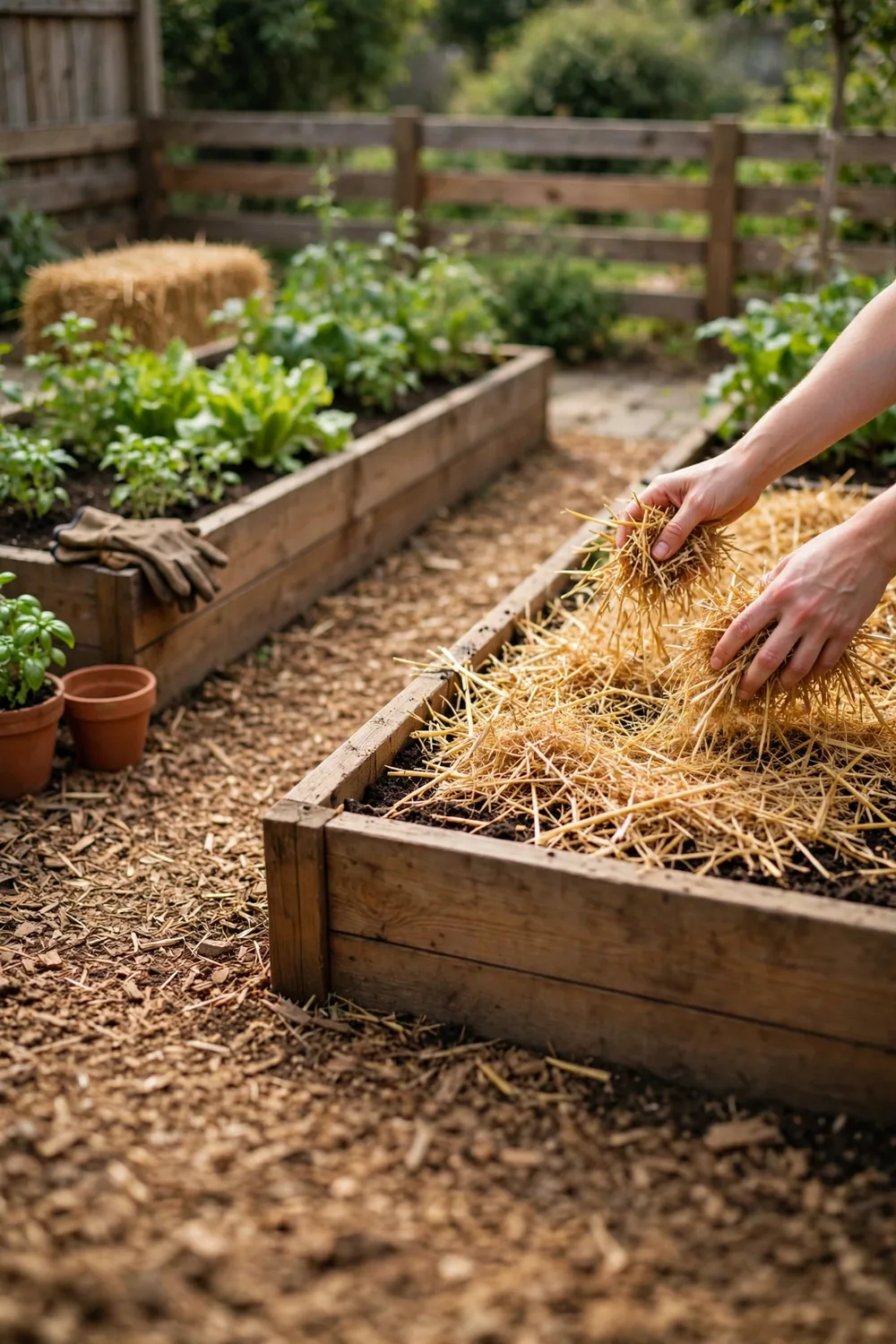
Spread four to six inches of clean straw over the bed right after planting. The mulch cushions soil heat swings and holds in water. It also keeps winter weeds from taking hold. Straw stays loose enough for shoots to push through in spring. A 4-by-8-foot bed needs roughly one large bale to reach full depth. Pull the mulch a little thinner right over each row so the first shoots find light with ease.
Keep dogs and curious pets from digging in the bed. Garlic can upset their stomachs if they eat much of it. Leave the mulch in place all winter; it also shields the soil from hard rain. In spring, pull the layer back a little at a time as the weather warms. Then tuck it around the growing plants to hold weeds down.
Water Deep, Then Let the Season Take Over

Water the bed deeply right after planting and mulching. Soak the soil several inches down. After that, fall rain usually handles the job in most regions. During a dry spell, give the bed about an inch of water a week so roots keep forming. Soggy soil brings more danger than dry soil, so skip watering after a good rain.
When shoots stand about six inches tall in spring, feed the plants. Use a nitrogen-rich fertilizer such as blood meal or composted manure, and follow the rate on the package. A second light feeding three to four weeks later builds strong leaves. Big leaves grow big bulbs. Stop watering two to three weeks before the planned harvest so the wrappers dry well.
Read the Leaves, Then Harvest on Time

Green shoots often poke through the mulch in late fall, and that is normal. They pause through winter and resume growing in spring, so leave them alone. On hardneck types, curly scapes appear in late spring. Snap them off once they curl once or twice. The plant then puts its energy into the bulb. The scapes cook up tender and mild.
Harvest time arrives when the lower three or four leaves turn brown. Five or six upper leaves should still look green. That stage usually hits in June or July. Loosen each bulb with a garden fork. Tugging the stem can tear the wrapper, so work the fork under the bulb and lift. Cure the harvest in a dry, shaded spot with good airflow for two to three weeks before trimming and storing.
Frequently Asked Questions
Does planting garlic in fall work in warm climates?
Yes, with the right type. Softneck varieties suit zones 8 and 9, where winters stay mild. In the warmest areas, chill cloves in the fridge for four to six weeks before planting, which copies winter cold and leads to fuller bulbs. Plant on the late side of the window so shoots do not emerge too early.
Can garlic from the grocery store be planted?
It can sprout, but results often disappoint. Store heads may carry soil diseases, and many are treated to slow sprouting, which weakens growth. The variety is also unknown, so it may not suit the local climate. Certified seed garlic removes every one of these risks.
What should be done if garlic sprouts before winter?
Nothing at all. Fall sprouting is normal, and the green tops handle frost well under a straw blanket. Cutting them back only removes energy the plant saved for spring. Growth simply pauses during the cold months and restarts when the soil warms.
How long does homegrown garlic last in storage?
Hardneck bulbs keep about four to six months. Softneck bulbs often last nine months or longer. Store them in a cool, dark place with moving air, such as a pantry shelf in a mesh bag. Keep them out of the fridge, since cold and damp can trigger sprouting.
Give It a Try
By midsummer, those plain cloves will have grown into full heads with papery skins. They will be ready to cure on a shaded rack. Fall planting lets winter do quiet work for you. The cold settles the roots, and spring growth starts early from the base built in autumn.