Nursery Organization Ideas: 13 Solutions for Small Baby Rooms
You set up the crib, and the small room already looks full. Diapers and wipes pile up fast, and the tiny clothes keep coming. Bath gear needs a home too, so good nursery organization starts with one rule. Give each item its own spot, and keep daily items near the changing area.
Small rooms really reward vertical thinking. Walls and doors hold more than you think, and so does the space under the crib. A few cheap bins and a rolling cart go a long way. Add some plain labels, and a tight corner turns calm and easy to use. The 13 ideas below show how, one spot at a time.
1. Roll a Diaper Cart Between Stations
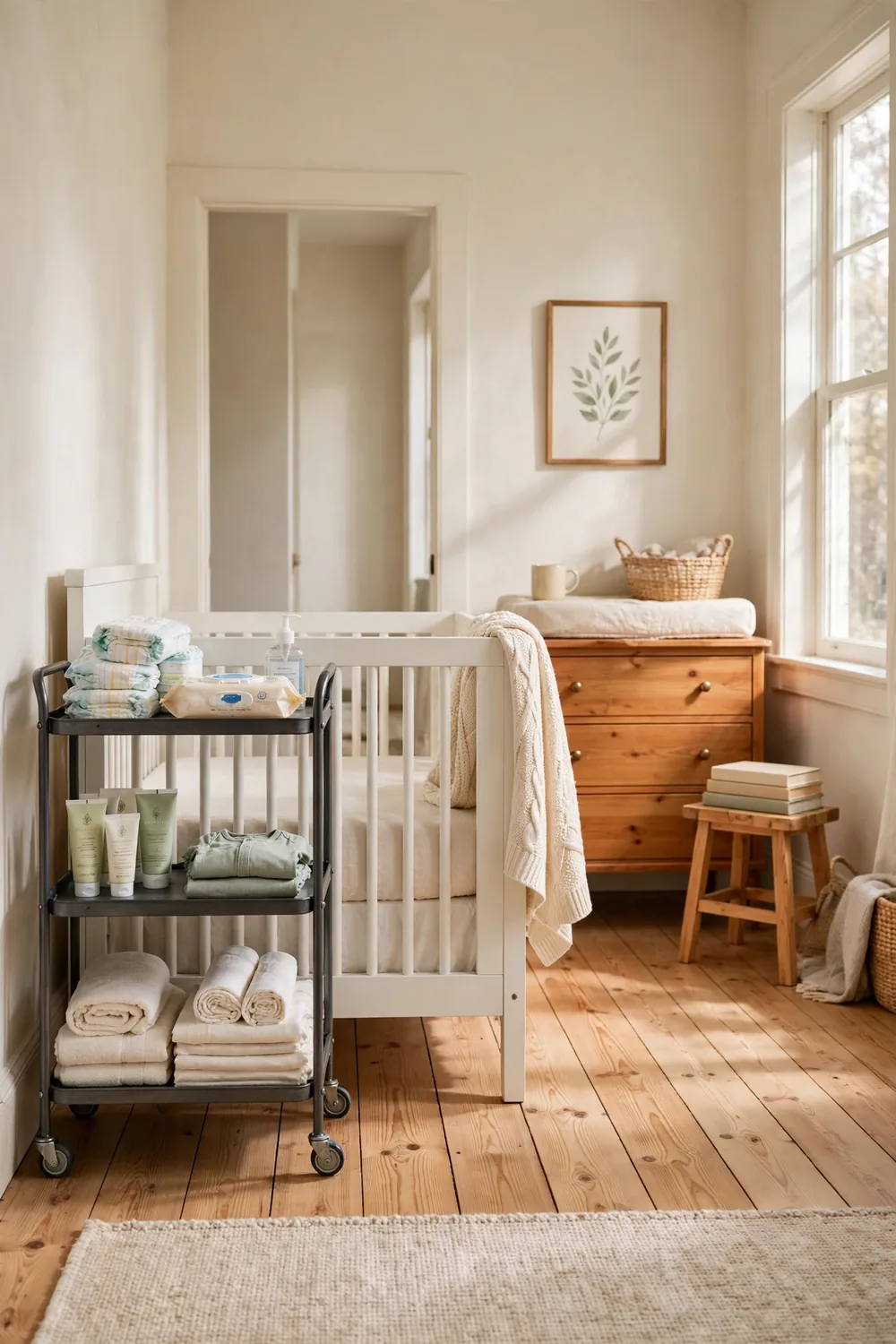
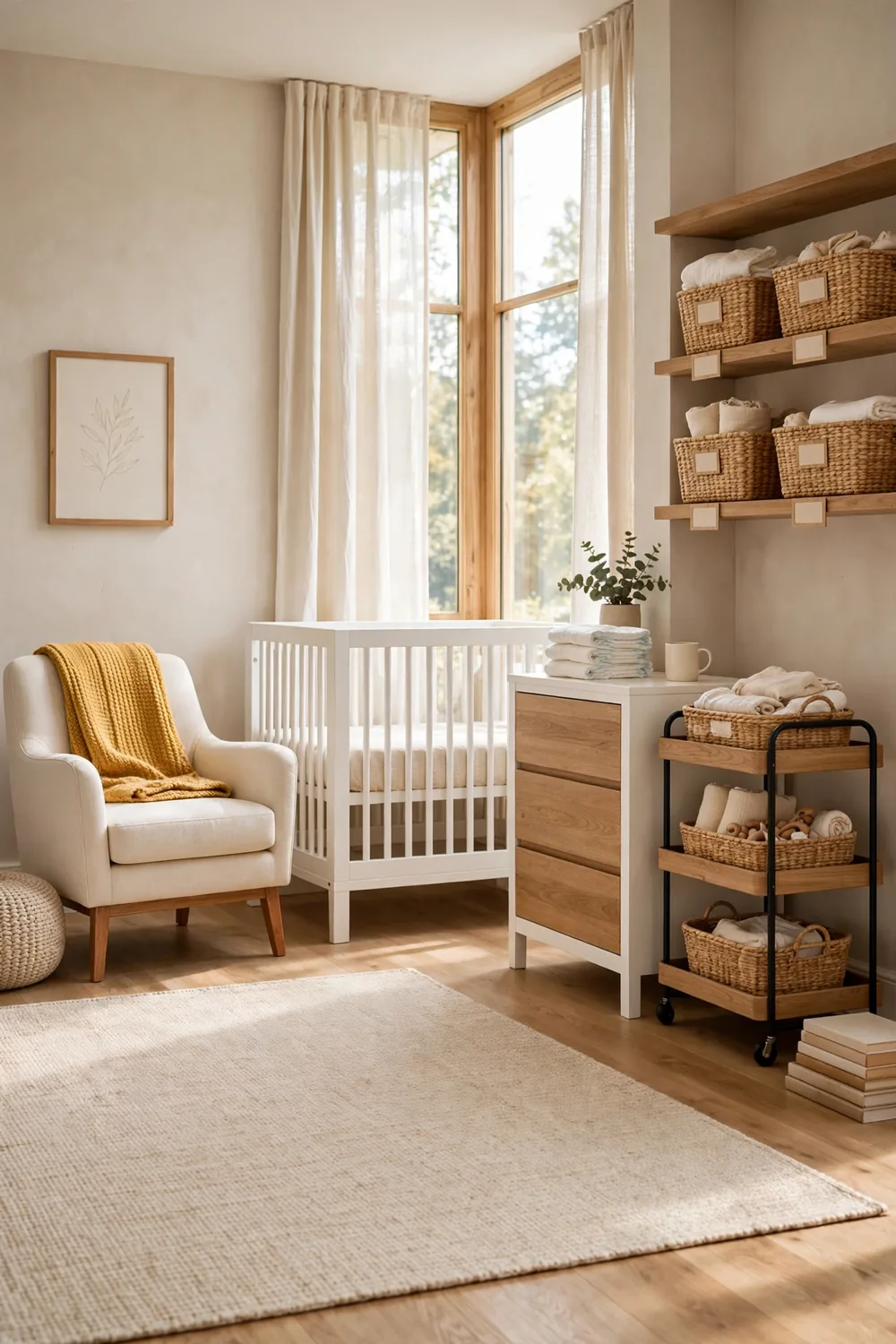
A rolling cart with three tiers makes diaper changes easy. Keep diapers, wipes, and hand sanitizer on the top shelf, close to the changing pad. The middle shelf holds diaper cream, spare pacifiers, and an extra onesie. Towels and spare sheets go on the bottom shelf.
The wheels let the cart follow you through the house. Park it by the couch for day changes, and roll it by the crib at night. Big-box stores sell strong carts for under thirty dollars, which is less than a week of diapers.
2. Divide Dresser Drawers by Size

Baby drawers get messy fast when clothes pile up. Thin dividers split each drawer into neat rows. Fold onesies upright like files so you can see each one at a glance. Socks and hats get their own small squares.
Put the current size in the front row and the next size in the back. When the baby outgrows a size, just shift the rows back. You won’t need to dig through the whole drawer to find a size. Bamboo or plastic dividers cost only a few dollars and fit most standard dressers.
3. Label Every Basket on the Closet Shelves
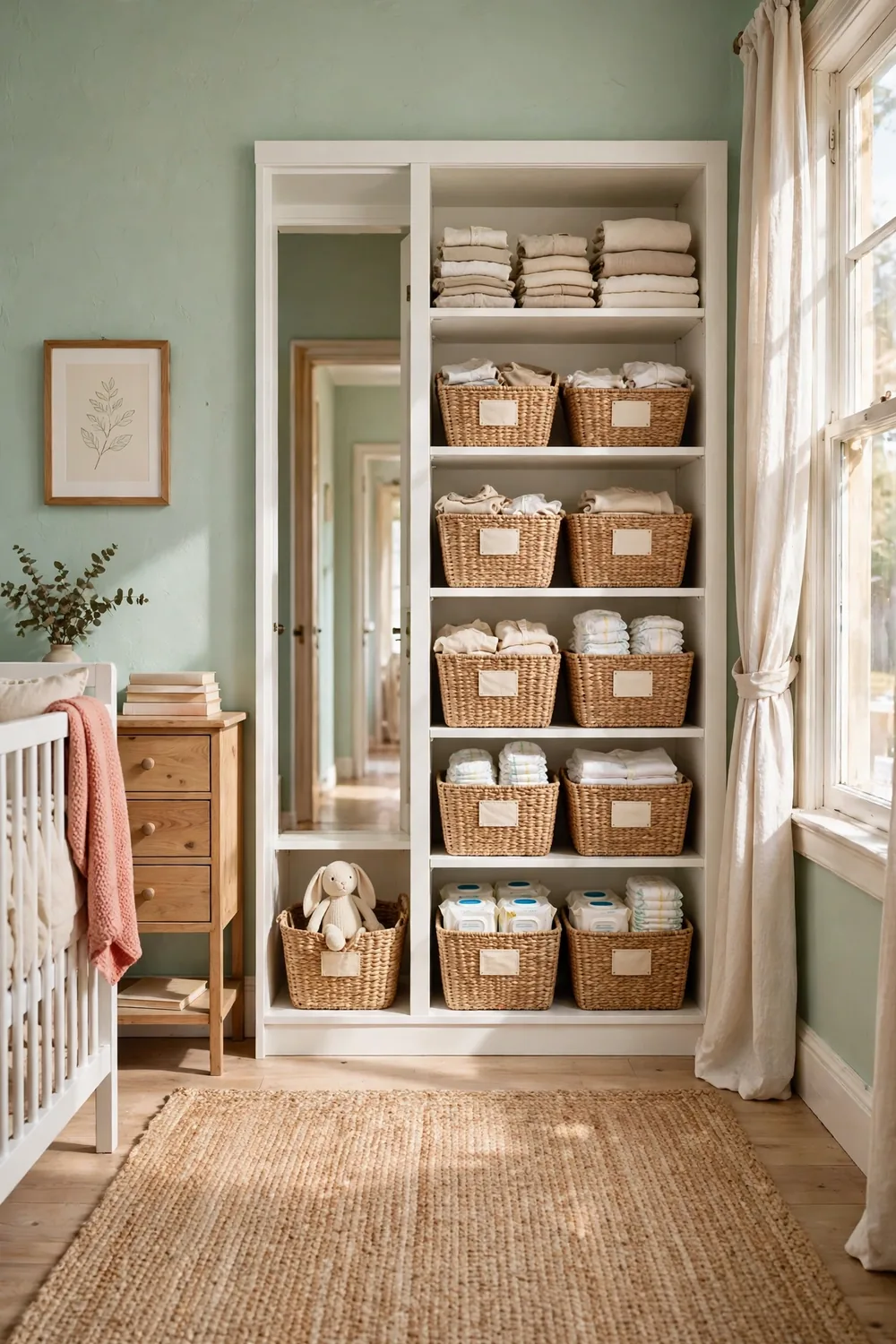
Closet shelves work harder with open bins that have clear labels. Pick bins you can see into at a glance. Add a word and a small picture on each label so sitters and grandparents can find things too. Keep daily items like diapers and wipes on low shelves, and store outgrown clothes in bags up high.
Labels speed up cleanup since anyone can put things back. A label maker or masking tape and a marker does the job for very little money. Write the words big and clear so tired eyes can read them at night.
4. Double the Closet With a Second Rod
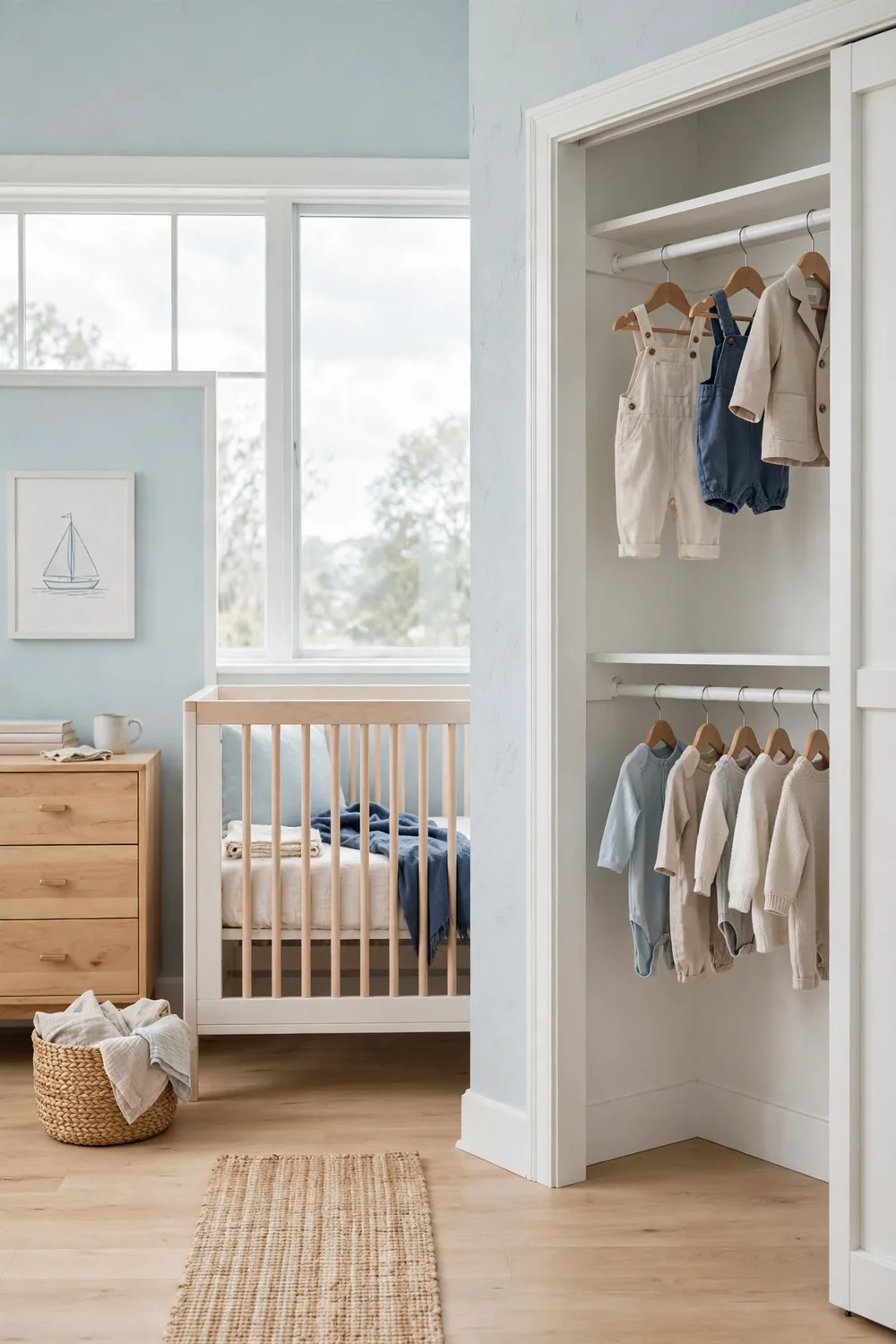
Baby clothes are short, so one rod wastes space. A second rod gives you twice the hanging room. Hang daily outfits on the lower rod where you grab them most. Put dressy clothes and larger sizes up high. This also makes the next size easy to spot when a growth spurt hits.
Tension rods suit rentals since they need no holes or tools, while screw-in rods suit closets you will keep for years. A second rod costs less than ten dollars and takes minutes to set up. Either way, dead air turns into storage you will use each day.
5. Use the Closet Door for Small Supplies
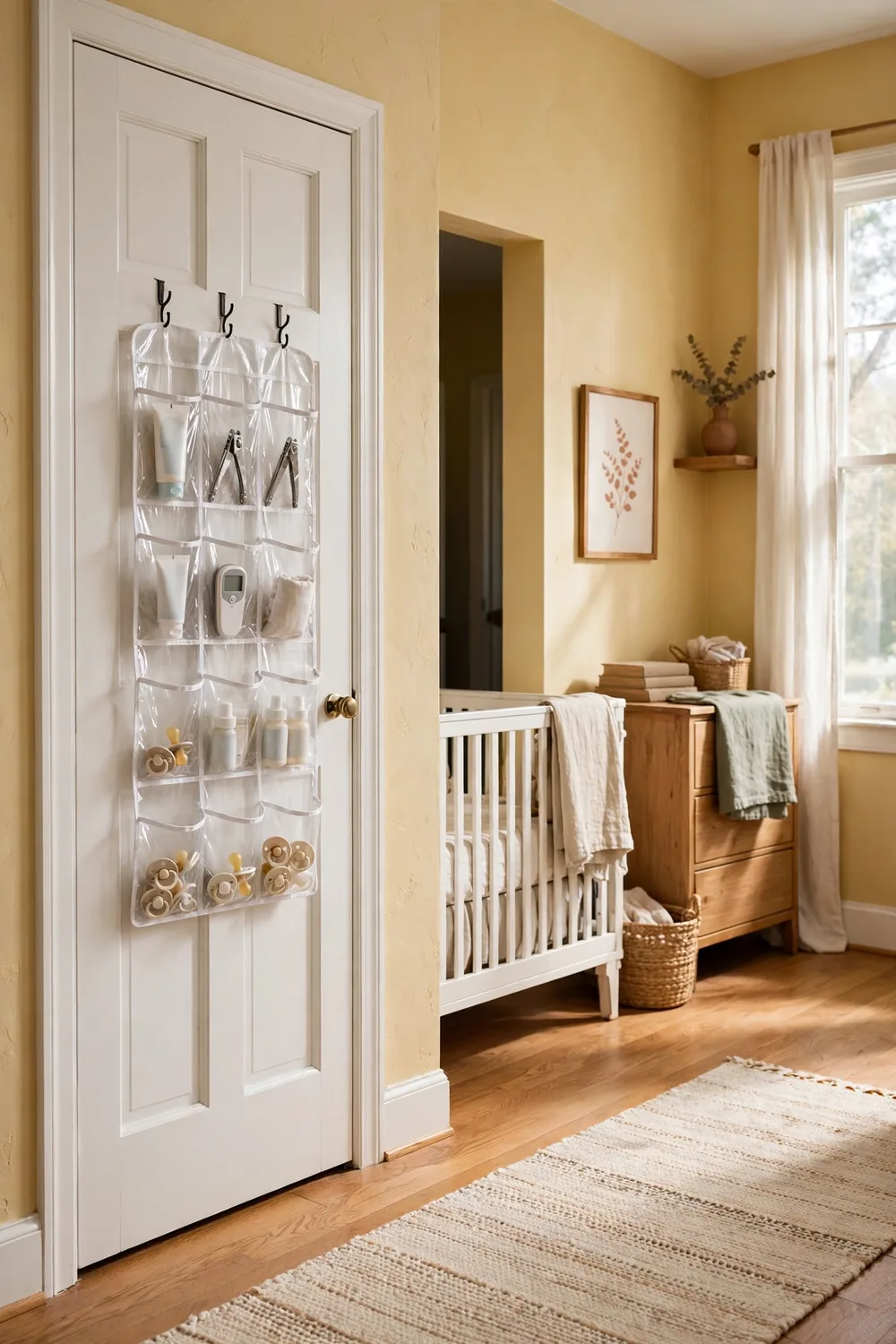
The back of the closet door is storage most parents miss. A clear shoe organizer hangs there and turns that flat space into rows of handy pockets. Each pocket holds one type of item, like diaper cream or nail clippers. The clear front keeps thermometers and spare pacifiers easy to find.
It hangs on two hooks with no tools at all, so renters love it, and you can move it to a new door in minutes. Try a second one on the bedroom door for bedtime books and a small night-light.
6. Stow Extras Under the Crib
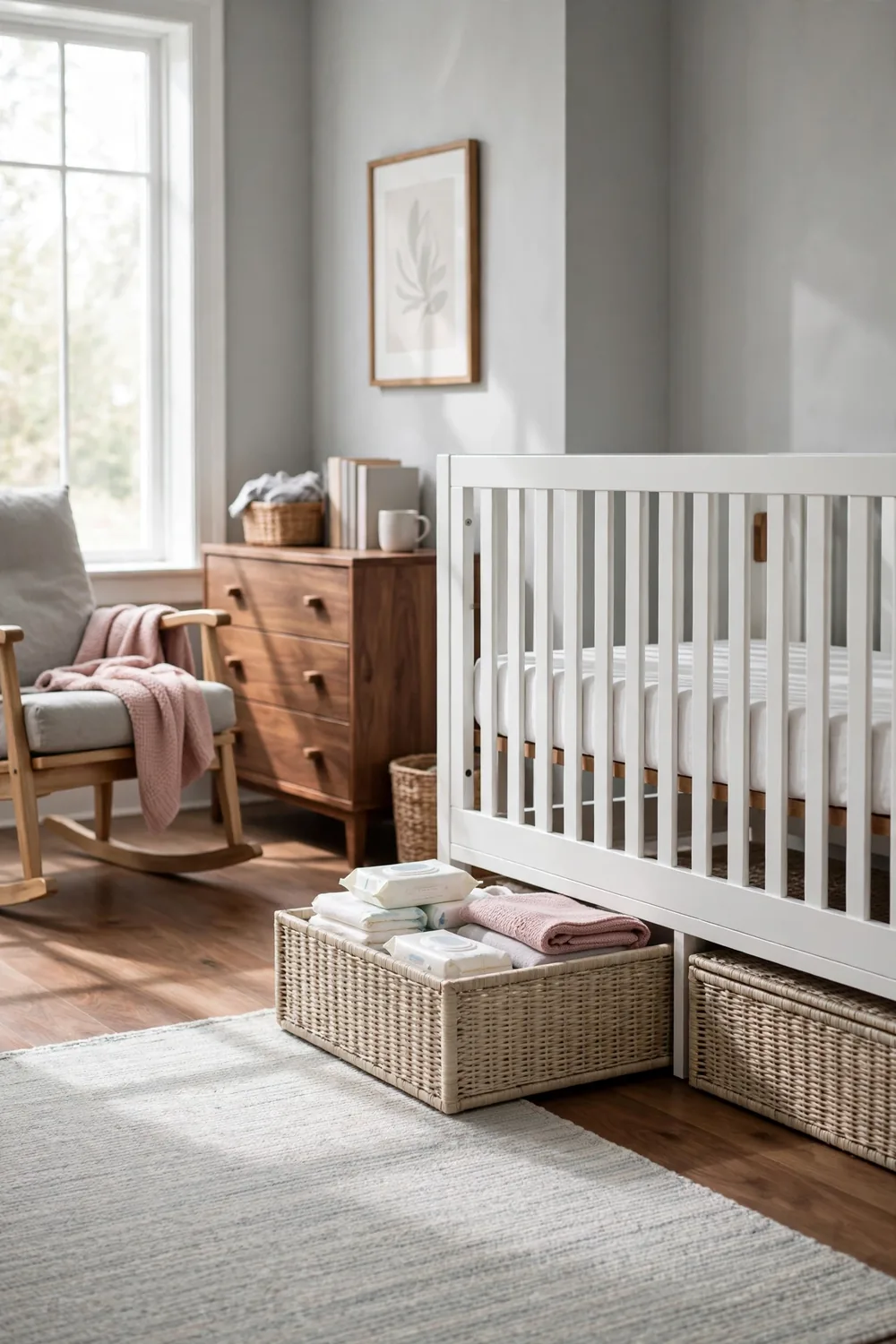
The space under the crib holds more than most parents use. Flat bins slide underneath to hold bulk diapers and wipe packs, with folded blankets on top. Pick bins that slide out with one hand while you hold the baby. Keep small items far from the rails where little fingers reach.
These bins hold your extra stock with no new floor space. Pull one out at night for a fresh diaper without walking to the closet. Tuck them back in the morning and the whole room stays neat.
7. Mount Book Ledges at Reading Height

Books take over fast, and a bookcase eats floor space. Shallow wall ledges display books with their covers facing out. Little kids can see each cover and pick their own story. Mount two or three near the glider, low enough for small hands. The bright covers double as wall art in soft hues.
Each ledge shows about ten books and sticks out just a few inches. Rotate the books each month so the little shelf feels new again. Leave one ledge open for library books or new gifts. This keeps reading fresh without buying a single new book.
8. Corral Toys in Corner Cubes

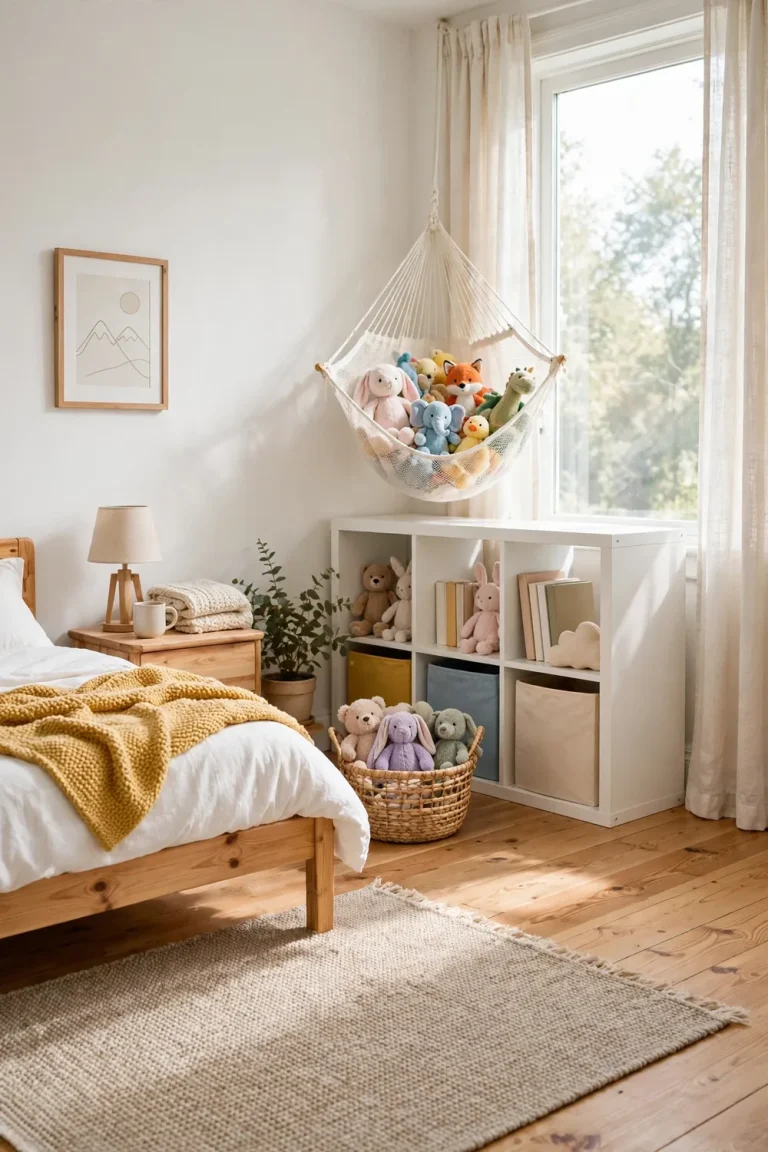
Toys spread across a small nursery in minutes. A low cube shelf tucked in the corner gives every toy a clear home. Put blocks in one bin, soft toys in the next, and teethers in a third. The open floor stays free for tummy time and first crawls.
Fewer toys out means calmer play and fast cleanup, so swap one bin each week with a different one from the closet. Old toys feel brand new again. If a bin sits still for a month, those toys can leave the house.
9. Build a Night Feeding Kit
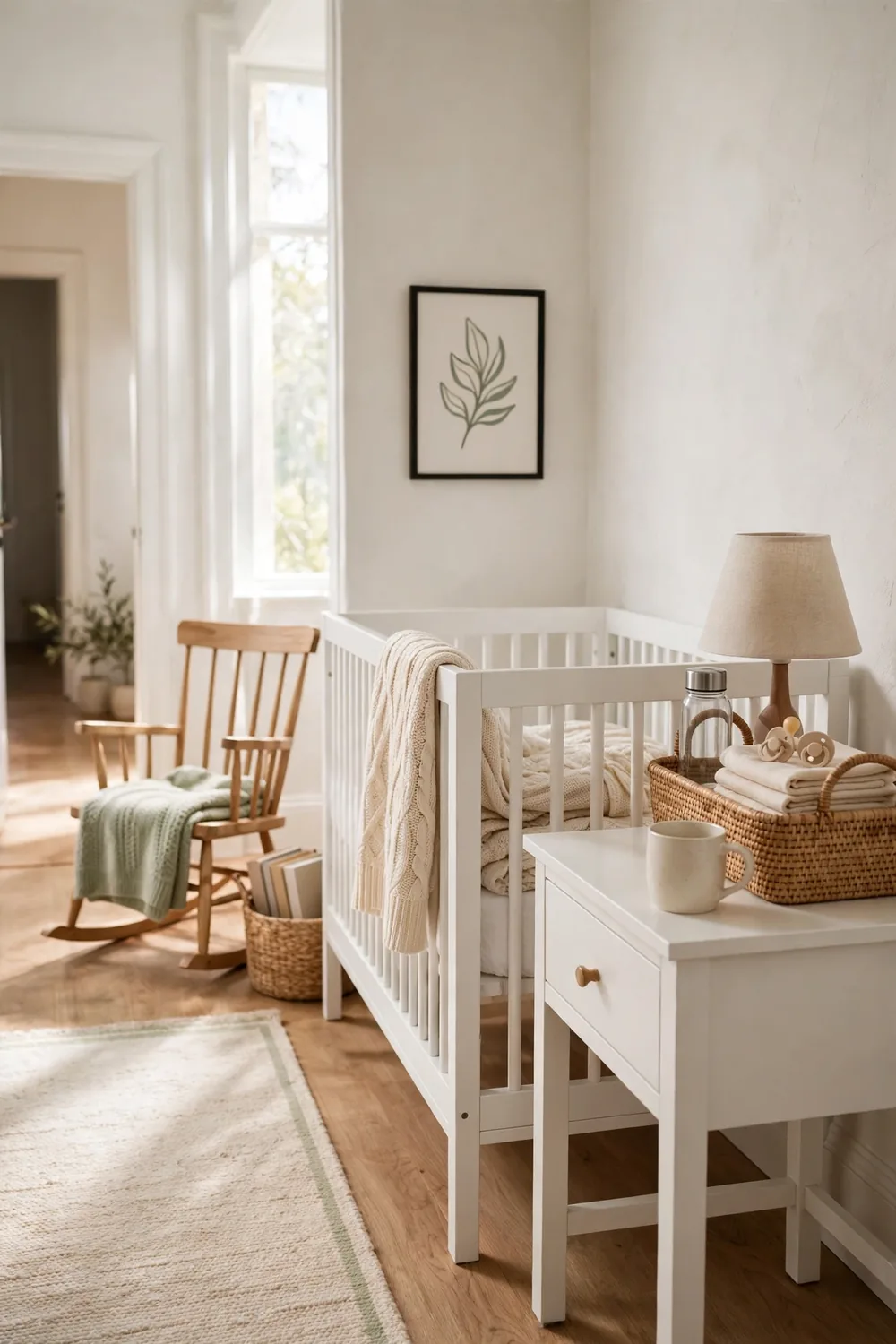
Night feeds go smoother with a small caddy on the nightstand. Pack a water bottle for yourself and a neat stack of burp cloths. Tuck spare pacifiers in the side and add a dim lamp. You can grab everything you need without the bright overhead light.
Run the phone cord behind the stand so no cords hang near the crib. A caddy with a handle also moves to the couch for daytime feeds. One less thing to buy and one less trip at 3 in the morning.
10. Start a Too-Small Rotation Bin

Babies grow fast, and drawers fill with clothes that no longer fit. Keep one clearly marked bin on the closet shelf for outgrown clothes. When a onesie gets snug, drop it in the bin instead of back in the drawer. Toss each piece in the moment it feels tight.
When the bin fills up, wash everything and move it to storage bags or a donation box. Mark the bin by size, like 0 to 3 months. A full bin means it is time to pass clothes on or pack them away. This one habit keeps drawers lean and saves a big sort later.
11. Keep Bath Gear in One Portable Caddy
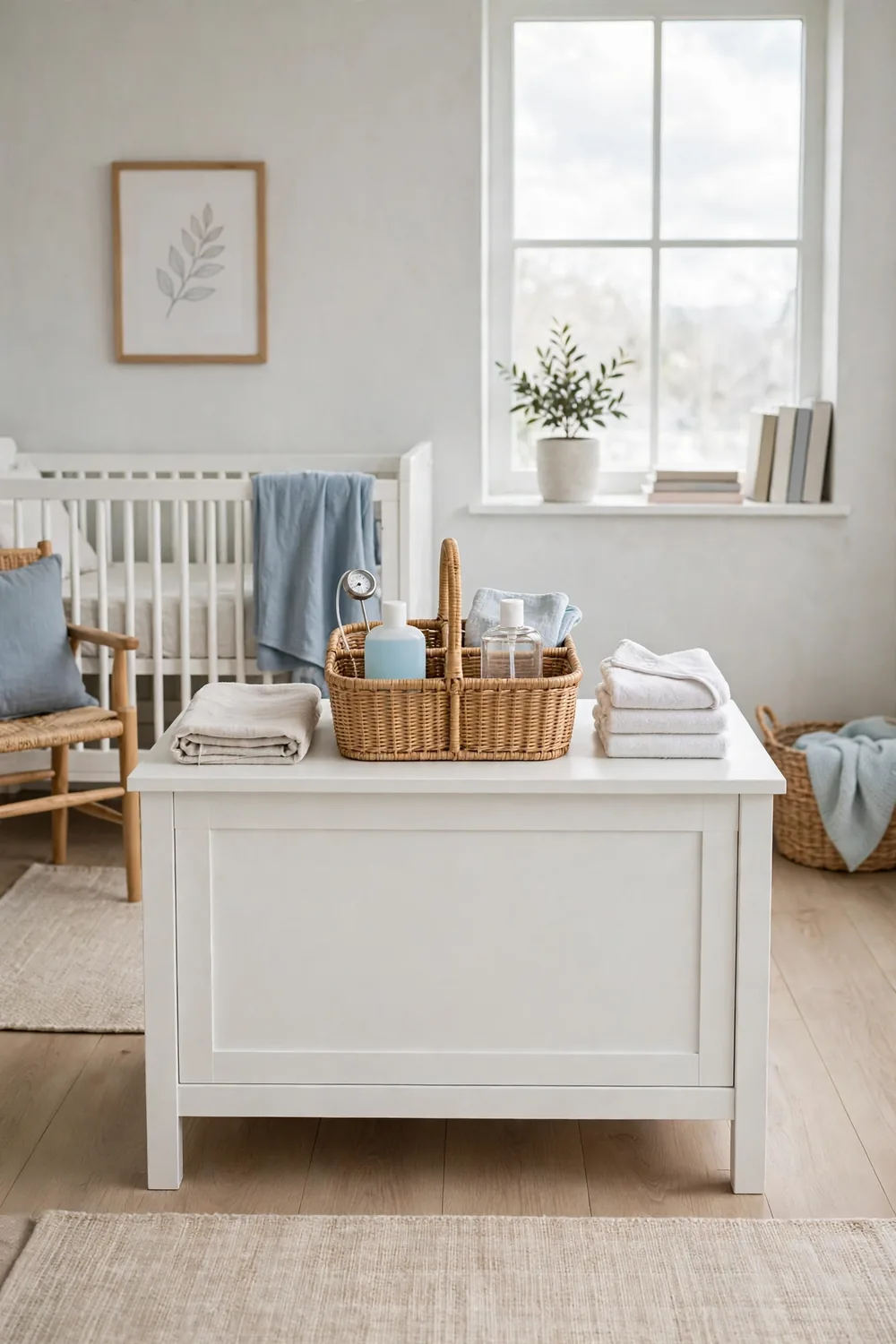
Bath time runs smoothly when every supply lives in one portable caddy. A handled caddy holds baby wash, gentle shampoo, a bath thermometer, and a soft washcloth. Stack the hooded towels close by. Carry the kit to the sink or tub in one trip. Nothing gets left behind or lost.
The caddy dries fast and wipes clean, so grime has no place to grow. Hang it on a hook when bath time is done, and the counter stays clear for the next round. It also works beautifully for sink baths in the first few weeks. One trip in, one trip out, and bath time stays calm.
12. Sort Laundry Into Two Hampers
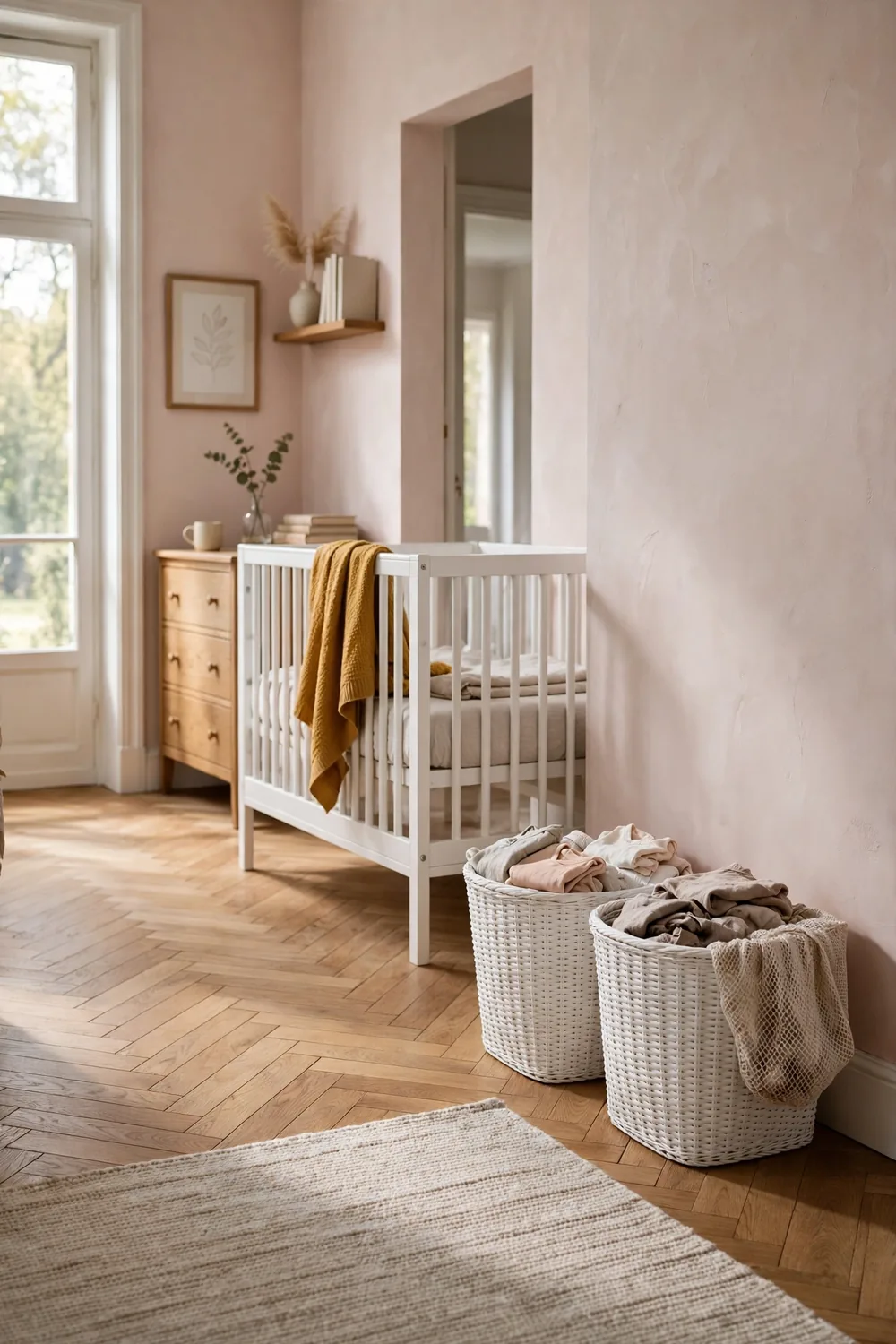
Baby laundry piles up in days. Mixing it with the family wash wastes time. Use two small hampers, one for daily clothes and one for soiled items that need a good soak. A mesh laundry bag in the first hamper catches tiny socks and bibs. No more lost socks or stained onesies in the big family load.
Wash a small load every two or three days and fold everything right away. A full hamper eats the whole corner of a small room, so this quick rhythm keeps the space calm and the piles small. Fold warm from the dryer and put each piece straight in its drawer.
13. Anchor Tall Pieces and Go Vertical

Tall shelves hold the most in a small room. Anchor every bookcase and dresser to the wall studs with anti-tip straps. The straps cost a few dollars and stop a climbing child from pulling furniture down. Each anchored shelf becomes a safe tower of neatly labeled bins. Give the straps a quick check twice a year to make sure they still hold tight.
Pick finishes marked non-toxic or low-VOC since small hands touch all. A low, anchored dresser can hold the changing pad on top. That frees the space a tall changing table would take. Store heavy items on the lowest shelves so furniture stays bottom-heavy.
Frequently Asked Questions
What are the nursery organization basics for first-time parents?
Start with four zones: a changing spot, a feeding corner, a sleep area, and a play space. Keep daily items like diapers and wipes near the changing spot. Keep feeding gear on the nightstand and give the toys one home in a corner. When every zone holds its own gear, even a small room runs smoothly.
What belongs in a well-stocked diaper station?
Keep 8 to 10 diapers per day for a newborn. Add a full pack of wipes and a fresh tube of diaper cream. Toss in two spare onesies, a clean burp cloth, and a small roll of trash bags. Restock the station each night so mornings never start with bare shelves.
How do you keep furniture safe in a small nursery?
Anchor each tall piece to wall studs with anti-tip straps. Keep the crib away from windows and cords. Choose dressers and shelving with safe non-toxic finishes. Store heavy items down low so the furniture stays steady.
How often should you sort through baby clothes and toys?
Sort through the clothes once a month since babies outgrow sizes quickly. Move snug items to the bin right away. For toys, swap one bin each week, and pass along any toys your child has not touched in a full month.
Pick Your Favorite
A small nursery stays calm when each item has a place. The rolling cart, the divided drawers, and the labeled bins all cut down on daily search time. Pick two or three ideas to try this coming weekend, then add more as the room settles into its rhythm.
With these 13 fixes in place, even the tiniest baby room feels open and ready.